
How to Build a Shopping App That Drives Sales: 2026 Development Roadmap


Contents
Developing a successful shopping app requires strategic planning, informed technology selection, and user-centric design to capture the projected $300 billion market by 2033.
Key Takeaways
- Start with comprehensive market research and niche selection. Clearly define your target audience and validate your app concept through primary research before beginning development.
- Choose cross-platform development for faster time-to-market - React Native or Flutter can reduce development time by 30-40% while sharing 70-80% of code between iOS and Android.
- Design for mobile-first conversions with thumb-zone optimization - Place primary CTAs in the lower-middle screen area and implement guest checkout to combat 85% mobile abandonment rates.
- Integrate essential features that drive sales - Include one-step social login, push notifications, multiple payment options, and AI-powered recommendations to match user expectations.
- Plan for 15-20% annual maintenance costs - Regular updates and continuous optimization based on user data are crucial for long-term success and retention.
Real-world success stories, such as METRO BRAZIL's 70% increase in daily active users prove that the strategic execution of these fundamentals delivers measurable business results in today's competitive mobile commerce landscape. Shopping app development is booming, with the market expected to reach $300 billion by 2033. At least 67% of customers have already downloaded a shopping app, and these apps to generated $710 billion in revenue in 2025.
This piece will walk you through how to create a shopping app that converts, from market research and tech stack selection to design and deployment. We'll also break down online shopping app development costs and share real-life case studies showing what works in retail app development today.
Shopping App Development Market Overview and 2026 Trends
Mobile commerce has crossed a decisive threshold. Sales on mobile devices will account for more than 50% of US retail ecommerce sales in 2027, a year earlier than previously expected. The global mobile commerce market is estimated to reach $2,416.46 billion in 2026 and is projected to hit $5,009.99 billion by 2034, exhibiting a CAGR of 9.5%. These numbers translate into sustained demand for shopping app development well into the next decade for developers and businesses.
Market Growth Forecasts and Revenue Projections
The shopping apps market itself shows equally reliable expansion. The market is projected to reach $189.4 billion by 2033 from $48.9 billion in 2023, reflecting a CAGR of 14.5%. North America captured a dominant 38% market share in 2023 and generated $18.6 billion in revenue. Similarly, mobile ecommerce sales reached approximately $3.40 trillion globally in 2025, representing 62% of all ecommerce revenue, with projections exceeding $5.00 trillion by 2029.
These projections become relevant for retail app development because of the performance gap between apps and mobile browsers. Over 54% of mobile commerce transactions now happen within shopping apps rather than mobile browsers. Shopping apps convert at substantially higher rates. Cart abandonment sits at 20% in apps versus 97% on mobile web. This stark contrast explains why businesses with sufficient traffic prioritize native or cross-platform shopping mobile app development over mobile-optimized websites.
Mobile wallet adoption reinforces this app-centric change. Mobile wallet payments surged from $25 billion in 2016 to $275 billion in 2021, with 2025 transactions surpassing $600 billion globally and projections reaching $1 trillion by 2028. Digital payment integration has become non-negotiable in online shopping app development.
AI and Emerging Technologies in Shopping Apps
Generative AI is transforming how to create a shopping app by enabling hyper-customization through AI-driven product recommendations, conversational commerce, and virtual shopping assistants. Research shows that 39% of consumers already use AI for product discovery, with over half of Gen Z adopting these tools. By 2030, agentic commerce could coordinate $900 billion to $1 trillion in US B2C retail revenue alone, with global projections between $3 trillion and $5 trillion.
This change requires a fundamental transformation in how to make a shopping app. Retailers must move from keyword optimization to solution-oriented product descriptions that AI systems can interpret and recommend. AI-powered chatbots leveraging large language models like GPT-4 can now understand context and provide customized recommendations while handling complex queries with human-like comprehension.
Augmented and virtual reality reshape product visualization beyond AI. The AR and VR market is projected to reach $35 billion by 2025, with much of it dedicated to retail applications. These technologies allow customers to try products virtually before purchase, especially in fashion and beauty categories.
Social commerce has evolved from a discovery tool to a primary buying channel. TikTok Shop allows creators to sell products directly through live streams and short-form videos.Live commerce represents another substantial chance. The global live commerce market is expected to reach $2.47 trillion by 2033. Subscription-based models are gaining traction as well. Brands create recurring revenue streams through automated restocking and curated subscription boxes, improving retention and providing richer customer data to personalize.
Regional Opportunities in LATAM and APAC
Regional dynamics reveal where shopping app development cost investments offer the highest returns. Asia-Pacific held 42.66% of the global mobile commerce market in 2025, valued at $954.65 billion, and is expected to grow at the highest CAGR of 11.4%. This growth stems from massive smartphone user bases, rapid internet penetration, and widespread digital payment adoption through systems like UPI, Alipay, and WeChat Pay.
Latin America stands out with explosive growth metrics. LATAM recorded 17% install growth and a 30% session increase in 2025, the highest among all regions. The region's ecommerce market expanded by 31% annually through 2025 and signals a chance for super apps to gain market share. Finance app installs in LATAM surged 76%, with sessions up 57%. Brazil saw 48% growth in shopping app installs, while regional ecommerce expects to double in size within three years and reach millions of new online shoppers.
Ecommerce app installs grew 7% in 2025 in APAC, with finance sessions surging 50% year-over-year compared to 21% globally. Thailand recorded 180% install growth and Malaysia 12%, demonstrating the varied maturity levels across the region. These markets benefit from mobile-first economies. India and China are projected to reach $0.23 billion and $0.36 billion, respectively, in 2026.
These regions offer first-mover advantages in emerging categories like quick-commerce, super apps, and payment innovation for developers considering how to create online shopping app solutions. The combination of infrastructure development, rising disposable incomes, and digital transformation initiatives creates fertile ground for AI shopping app development that addresses local market needs.
Step 1: Research and Strategy Development
Before writing a single line of code, you need to verify whether your shopping app idea can survive in the market. Research isn't optional. It's the foundation that separates apps that scale from those that burn through budgets and fail within months.
Market Research and Niche Selection
Market research for retail app development involves gathering, analyzing, and interpreting data about your specific market, target audience, and competitive landscape systematically. Use both primary research (surveys, interviews, focus groups with potential users) and secondary research (industry reports, competitor app reviews, app store analytics) to build a complete picture.
Clarify specific goals rather than vague objectives first. Define measurable targets like "identify the three most desired features among millennial shoppers for sustainable fashion apps" instead of "understand customer needs". Mix your research methods. Combine social media listening to gauge sentiment with focus groups for in-depth feedback on your app concept.
Niche selection determines your app's positioning. Micro-niche marketing targets the narrowest possible audience while maintaining sufficient market size. This allows you to rank for related keywords more easily and face less competition. Rather than building a generic fashion shopping app, focus on sustainable activewear for yoga practitioners or vintage streetwear for Gen Z collectors.
The shopping application market reached USD 1.84 billion in 2026, with a projected CAGR of 14% through 2031. North America held 37%+ market share in 2025, exceeding USD 0.60 billion. Global ecommerce app installs declined 14% year-over-year during H1 2025, but sessions grew approximately 2%. This shows a change toward higher-quality, more engaged users. Regional opportunities remain strong. LATAM recorded +18% installs and +27% sessions, while APAC showed +13% installs, with standout markets including Thailand (+180% installs), Brazil (+48%), and Malaysia (+12%).
Defining Your Shopping App Business Model
Your business model determines both user experience and revenue generation. B2C marketplaces connect businesses directly to end customers, like Amazon or Teachable. B2B platforms target business buyers purchasing from other businesses, exemplified by Alibaba's wholesale model. P2P marketplaces facilitate transactions between individuals, as seen in Airbnb, Etsy, and Upwork.Monetization strategies vary. Commission-based models charge sellers a percentage per transaction.
Subscription models collect recurring monthly or annual fees from users or sellers. Freemium approaches offer simple functionality for free while charging for premium features, additional content, or advanced capabilities.
Listing fees charge sellers to post products, while lead generation models bill for qualified buyer referrals.METRO BRAZIL replaced outdated native apps with Flutter. They achieved a 70% increase in daily active users and 40% growth in international orders within three months. Sportano built a React Native app that got 5,000 downloads in its first week and managed to keep a perfect 5.0 App Store rating by achieving feature parity with their web platform.
Understanding Your Target Audience
Define your target audience through demographics (age, gender, location, income, occupation), psychographics (motivations, values, lifestyle choices), and behavioral patterns (shopping habits, device preferences, tech comfort level). Create detailed user personas representing each customer segment based on real data from surveys, customer interviews, and analytics platforms.
Ask potential users what motivates their purchasing decisions, when and how often they use similar apps, and what pain points remain unsolved by existing solutions. Digital tools like Google Analytics and social media analytics reveal unexpected insights into user demographics, interests, and behavior patterns.
Competitive Analysis Framework
Identify direct competitors (similar products, same audience), indirect competitors (similar products, different audience or vice versa), and tertiary competitors (somewhat related products). Download and test competing apps. Analyze their strengths, weaknesses, user reviews, and unique features.Conduct a SWOT analysis for each major competitor. Examine their strengths (what they do well), weaknesses (where they fall short in reviews), opportunities (market gaps they're missing), and threats (external factors affecting competition).
Tools like Apptopia, Determ, SimilarWeb, and app store analytics help collect competitor data on revenue, user base, feature sets, and marketing strategies.Countr implemented machine learning algorithms for personalized product discovery. This resulted in high user satisfaction and celebrity partnership discussions. Delivery Hero scaled by integrating over 150 specialized experts into their core teams, accelerating update rollouts across 70 countries under multiple brand names.
Step 2: Technical Planning and Development Approach
Platform selection ranks as your first major technical decision in retail app development. This choice affects development timeline, shopping app development cost, team composition, and long-term maintenance requirements.
Native vs Cross-Platform vs Hybrid Development
Native apps are written for iOS (Swift) or Android (Kotlin/Java) specifically. They deliver the highest performance and full access to device features like cameras, sensors, and payment systems. Native development costs 1.6x to 2.2x more than single-platform builds because you maintain two separate codebases. But performance-critical apps that just need complex animations, AR/VR, or heavy processing benefit from this approach.
like React Native and Flutter allow developers to write one codebase that runs on both iOS and Android. They share 70-80% of code between platforms. This approach reduces development time by 30-40% and simplifies maintenance since bug fixes apply to both platforms at once. Sportano built their React Native shopping app and achieved 5,000 downloads in the first week with a perfect 5.0 App Store rating. They matched their web platform's features successfully. METRO BRAZIL chose Flutter for its global expansion.
This resulted in a 70% increase in daily active users and 40% growth in international orders within three months.Hybrid apps combine web technologies (HTML, CSS, JavaScript) wrapped in a native container. They offer the fastest development but with performance tradeoffs. They work well for MVPs and content-heavy apps but may struggle with demanding tasks like graphics rendering.
Assembling Your Development Team
A complete shopping mobile app development team has a project manager to maintain timeline and budget adherence, a product owner to align with business goals, UI/UX designers for user research and prototyping, frontend developers to build the interface, backend developers for server logic and APIs, and QA engineers for testing and bug identification.
Hiring models vary substantially. Teams you hire directly provide oversight and deep alignment but cost more due to salaries, benefits, and infrastructure. Freelancers offer flexibility and lower costs (USD 10,000-25,000 per project), but quality varies, and management overhead increases. Agencies provide full-service teams with processes already in place. They cost USD 50,000-60,000 for local partners. Outsourcing to regions like Eastern Europe delivers skilled developers at USD 50-100 per hour versus USD 100-150 in the US.
Delivery Hero integrated over 150 specialized experts into their core teams. This accelerated update rollouts across 70 countries under multiple brands. Countr's team rewrote legacy code and implemented machine learning algorithms for product discovery that adapt to each user. This led to high user satisfaction and celebrity partnership discussions.
Shopping App Development Cost Breakdown
Online shopping app development cost varies by complexity. Simple apps with 8-10 core features cost USD 60,000-100,000 over 3-5 months. Standard applications with 15-20 features range from USD 100,000-200,000 across 6-8 months. Advanced apps with 25+ features that have AI or AR cost USD 200,000-400,000 over 10-14 months. Enterprise solutions with custom architecture reach USD 400,000-800,000+ over 12-18 months.
Phase-based budgeting helps: discovery costs USD 4,500-8,000, prototyping USD 15,000-30,000, development USD 35,000-75,000 (50-70% of total budget typically), QA USD 8,000-18,000, deployment USD 2,000-4,000, and maintenance averages 25% of total cost each year.
Choosing the Right Tech Stack for Your Needs
Frontend technologies shape user experience. React, Angular, and Vue.js dominate JavaScript frameworks. Cross-platform development using React Native or Flutter suits most retail businesses. It enables code reuse and faster deployment.
Backend selection depends on security and scalability needs. Django handles secure, rapid development and powers platforms that process over 95 million photos daily. Node.js enables features that work in the moment. Microservices architecture offers modularity for large-scale applications, while serverless computing (AWS Lambda, Firebase Functions) reduces costs by 10.2% while improving performance by 43.6%.Database choices matter just as much.
PostgreSQL and MySQL suit structured, transaction-heavy applications. MongoDB and Firebase handle unstructured data that changes in the moment efficiently. WhatsApp processes 100 billion messages daily using NoSQL databases like Cassandra.Infrastructure decisions affect scalability. Cloud hosting (AWS, Google Cloud) provides pay-as-you-go scalability. Netflix streams over 2 billion hours monthly using AWS hybrid infrastructure. Choose technologies based on scalability requirements, team expertise, development speed needs, and long-term maintenance.
Step 3: Design and Build Your Shopping App
Design decisions shape whether users complete purchases or abandon your app. Mobile commerce converts at only 1.8-2.2%, roughly half the desktop rate. Every UX choice becomes critical to the recovery of lost revenue.
UI/UX Design for Maximum Conversions
Mobile UX optimization solves conversion problems that responsive design cannot fix. The thumb zone concentrates in the lower-middle of the screen. Primary calls-to-action like "Add to Cart" and "Buy Now" should sit there, while secondary actions go higher. Mobile checkout abandonment reaches 85%, 15 percentage points above desktop. Form friction and forced account creation drive this. Guest checkout matters because 24% of mobile shoppers abandon when required to create accounts before purchase.
Single-page checkout layouts reduce abandonment. They need autofill, correct input types (tel, email, number), inline validation, and visible trust badges near payment fields. Visual hierarchy guides users toward desired actions. Contrasting colors for buttons and whitespace around CTAs help.
Must-Have Features for Online Shopping Apps
Core features include one-step registration with social logins (Apple, Google, Facebook) and push notifications for stock updates and offers. 70% of users find them useful, and 40% engage within an hour. Shopping carts need visible products and saved items. Customer service should be available 24/7 through chatbots. 95% of customer interactions will be AI-driven by 2025, with the market reaching USD 47 billion by 2030. Multiple payment options matter, including BNPL, digital wallets, and cards.
Advanced search with filters by price, brand, and ratings speeds up product discovery. Immediate order tracking and wishlist functionality convert casual browsers into buyers.
Advanced Features: AR/VR, AI Recommendations, and Social Shopping
More than 30% of users now use AR when shopping online. AR and VR enable virtual try-ons, product visualization in real environments, and 3D demonstrations. 63% of US consumers believe AR improves shopping experiences.
71% of Gen Z and Millennials express a strong interest in using these technologies. Brands offering virtual try-ons report a 20% sales increase and 30% drop in return rates.AI personalization customizes experiences based on past behavior. Over 40% of businesses invest in AI-driven recommendations. Amazon's AI recommendation engine generates 35% of total sales.
Countr implemented machine learning algorithms for tailored product discovery. This resulted in high user satisfaction and celebrity partnership discussions. Social media integration allows users to share purchases from apps. Networks like Instagram and Facebook create brand awareness.
Payment Integration and Security Implementation
Digital wallet integration (Apple Pay, Google Pay, PayPal) reduces checkout friction. Manual card entry becomes single biometric authentication, completing payments in under 5 seconds. BNPL options through Klarna or Afterpay increase average order value by 20-30%. Present digital wallet options before card entry to increase adoption.
Payment gateways must support PCI DSS compliance, encryption, tokenization, and fraud detection. API-hosted gateways keep users in-app without redirects while supporting multiple currencies and local payment methods.
Product Catalog Management System
E-commerce catalog management organizes product lists into consistent data for immediate access across all channels. Poor catalog management leads to lost sales, low conversion rates, and increased returns. Salsify found that 87% of shoppers rate product content very important when deciding to buy.
Catalog systems centralize product information and enable categorization. They provide immediate inventory data, standardize descriptions and specifications, and perform automated data quality checks. Delivery Hero integrated over 150 experts into core teams. This accelerated update rollouts across 70 countries under multiple brand names.
Step 4: Testing, Deployment, and Growth
Testing determines whether your shopping app development investment succeeds or fails before users ever see it. A complete mobile app testing strategy extends beyond finding bugs to ensure overall quality, performance, and user experience.
Complete Testing Strategy
Shopping apps require multiple testing layers. Functional testing confirms features like user authentication, search, payment processing, and notifications work as specified. Performance testing reviews how the app handles heavy traffic, network problems, and background activity. 48% of users uninstall slow apps.
Security testing identifies vulnerabilities in encryption, session management, and access controls, especially when you have apps handling payment details. Usability testing reveals friction points that hurt acquisition and retention. Test on real devices with different operating systems, screen sizes, and network conditions rather than relying on simulators alone.
App Store Launch and Optimization
App store optimization drives 65-75% of all installs through built-in search. Target relevant keywords in your title and description. Use high-quality screenshots and preview videos. Encourage satisfied users to leave reviews. Apps with ratings below 4.0 struggle to maintain user volume. Run A/B tests on store assets using Apple's Product Page Optimization or Google's Store Listing Experiments to optimize conversion rates. Localize listings for different regions and languages.
Marketing Your Shopping App
Organic ASO works best when paired with paid user acquisition. Social media channels serve as connective tissue between your app and potential users. Influencer marketing taps engaged communities that share your target audience.
Set ROAS goals and work backwards from lifetime value to determine acquisition spending. Test creatives by comparing images, headlines, and copy variations. Segment audiences based on demographics, behavior, and quality metrics. This lets you allocate budget where you get the highest-quality users.
Maintenance and Continuous Improvement
Allocate 15-20% of the original development cost each year to maintain your app. Apps that get regular updates have 2-4× higher retention over six months than those updated rarely. Regular updates address bug fixes, OS compatibility, security patches, and feature improvements. Monitor crash analytics, performance telemetry, and user feedback. Prioritize fixes where business effect is highest. Establish predictable release cycles rather than handling updates sporadically.
Real-World Shopping App Success Stories
Four companies demonstrate how technology choices in retail app development translate into measurable business outcomes.
METRO BRAZIL: 70% Increase in Daily Active Users
METRO BRAZIL replaced outdated native mobile apps with a Flutter-based cross-platform solution that integrated naturally with Shopify. The results came fast: a 70% increase in daily active users within three months, 50% improvement in customer satisfaction, and 40% growth in international and GCC orders. The app features multi-language and multi-currency support for the Middle East, plus an exclusive VIP program for GCC customers.

Sportano: Perfect 5.0 Rating with React Native
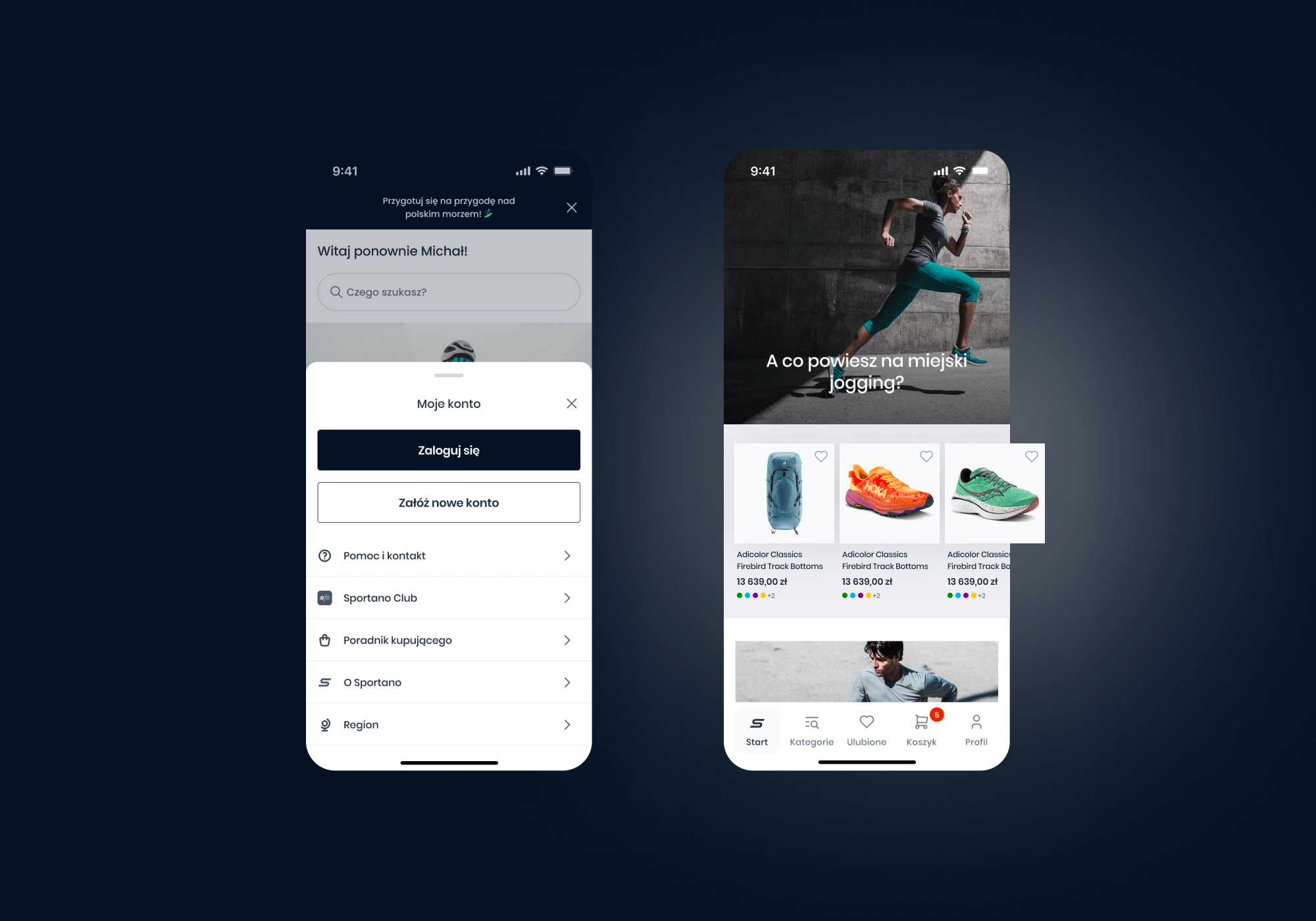
Sportano built a React Native app offering over 27,000 sports products in 60 categories. The app was downloaded 5,000 times in its first week and achieved feature parity with their web platform while maintaining a perfect 5.0 App Store rating. The client gave an 8 NPS rating for this work.
Countr: ML-Powered Social Shopping Experience
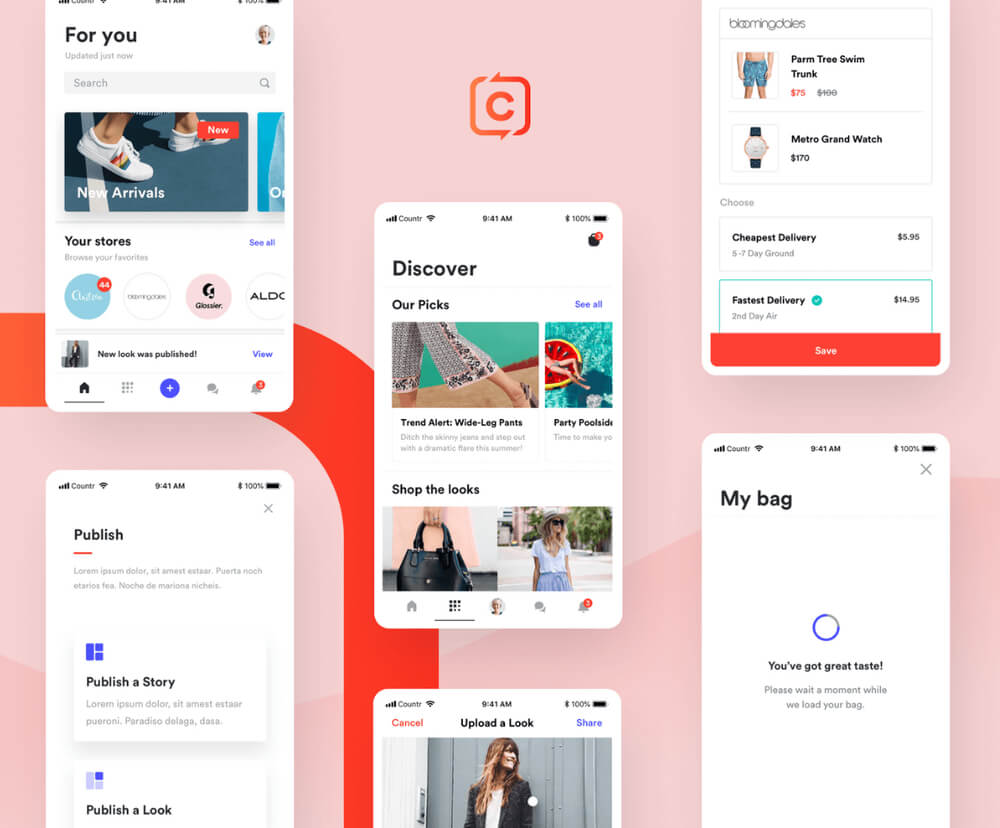
Countr implemented machine learning algorithms to curate customized product discovery feeds based on user-selected stores and style priorities. The social shopping platform enables single-cart checkout at multiple retailers and rewards creators who reach 500 followers with compensation for exclusive content. High user satisfaction led several celebrities to enter partnership discussions.
Delivery Hero: Scaling Q-Commerce Globally
Delivery Hero integrated over 150 specialized experts into their core teams to accelerate development in 70 countries under multiple brand names. The company operates more than 1,000 dark stores and partners with over 80,000 vendors. Quick commerce contributed over 10% of its Gross Merchandise Volume by 2024.

Conclusion
You now have a complete roadmap to build a shopping app that actually converts. The market chance remains strong, with the shopping apps sector expected to reach $300 billion by 2033 and mobile commerce accounting for 62% of all ecommerce revenue in 2025.
Success comes down to choosing the right tech stack and designing for mobile-first conversions. You must optimize continuously based on real user data. Begin with comprehensive research, verify your niche, and build an MVP to test your assumptions. Focus on solving real problems for your target audience rather than chasing features. The chance is massive, but execution determines everything.


