




ai-development

AI Development Services

Check how AI can help you solve key business problems.
Estimate project

AI development services built around your use case

We cover the full range of AI disciplines — so whether you need a standalone model, an integrated feature, or an end-to-end autonomous system, there is a named service for it.

Generative AI development

We build LLM-powered products — chatbots, document processing tools, content generation pipelines, and retrieval-augmented generation (RAG) systems — using models that fit your data and compliance requirements.

Agentic AI and autonomous systems

We design multi-agent architectures where AI systems plan, reason, and act across tools and APIs with minimal human intervention. Use cases include automated research workflows, code generation agents, and decision-support systems.

Custom model development

When off-the-shelf models do not fit your domain, we train, fine-tune, or distil models on your proprietary data — covering NLP, computer vision, time-series forecasting, and recommendation engines.

MLOps and model lifecycle management

We set up the infrastructure to keep models accurate and reliable in production — automated retraining pipelines, drift monitoring, experiment tracking, and CI/CD for ML.

AI integration and API development

We connect AI capabilities to your existing products and data sources through clean APIs and event-driven architectures, so AI features ship without rewriting your stack.

AI consulting and strategy

We help product and engineering leaders identify where AI creates the most value, assess technical feasibility, and produce a prioritised roadmap before a single line of code is written.

Our AI development lifecycle

We treat AI delivery as six connected stages, not a single handoff.
  1. Discovery and feasibility

    We assess your data, systems, and business goals to find where AI creates real value — and where it doesn't. This is the AI Primer Exploration Workshop.
  2. Design and solution architecture

    We define the model approach, integration points, and success metrics, then build a testable prototype. This is the AI Solution Design Sprint.
  3. Proof of concept

    We train and tune the model against your real data and validate it before you commit further budget. Our fastest PoC delivery to date ran 6 weeks, start to finish.
  4. Build and integrate

    We engineer the production application and connect the model into your existing systems — not as a bolt-on. This is the AI MVP Implementation stage.
  5. Test and validate

    We run the model against edge cases and adversarial inputs before it reaches a real user, checking accuracy, bias, and failure modes.
  6. Deploy, monitor, and retrain

    We track model performance in production, catch drift early, and retrain on a schedule — not just when something breaks.

Why seek support with AI development services?

Businesses that we'’ve worked with reported: faster problem-solving, task and process automation, higher customer satisfaction and retention. Our expertise in AI software development enables us to enhance various applications, including healthcare, chatbots, and predictive analytics. We developed AI and ML solutions for

If I had to choose two words to summarize our collaboration with Netguru it would be 'speed' and 'efficiency'. They were able to provide us with a POC within the 5 weeks deadline and now, with the AI R&D Assistant, we can complete our task in a fraction of the time.

Mark Greiner

Digital Innovation Manager at Merck KGaA Darmstadt

Advanced AI for real-life effects

COSMO Group collaborated with Netguru to create NEONAIL, a virtual try-on app for manicures. Deep learning plays a crucial role in enhancing the app's image recognition capabilities. Using advanced AI and augmented reality technologies, the app provides real-time, lifelike 3D effects of colored nails, enabling customers to test and purchase products with more confidence.

Read case study
NEONAIL lavender square preview

60% more user engagement with hyper-personalization

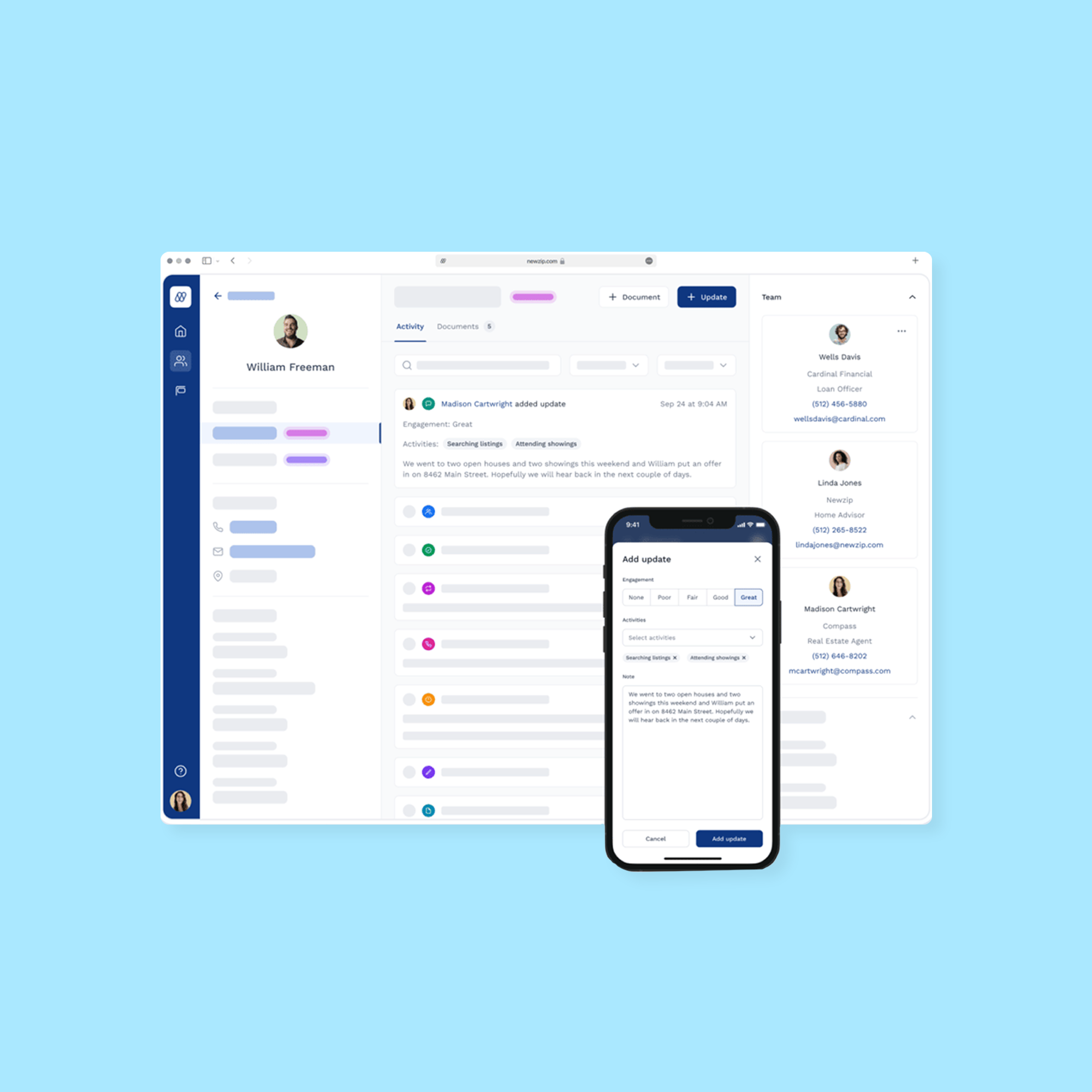
Newzip, a US real-estate-as-a-service platform, partnered with Netguru to validate whether hyper-localized content could boost customer engagement. In just six weeks, we built an AI PoC that generated personalized home-buying insights, tailored recommendations, and lender–agent matchmaking. The result: 60% higher engagement, a 10% lift in conversions, and a scalable foundation for nationwide personalization.

Read case study
Newzip blue case study preview

AI capabilities across industries

Unlike other agencies, Netguru provides the full spectrum of talent you need to achieve stable, long-term success.

Pharma and life sciences

Merck KGaA needed domain experts spending months manually identifying chemical compounds from scientific literature. The AI R&D assistant we built cut that process from 6 months to 6 hours — a 20x speed gain.

Insurance

A GPT-based AI agent proof of concept cut ARC Europe's claims-assessment time from 30 minutes to 5 — an 83% reduction — while holding up under regulatory compliance review, delivered in under 6 weeks on Microsoft Azure.

Mobility and customer service

ARC Europe's WhatsApp-based AI chatbot automates post-incident support across multiple European markets, guiding customers to the right service — a taxi, a hotel, a replacement vehicle — in as few as two to four questions.

Retail

Żabka Nano's autonomous-store system, built on the architecture we designed, now runs in more than 50 locations, giving shoppers a 24/7 checkout-free experience.

Nonprofit and public sector

During its Grand Finale fundraiser, the Great Orchestra of Christmas Charity needed to handle thousands of recurring donor questions on Messenger. Our chatbot processed 80% of them automatically, freeing volunteers for the questions that needed a human.

SaaS and sales

Fortuna.ai's sales team was losing time to manual prospecting across disconnected tools. The AI-powered Chrome extension we built generated 5x more leads within three months of kickoff.

E-commerce

NEONAIL customers were more likely to buy in physical stores, where they could check a color match in person. Our virtual try-on app combines computer vision, machine learning, and augmented reality so they can preview it online instead.

Proptech and real estate

The AI hyper-personalization engine we built for Newzip lifted user engagement by 60% — the same figure already featured elsewhere on this page.

Transform your business with advanced AI Solutions

Harness the potential of artificial intelligence to drive growth, streamline operations, and unlock new opportunities. Our ai powered solutions assist businesses in identifying opportunities and implementing effective AI technologies. Netguru'’s AI development services offer customized, cutting-edge solutions designed to meet the unique needs of your industry. From automating processes to enhancing customer engagement and enabling data-driven decisions, our expert team ensures that your AI investment delivers real, measurable results, all while adapting to the dynamic needs of your business.

What is an AI Development?

Artificial intelligence (AI) development is a rapidly growing field that involves the creation of intelligent systems capable of performing tasks that typically require human intelligence, such as learning, problem-solving, and decision-making. As a leading AI development company, we specialize in providing innovative AI solutions that can help businesses improve their operational efficiency, enhance customer experience, and drive business growth.

Our AI development services encompass a wide range of capabilities, including custom AI app development, machine learning, natural language processing, and computer vision. We understand that each business faces unique challenges, and our approach is tailored to meet those specific needs. By leveraging advanced AI technologies, we create custom AI solutions that seamlessly integrate with your existing systems, ensuring a smooth transition and maximum impact.

Whether you’re looking to automate routine tasks, gain deeper insights through data analysis, or develop AI-powered applications, our team of experts is here to guide you through every step of the AI journey. With our extensive experience and commitment to delivering cutting-edge AI solutions, we help businesses stay ahead of the competition and achieve their strategic goals.

How can AI benefit my business?

Integrating AI can revolutionize your business operations and enhance efficiency across various departments. AI-driven solutions analyze vast datasets, extracting valuable insights to inform strategic decisions and automate repetitive tasks, reducing human error and freeing up your team to focus on high-value tasks. AI can also power personalized customer experiences, boosting engagement and satisfaction In a competitive landscape, AI empowers you to remain agile and adaptive, seizing opportunities and gaining a competitive edge.

What types of AI solutions does Netguru offer?

Netguru specializes in AI development services across various industries. Our team crafts a wide range of tailored solutions to meet specific business needs, utilizing Natural Language Processing, Machine Learning, and more. Our expertise includes:
  • Intelligent Chatbots: Enhance customer interactions and streamline support with AI-powered chatbots.
  • Image Recognition Systems: Automate visual tasks and gain deeper insights from images.
  • Personalized Recommendation Engines: Improve customer satisfaction and drive sales with recommendations tailored to individual preferences.
  • Predictive Models: Forecast trends, anticipate customer behavior, and make data-driven decisions.
  • Sentiment Analysis Tools: Gauge customer opinions and feedback to refine your strategies.

What is the process for developing an AI solution?

Netguru's approach prioritizes understanding your business goals and ensuring solutions are designed to achieve specific objectives. The typical process involves:
  • Discovery: Analyzing your business goals, challenges, and potential to identify opportunities and outline the development course.
  • Design: Finalizing features, technologies, and creating a testable prototype.
  • Proof of Concept (POC): Training and tuning AI algorithms, rigorously testing to ensure viability.
  • Implementation: Engineering the AI application, integrating the ML model, and launching in the desired environment.

What factors influence the cost of developing an AI solution?

The cost of AI development varies depending on several factors:
  • Complexity of the AI model: More complex models require more data and expertise.
  • Data quality and volume: Acquiring and preparing high-quality data can be expensive.
  • Development team expertise: Specialized AI developers come at a higher cost but deliver faster, more effective solutions.
  • App features: The number and complexity of features impact development costs.
  • Deployment and maintenance: Ongoing costs include cloud platform fees, updates, and model retraining.

How long does it take to build an AI-powered product?

Building an AI-based product typically takes 4-9 months, but the timeline can vary based on factors such as:
  • Problem complexity: Intricate problems may demand more development time.
  • Data availability and quality: Well-organized, high-quality data streamlines development.
  • AI team experience: Experienced teams deliver faster results.
  • Choice of AI algorithm: Complex algorithms can extend development time.
  • Team size: Larger teams may accelerate progress but increase coordination complexity.
  • Integration with third-party services: External API integrations add to the timeline.
  • Testing and evaluation: Thorough testing ensures quality and can extend the timeline.

How do you control for hallucinations in generative AI?

We ground generative AI systems in your own data through retrieval-augmented generation, so answers come from your product catalog, policy documents, or knowledge base instead of the model's memory. Chatguru, our open-source RAG chatbot framework, is built specifically to prevent this failure mode. We test outputs against known-good answers before launch and keep tracing them in production, so a wrong answer gets caught instead of repeated.

How do you secure data in an AI implementation?

Data access follows least-privilege by default: a model or agent only reaches the systems and records it needs for the task in front of it. Our development processes are ISO 27001-certified, GDPR-compliant, and audited against the OWASP Top 10 — the same standards that apply to every system we build, AI or not.

How do you handle regulatory compliance in AI projects?

We map data residency, audit trails, and explainability requirements to your industry's regulations before a line of code is written, not after the system is live. Our AI agent proof of concept for ARC Europe, an insurer, was built to hold up under regulatory compliance review from day one — the same approach applies to any regulated industry we work in.

Get in touch with our expert

Let's see how we can help you streamline your processes and delight your customers.

Barbara Rybicka

Commercial Director

Click for the details

Technologies powering Netguru's AI development

Foundation models and connectors

We build against OpenAI, Anthropic, and Azure OpenAI connectors, so the model choice follows the use case instead of locking you into one vendor.

Agentic AI and RAG

LangChain handles orchestration; Chatguru, our own open-source RAG chatbot framework, grounds every answer in your product catalog, policy documents, or knowledge base instead of the model's memory.

Applied ML infrastructure

AWS SageMaker covers training, hosting, and versioning for custom models at scale.

Evaluation and observability

Promptfoo tests prompts and outputs automatically before release; Langfuse traces what a model did and why, in production, not just in a demo.

Data and MLOps pipeline

  1. Data storage and preprocessing

    Structured, unstructured, or a mix — we clean and structure the data before a model sees it.
  2. Data annotation

    Labeled datasets for supervised training, sized to the task rather than over-collected.
  3. Algorithm and model development

    From off-the-shelf foundation models to custom architectures, matched to the problem's actual complexity.
  4. Model training and evaluation

    Benchmarked against your data, not a generic public dataset.
  5. Deployment and integration

    The model connects into your existing systems from day one — not as a standalone tool bolted on afterward.
  6. Monitoring and logging

    Every model in production is watched, not shipped and forgotten.
  7. MLOps and workflow orchestration

    Retraining, versioning, and rollback are built in from the start, not added after the first failure.