



Full Stack Development Services

One team for the front end, back end, database, API integration and DevOps of your web application, from discovery to production support. Rated 4.9 out of 5 by our clients and ISO 27001 certified.

Trusted by

Estimate your project

Full stack development services across every layer

Six layers, one accountable team, and each service links to the team that delivers it.

Full stack development backed by real delivery

17+

Years in the market

Building web and mobile products since 2008.

3,500+

Projects delivered

From MVPs to enterprise platforms.

900+

Clients worldwide

Product teams in 50+ countries.

4.9/5

Average client rating

How our clients rate their work with Netguru.

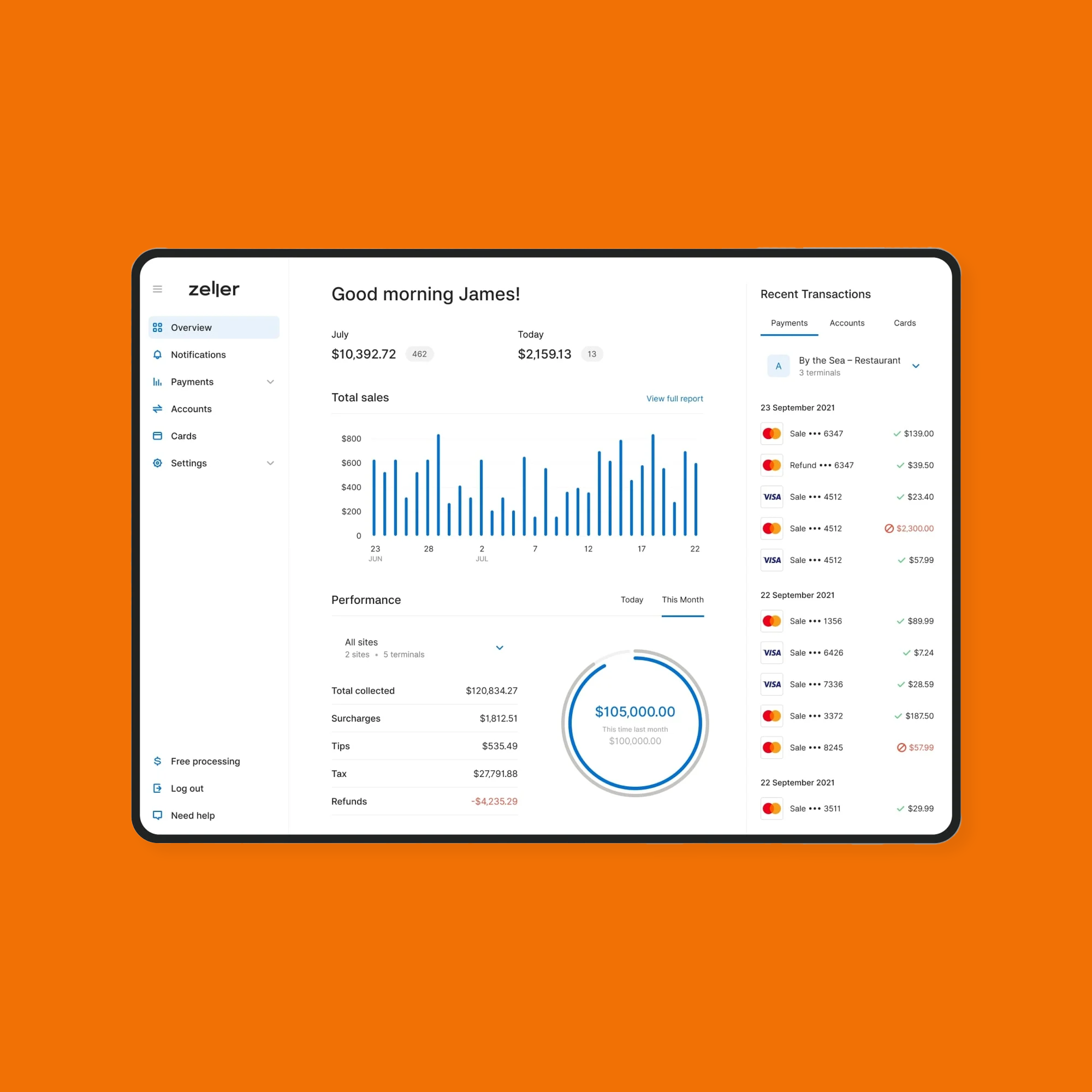
Zeller: a full-stack B2B fintech platform launched in 12 months

Zeller builds payment and finance tools for business owners and needed more capacity ahead of its launch.

Netguru extended Zeller's product and engineering teams across design, web and the merchant experience. The platform now serves 85,000+ businesses, and Zeller reached a USD 1B valuation after launch.

  • 12

    Months to launch

  • 85,000+

    Businesses served

  • 1B

    USD valuation after launch

Netguru has been a great extension to Zeller’s wider delivery team, and shares our high standards for quality and speed of execution.

James Vatiliotis

Product Lead at Zeller

Read case study
Zeller orange square preview

How a full stack project runs from discovery to launch

Six phases, each with what you receive.

  1. Discovery

    Workshops on goals, user roles, integrations and existing systems. You receive a scoped backlog, an architecture outline and an estimate.
  2. Design and architecture

    Clickable prototypes while engineers choose the stack and draw the data model. You receive approved designs and a technical plan.
  3. Build in increments

    Two-week sprints with a demo at the end of each. You receive working increments on a staging environment every sprint.
  4. Testing and hardening

    Automated tests, manual QA, an OWASP Top 10 security review and load checks on the busiest flows. You receive a tested release candidate.
  5. Launch

    Deployment through the CI/CD pipeline, data migration and monitoring during release. You receive a live application and a rollback plan.
  6. Handover and support

    A walkthrough of the codebase, runbooks and infrastructure. You receive documentation, code ownership and the support terms in your contract.

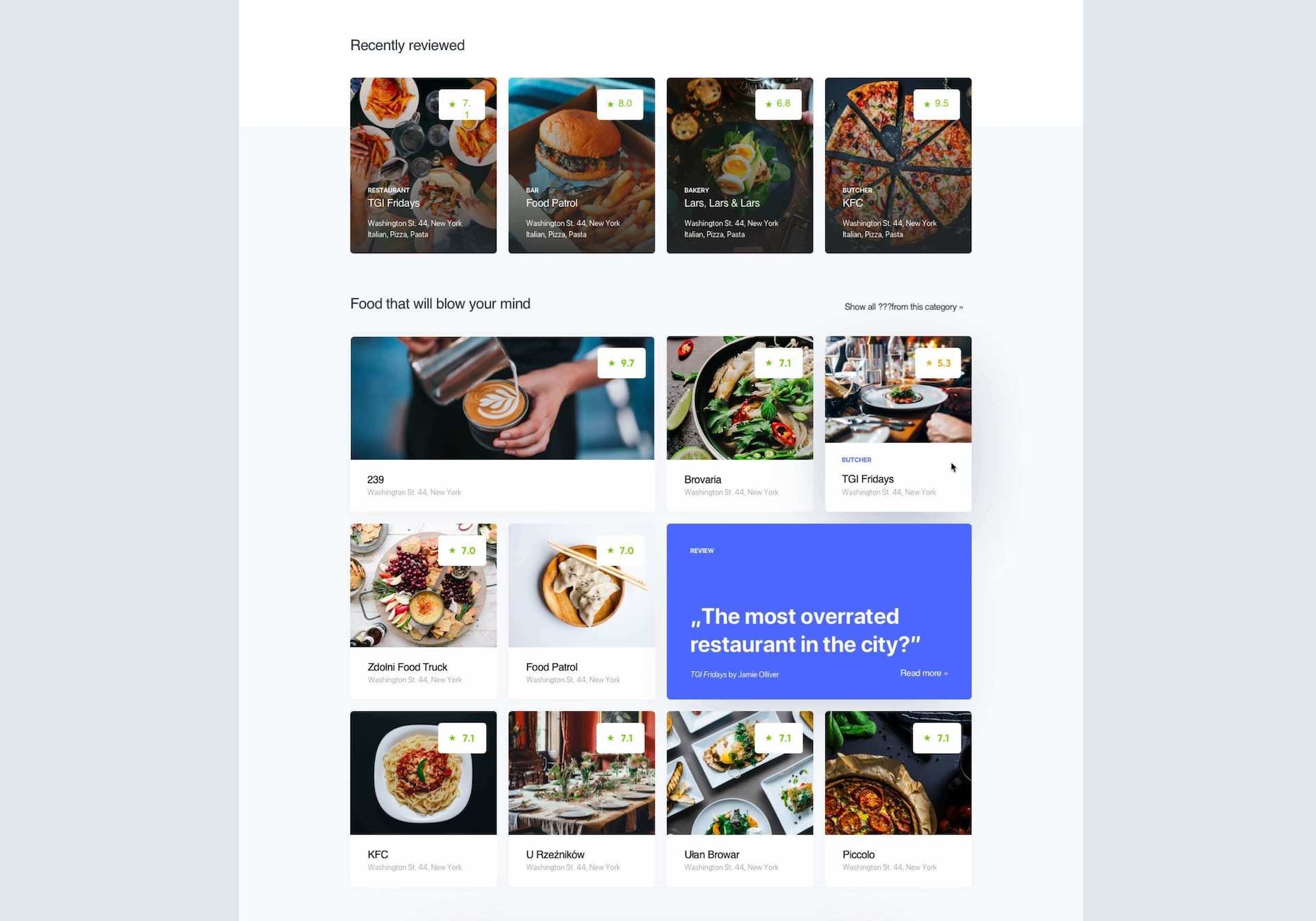
Foodetective: a B2B platform and B2C app on one database of 1.89M restaurants

Foodetective wanted restaurant owners to run their business from one app, and diners to find places through a search they can trust.

Over 28 months, Netguru built both products on a shared database of proven food businesses. The platform now has 150,000+ users across 91 cities.

  • 1.89M

    Restaurants in the database

  • 150,000+

    Users

  • 28

    Months of work

We had an initial idea worked out for months, but after a workshop that we had together I got surprised, because Netguru’s sketches were a hundred times better.

Andrea Tassistro

Founder & CEO

Read case study
Foodetective case study 2-2

Engineering standards behind every release

The practices behind every full stack build, named so you can compare providers.

Code review and testing

Peer review on every pull request, and Jest, Pytest or Playwright tests on each commit, with coverage reports at every release.

Performance

Core Web Vitals budgets, caching, database indexes and slow-query profiling on the journeys that carry your revenue.

Accessibility

WCAG 2.2 checks on key journeys, reviewed by our IAAP-certified accessibility specialist.

Security

Role-based access, secrets management and dependency scanning under Netguru's ISO 27001-certified processes, with GDPR data handling.

Infrastructure as code

GitHub Actions or GitLab CI with Terraform, so every environment can be rebuilt and every release leaves an audit trail.

What our clients say

Rated 4.9 out of 5 by our clients.

Netguru's understanding of our product vision and technical excellence has played a key role in expanding Booksy's B2B ecosystem. Together, we've transformed complex operational needs into simple, scalable solutions that truly support our business clients.

Konrad Howard

Co-Founder & Chief Innovation Officer, Booksy

It's a pleasure working with the entire team at Netguru. I'm especially happy that the IT support teams, both ours and Netguru's, collaborate so smoothly that it feels like a single team.

Kasparas Kralikas

Engineering Manager, Vinted Go

If I had another project, I would directly start it with Netguru and not look for other providers.

Dr. Sayf Al-Sefou

CTO, CRIF Bürgel GmbH

Why one full stack development team

What changes when one team owns every layer of your software, compared with separate front-end and back-end vendors.

Fewer handovers

A feature that touches the interface, the API and the database moves through one team and one backlog.

One accountable lead

A single tech lead answers for architecture, delivery and quality across the whole application.

Consistent architecture

Data models, API contracts and interface components are designed together, so they fit when requirements change.

Web, mobile and PWA from one team

The same developers can extend a web application into a progressive web app or connect it to native mobile apps.

How you can work with us

Three ways to start. Each one comes with the same delivery standards and a named delivery lead.

Fixed-scope project

A defined scope, timeline and budget, agreed after a paid discovery phase. It suits a first release or a well-specified module.

Dedicated team

A cross-functional team of front-end and back-end engineers, a designer, QA and a delivery lead that owns a roadmap with you sprint by sprint, under time and materials.

Team extension

Senior full stack developers who join your in-house team, follow your process and tools, and are matched to the skills your roadmap needs.

Full stack development services: your questions answered

What are full stack development services?

They cover every layer of a web application: front end, back end, database, API integration and deployment, delivered by one team. The alternative is separate front-end and back-end vendors, which adds handovers; one team gives you a single point of accountability.

What drives the cost of full stack development?

Scope and the number of user roles, the number and quality of integrations, design depth, compliance and security needs, and team shape. A discovery phase turns these drivers into an estimate. Our guide to web development services explains how each one moves the budget.

Fixed price, time and materials or a dedicated team: which fits?

Fixed price suits a well-defined scope, time and materials suits a scope that will change, and a dedicated team suits a product you will keep developing. We usually recommend a discovery phase first, then time and materials or a dedicated team for products still learning from users.

How long does a full stack project take?

It depends on scope, the number of integrations, how quickly your team gives feedback and how many approvals sit in the path. Discovery ends with a phased plan, so you can see what a first release contains and when the next increments follow.

Which tech stack should a full stack project use?

Our default is React or Next.js on the front end with Node.js and PostgreSQL behind it. Ruby on Rails fits products that need to move fast with a small team, and Python with Django fits data-heavy products and anything close to machine learning. When your estate runs on .NET or Java, we integrate with it through APIs. See our Python development services.

What does a full stack developer do?

A full stack developer works across the front end, the back end and the database: building interfaces, writing APIs and business logic, designing data models and shipping through CI/CD. On larger products, full stack developers work alongside specialists in design, QA and DevOps.

How much does it cost to hire a full stack developer?

It depends on seniority, the technologies your product uses, the length of the engagement and whether you hire one developer or a team with a tech lead and QA. For team extension we propose profiles and terms after a short scoping call.

How do you choose a full stack development company?

Check five things before you shortlist:

  • code samples and a case study close to your product;
  • a structured, paid discovery phase;
  • the seniority of the people who will build your product;
  • code ownership and IP assignment in the contract;
  • written support terms after launch.

A security certification, such as ISO 27001, belongs on the list too.

Is full stack development right for startups?

Yes, because one team can ship a first version without coordinating several vendors. Keep the first release to one core user flow and add roles and integrations after real usage; if the product depends on specialist data or ML work, plan for that expertise early.

Will AI replace full stack developers?

No. AI coding assistants speed up boilerplate, tests and documentation, and our developers use them with human review on every change. Choosing an architecture, weighing trade-offs and owning a production system still need engineers who understand the whole application.

Full stack team or freelancers?

A full stack team gives you continuity, peer code review and one party answerable for the whole product. Freelancers suit well-bounded tasks and cost less to start, but knowledge of your codebase leaves with them.

When is a full stack team the wrong choice?

When the core of the work is specialist data engineering, native mobile apps, heavy machine learning or systems built for extreme load. We pair a full stack team with those specialists when the web application is only part of the product.

Talk to our full stack development expert

Tell us about your application, preferred stack and engagement model, and we will talk through the options.

Barbara Rybicka

Commercial Director

Click for the details