
Custom React Development: Top Solutions From High-Traffic Apps


Contents
High-traffic applications demand solutions that can handle millions of users without breaking down.
ReactJS delivers this reliability through its virtual DOM, which significantly boosts performance when applications need to scale with growing business demands. The beauty of custom React development lies in building components once and reusing them across entire applications—eliminating the code duplication that slows down most development teams.
Custom React component development shines brightest under pressure. When you modify a component, those changes ripple through every instance automatically, keeping your application consistent while reducing the effort needed for updates. This approach has changed how businesses think about web applications, enabling teams to build modular codebases that actually stay maintainable as they grow.
What makes React JS custom component development particularly powerful? Teams can encapsulate complex logic, manage state efficiently, and streamline functionality in ways that weren't feasible with older approaches. We've witnessed this pattern across numerous React application development development projects where custom hooks transform messy, repetitive logic into elegant, reusable solutions for API calls and state management.
This article examines battle-tested solutions from applications that handle serious traffic loads. We'll walk through component architecture patterns that actually work under pressure, performance optimization techniques that prevent slowdowns, state management approaches that scale, and developer experience improvements that speed up delivery. These insights come from real-world implementations—not theoretical concepts—that can reshape how you approach your next custom React project.
Component Architecture Patterns in High-Traffic React Apps
Effective component architecture determines whether your React application will thrive or collapse under heavy traffic. The patterns that work focus on three core principles: separation of concerns, reusability, and maintainability. These aren't just theoretical concepts—they're the foundation that keeps applications running smoothly when user numbers spike.
Reusable UI Blocks in Moonfare and Babbel Dashboards
React's component-based structure excels at creating reusable UI blocks that maintain consistency across complex applications. Moonfare's fintech platform demonstrates this approach perfectly. Their modular components make maintenance straightforward because developers can isolate and fix issues in specific parts without touching the entire codebase.
The real advantage becomes clear when bugs appear. Instead of hunting through thousands of lines of code, developers can pinpoint problems quickly and apply fixes that automatically propagate everywhere the component appears.
Babbel's B2B admin dashboard takes this concept further by separating view logic from business logic. Rather than stuffing everything into monolithic components, their development team extracts pure function components that depend solely on domain object arrays. This separation makes components significantly easier to test and reuse across different parts of the application, cutting development time for new features.
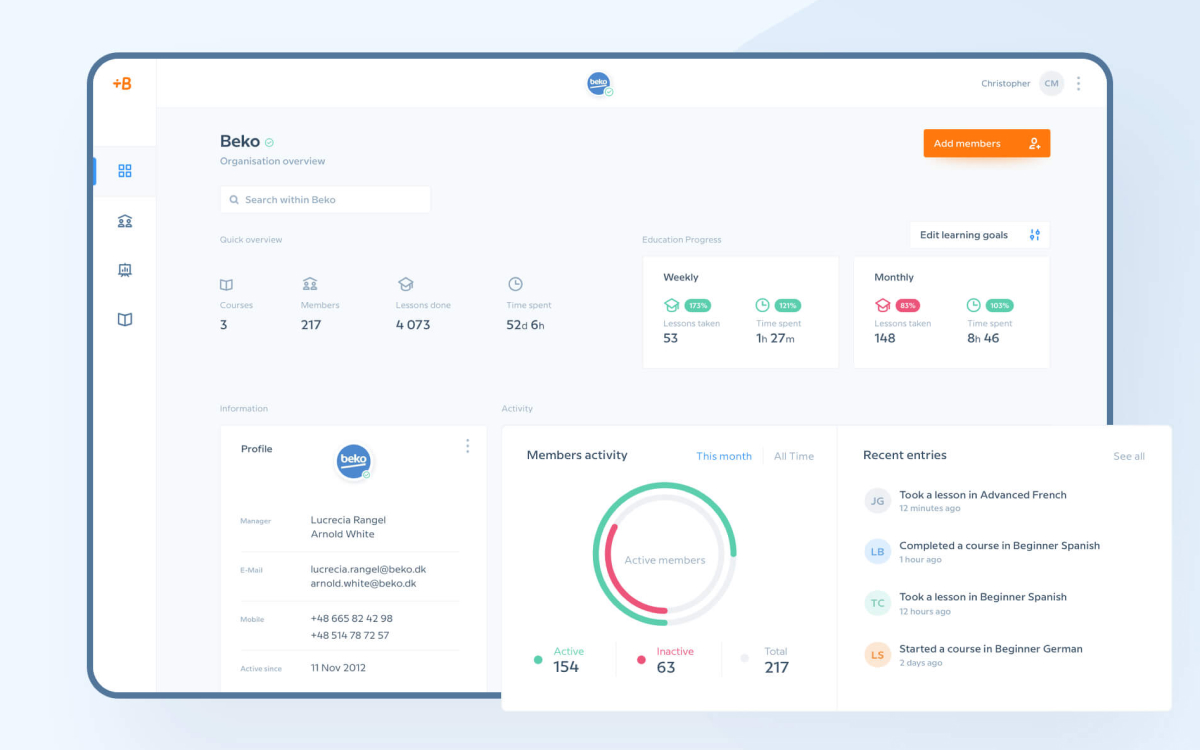
Dynamic Form Components in Aegon and ADN Platforms
JSON schema-driven forms have transformed how complex forms get built in React applications. Aegon's web platform showcases this approach by combining React Hook Form with third-party UI frameworks to generate interactive elements from simple JSON configurations.
The flexibility this provides is remarkable. Developers can:
- Define field structures, labels, and validation rules dynamically
- Update forms by modifying JSON schemas without code changes
- Ensure consistency across different form implementations
Anime Digital Network's streaming platform proves this pattern works under pressure. Their form implementation separates logic from rendering, allowing the platform to handle traffic spikes without performance issues. When thousands of users submit forms simultaneously, the architecture holds up because the separation prevents bottlenecks.

Custom Layout Systems in Ticket Zone and Herdius
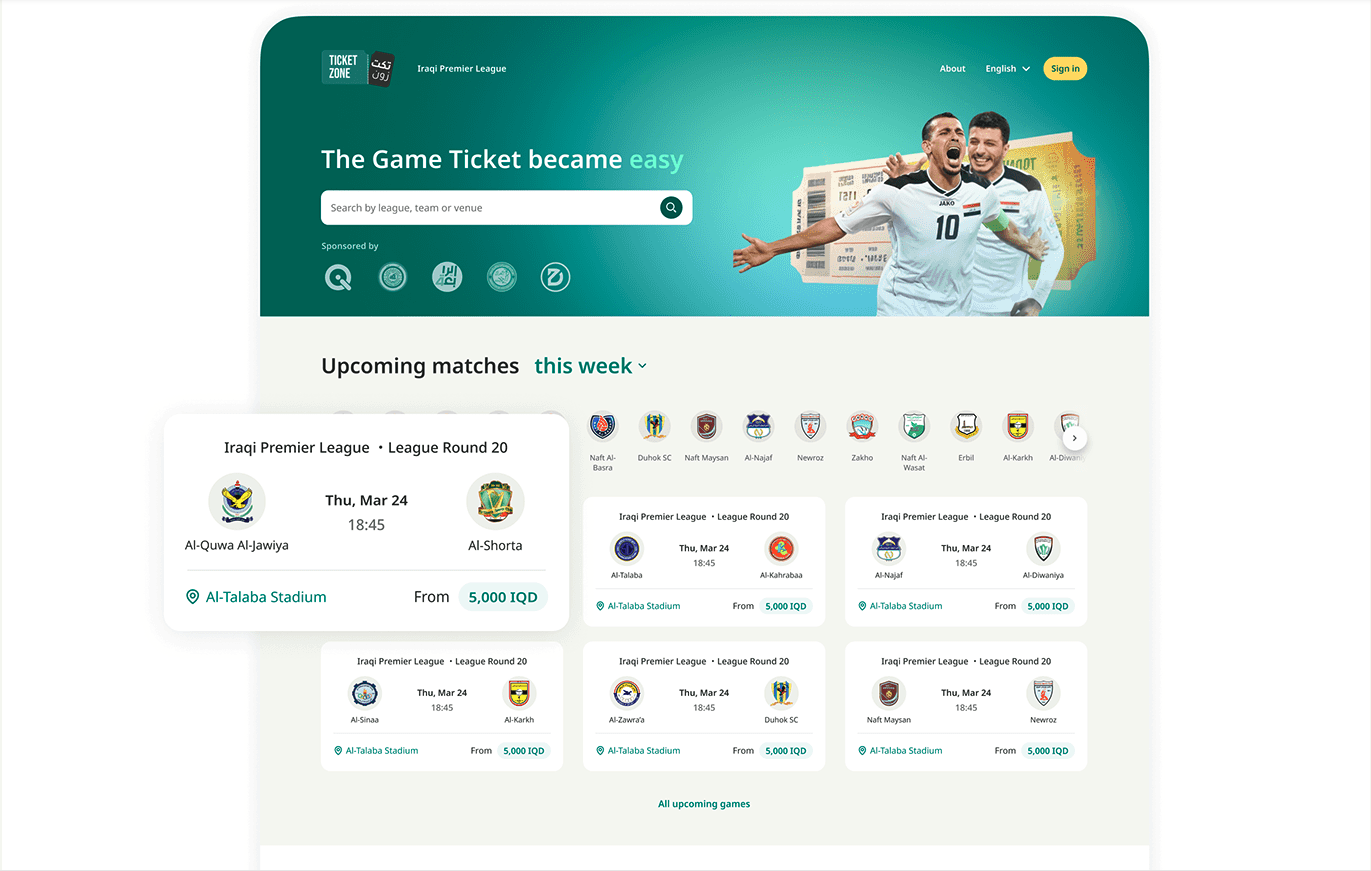
Applications with unique user experience requirements need flexible layout systems. The Ticket Zone web application employs CSS Grid-based layouts with defined template areas for headers, main content, and footers. This creates a consistent visual framework while accommodating content-specific needs.
Herdius demonstrates how layout components can transform complex information into clear, digestible narratives. Their approach relies on component composition—building sophisticated UI elements by combining simpler, reusable pieces. This pattern delivers two critical benefits: code reusability and easier testing. As the application grows, the modular approach keeps the codebase maintainable rather than becoming an unwieldy mess.

The key insight from these implementations? Start with simple, focused components and compose them into more complex structures. This approach scales naturally as your application grows.
Performance Optimization Techniques for Custom React Development
Performance optimization determines whether your React application thrives or crashes under real-world pressure. Applications that handle serious traffic loads need rendering efficiency that doesn't buckle when user numbers spike.
Virtual DOM Diffing in Anime Digital Network
Anime Digital Network's streaming platform demonstrates why React's virtual DOM diffing algorithm matters for high-traffic applications. Direct DOM manipulation becomes expensive quickly—React solves this by maintaining a lightweight JavaScript representation of the actual DOM. The virtual DOM enables React to implement an efficient O(n) algorithm instead of the O(n³) operations required for direct tree comparisons.
ADN's platform proved this approach during peak viewing periods. React's reconciliation process operates through three phases: diffing identifies changes, reconciliation determines necessary updates, and commit applies changes to the real DOM. The platform batches multiple DOM updates together, reducing browser reflow cycles and delivering smoother playback experiences even when demand surges.
Code Splitting and Lazy Loading in Babbel B2B
Bundle size can kill your application before users even see it. Babbel's B2B dashboard addresses this challenge through code splitting and lazy loading, dividing code into smaller chunks that load only when needed.
Dynamic imports make this possible in the Babbel platform:
const Dashboard = React.lazy(() => import('./pages/Dashboard'));Suspense components display fallback content until lazy-loaded components are ready. This technique reduced initial bundle sizes by up to 60% in real-world implementations. For Babbel's admin dashboard, users gained faster access to critical functionality even during traffic spikes.
Memoization Strategies in CertForward and Know Hotel App
Unnecessary re-renders waste computational resources that high-traffic applications can't afford. CertForward's blockchain platform and The Know Hotel review app prevent this through memoization via React.memo, useMemo, and useCallback hooks.
Memoization stores and reuses previously calculated results. The Know Hotel app benefits particularly from this approach when handling expensive calculations for user reviews and ratings data. The technique maintains referential equality between renders, stopping cascading re-renders from spreading throughout component trees.
SSR with Next.js in UBS Demo and Vital Voices
Server-side rendering changes the game for applications that need immediate content visibility. UBS Interactive Demo and Vital Voices platforms use Next.js to generate complete HTML content server-side before sending it to browsers, ensuring users see content without waiting for JavaScript execution.
This approach delivers two critical advantages: faster initial load times and improved SEO. The Vital Voices platform prioritized accessibility and smooth experiences—SSR ensures pre-rendered HTML appears immediately for users while search engines can properly index the content. Their implementation uses getServerSideProps functions to fetch necessary data on each request, generating complete pages before delivery.
Scalability and State Management in React JS Custom Component Development
State management becomes the critical bottleneck as React applications scale beyond simple use cases. The challenge isn't just moving data between components—it's maintaining predictable data flow when dozens of components need to share and update the same information simultaneously.
Redux and Context API in Fintech Risk Platform
The Fintech Risk Platform team faced a common dilemma: choosing between Redux's robust state management and Context API's simplicity. Redux delivers a centralized store with predictable state transitions, particularly valuable for applications managing complex data flows. Their implementation utilizes Redux's three core elements—Store (holding application state), Actions (defining state changes), and Reducers (pure functions transforming state)—to coordinate risk assessment data across multiple dashboard views.
Context API serves a different purpose within the same platform. For straightforward state-sharing scenarios, it provides an elegant solution without Redux's boilerplate overhead. This hybrid approach allows the development team to optimize performance while keeping code manageable.
Modular State Handling in AI-Powered Sales Advisor
The AI-Powered Sales Advisor takes a domain-driven approach to state management that improves long-term maintainability. Rather than cramming all state logic into a single reducer, the application separates concerns by functionality, creating cleaner separation between different parts of the system.
// Modular reducer for AI prediction state
const aiReducer = (state = initialState, action) => {
 switch (action.type) {
 case 'FETCH_PREDICTION_START':
 return { ...state, loading: true };
 case 'FETCH_PREDICTION_SUCCESS':
 return { ...state, loading: false, prediction: action.payload };
 default:
 return state;
 }
};
This modular pattern enables the AI advisor to handle complex prediction data while keeping individual components focused on their specific responsibilities. Each domain manages its own state logic independently, reducing the risk of unintended side effects across the application.
LocalStorage and SessionStorage in Posiłek dla Seniora
Browser storage becomes essential when applications need to maintain user preferences across sessions. The Posiłek dla Seniora web app demonstrates how browser storage APIs can be abstracted into reusable hooks that simplify persistent data management:
const useLocalStorage = (key, initialValue) => {
 const [value, setValue] = useState(() => {
 const storedValue = localStorage.getItem(key);
 return storedValue ? JSON.parse(storedValue) : initialValue;
 });

 useEffect(() => {
 localStorage.setItem(key, JSON.stringify(value));
 }, [key, value]);

 return [value, setValue];
};
This custom hook approach enables persistent storage of user preferences between browser sessions. Users experience continuity even after closing and reopening the application, which particularly matters for applications serving older demographics who may not expect to reconfigure settings repeatedly.
Handling Real-Time Data in Petro Ninja and Hive Apps
Real-time data presents unique state management challenges that traditional approaches struggle to address. Petro Ninja and Hive apps handle continuously updating information streams that would overwhelm standard state management patterns. Their implementations combine traditional state management with reactive patterns, using optimized update strategies to prevent performance degradation when processing high-frequency data changes.
Developer Experience and Tooling in Custom React Development Services
The right tools can determine whether your React development team ships fast or gets stuck debugging for weeks. Quality developer tools don't just make workflows smoother—they fundamentally change how productive teams can be throughout the entire development cycle.
Hot Module Replacement in Shine Well-Being App
Hot Module Replacement (HMR) has become essential for the Shine Well-Being app development team. Traditional development approaches force developers to refresh pages constantly, losing form data and component state with every change. HMR updates modules at runtime while keeping component state intact.
For Shine's development team, this means modifying styling or functionality and seeing results instantly without losing their place in complex user flows. The technique eliminated the frustration of re-entering test data after each code change, resulting in significantly faster iteration cycles.
React DevTools and Debugging in Prospero.AI
Prospero.AI's team treats React Developer Tools as their primary debugging weapon. This browser extension reveals component hierarchies, props, state, and hooks in ways that console.log statements simply can't match. The Components tab lets developers inspect and modify properties in real-time, making it possible to test different data scenarios without writing additional code.
The Profiler tab proved particularly valuable for Prospero.AI's performance optimization efforts. The team records rendering times and identifies bottlenecks within component trees, helping them spot expensive operations before they impact users.
Testing with Jest and React Testing Library in eRecruiter
eRecruiter's testing strategy combines Jest alongside React Testing Library for comprehensive coverage that actually catches real problems. Jest handles test running while React Testing Library provides DOM testing utilities focused on user interactions rather than implementation details. This approach enables:
- Component snapshot testing to catch unexpected UI changes
- DOM testing that verifies actual user interactions
- Asynchronous testing for API operations and data loading
The key advantage? Tests break when user experiences break, not when internal code structure changes.
CI/CD Integration for React Apps at Netguru
Netguru's automated pipelines remove the manual work from React deployments. Their system builds, tests, and deploys applications automatically when developers push to Git. The workflow consists of four core steps: building and testing the React application, uploading compiled assets to servers, restarting applications, and notifying team members of deployment status.
GitHub Actions powers their continuous integration approach, automating the entire software development lifecycle from source code to production. This setup prevents the common scenario where code works locally but fails in production.

Conclusion
These battle-tested React solutions reveal why high-traffic applications across industries consistently choose this framework for their most demanding projects. Real-world implementations from fintech platforms to streaming services demonstrate React's ability to handle complex user experiences without compromising performance.
Component architecture patterns establish the foundation for applications that actually scale. Moonfare's modular approach and Babbel's separation of concerns show how thoughtful design reduces maintenance overhead while accelerating feature development. Dynamic form implementations at Aegon prove that JSON-driven approaches can simplify even the most complex user interactions during peak traffic periods.
Performance optimization becomes critical as user bases grow. The virtual DOM diffing techniques deployed at Anime Digital Network prevent the rendering bottlenecks that plague traditional DOM manipulation. Code splitting strategies at Babbel achieved 60% bundle size reductions—directly translating to faster load times when every millisecond matters.
State management decisions determine whether applications remain maintainable as complexity increases. The hybrid Redux and Context API approach at the fintech risk platform demonstrates how teams can balance performance with code simplicity. Custom storage hooks at Posiłek dla Seniora create persistent user experiences that survive browser restarts without performance penalties.
Developer tooling accelerates delivery when implemented correctly. Hot Module Replacement at Shine eliminates the friction of constant page refreshes, while React DevTools enables the Prospero.AI team to debug complex component hierarchies efficiently. Testing strategies at eRecruiter with Jest and React Testing Library catch issues before they reach production.
What does this mean for your next React project? These patterns provide proven blueprints for building applications that handle serious traffic loads. Success comes from combining smart architecture decisions with performance-first optimization techniques, supported by tooling that enhances rather than hinders developer productivity.
The applications we've examined—from UBS interactive demos to Vital Voices community platforms—share a common thread: they prioritize user experience while maintaining code quality that teams can actually work with long-term. That balance makes the difference between applications that scale gracefully and those that buckle under pressure.
Key Takeaways
These battle-tested React solutions from high-traffic applications reveal proven strategies for building scalable, performant web applications that handle demanding user loads effectively.
• Component architecture drives scalability: Reusable UI blocks and modular design patterns reduce development time by up to 60% while maintaining consistency across complex applications.
• Performance optimization is non-negotiable: Virtual DOM diffing, code splitting, and memoization strategies prevent performance degradation during peak traffic periods in production apps.
• Smart state management scales with complexity: Hybrid approaches combining Redux for complex flows and Context API for simple sharing create maintainable data architectures.
• Developer tooling accelerates delivery: Hot Module Replacement, React DevTools, and automated CI/CD pipelines streamline workflows and improve code quality significantly.
• Real-world implementations prove React's versatility: From fintech platforms to streaming services, these patterns demonstrate React's ability to handle diverse, high-demand use cases effectively.
The key to successful custom React development lies in combining thoughtful architecture decisions with performance-first optimization techniques, supported by robust tooling that enhances developer productivity throughout the entire development lifecycle.
FAQs
Is React suitable for building large-scale applications?
Yes, React is well-suited for large-scale applications. Its component-based architecture promotes modularity and reusability, making it easier to build and maintain complex applications. React's extensive ecosystem of third-party libraries and tools further enhances its capabilities for handling large-scale projects.
How can I optimize my React application for high traffic?
To optimize a React application for high traffic, implement techniques like code splitting to load only necessary code, use virtual DOM diffing for efficient updates, apply memoization strategies to prevent unnecessary re-renders, and consider server-side rendering for faster initial load times. These methods can significantly improve performance during peak traffic periods.
What are the key elements of a scalable React application architecture?
A scalable React application architecture includes a clear project structure, efficient state management (using Redux or Context API as appropriate), code splitting for optimized loading, and comprehensive testing. Additionally, implementing reusable UI components and following modular design patterns can enhance maintainability and reduce development time.
How does React handle real-time data in high-traffic applications?
React can handle real-time data in high-traffic applications through optimized state updates and reactive patterns. This approach prevents performance issues when dealing with high-frequency data changes. Implementing efficient state management solutions and using appropriate hooks can help manage continuously updating data effectively.
What developer tools are essential for building high-performance React applications?
Essential developer tools for building high-performance React applications include Hot Module Replacement for faster development iterations, React DevTools for advanced debugging and performance profiling, testing frameworks like Jest and React Testing Library for ensuring code quality, and CI/CD integration for automated building, testing, and deployment processes.


