
Web Development Services: Types, Costs, and How to Choose the Right One


Contents
Web development services cover every technical discipline required to plan, build, and maintain a web presence, from pixel-perfect interfaces to distributed backend systems. With nearly 1.17 billion websites live in 2026 and retail ecommerce projected to exceed $4.8 trillion, picking the wrong service type wastes budget and delays growth (Siteefy (Netcraft Web Server Survey) & Market.us). This guide defines each service category, explains when to use it, and gives you a decision framework so you can brief a provider with confidence.
What Are Web Development Services?
Web development services cover everything from UX wireframes and visual design through frontend code, backend APIs, database architecture, and server infrastructure. Hiring for one layer without the others is the most common reason a project ships late or requires a full rebuild within 18 months (Rivera et al. (2016) summarized in arXiv preprint "Activity delay patterns in project networks").
After reviewing 500+ delivered projects across fintech, ecommerce, and SaaS, our team at Netguru consistently sees the same gap: business decisions treat web design and web development as interchangeable. They are not.
Web design produces the visual and interaction layer, layout, typography, graphic image systems, responsive breakpoints. Web development builds the functional layer, the code that makes those designs work, the APIs that move data, the infrastructure that keeps it available. A website that looks right but performs poorly will still fail; for example, 53% of mobile visitors will leave a page if it takes more than three seconds to load (Netguru research, Improve Your Web App Performance: 11 Tips for 2025) according to Google research on load abandonment.
Modern engagements rarely stay in one lane for any company. A typical SaaS platform rebuild combines full-stack web development (frontend + backend in one delivery stream), API-first development so the same data layer can serve web, mobile, and third-party integrations, progressive web apps for offline capability and app-store-free distribution, and Core Web Vitals optimisation to meet Google's LCP, CLS, and INP thresholds. WordPress and other CMS-led builds follow a different path but still touch every layer once custom functionality enters scope. Selecting the right web development tools and workflows is equally critical to ensuring each of these layers integrates efficiently across the delivery pipeline.
The nine service types most projects draw from include content creation, social media, and design.
| Service type | What it delivers |
|---|---|
| Custom web development | custom frontend/backend built to your data model and workflows |
| Web design | UX research, visual design, responsive design systems |
| Full-stack web development | End-to-end delivery across client, server, and data tiers |
| API-first development | Headless, integration-ready backends decoupled from any single frontend |
| Progressive web apps | Installable, offline-capable web experiences without native app overhead |
| SaaS platform engineering | Multi-tenant architecture, billing integration, usage-based access control |
| CMS / WordPress development | Content-managed sites with custom plugin or theme development |
| Core Web Vitals optimisation | Performance auditing, code splitting, image pipeline improvements |
| Maintenance and support | Post-launch monitoring, dependency updates, incident response |
Most project briefs land across three or four of these rows simultaneously. The sections below map each type to the architectural decisions and tradeoffs your team will face.
Frontend Development Services
Frontend development services cover the full delivery chain from design system to deployed code: responsive layouts, component libraries, performance budgets, and the Core Web Vitals scores that determine whether Google ranks your page or buries it. Selecting the right essential backend development tools is equally critical, as the APIs and server-side services powering your frontend directly affect the performance budgets and Core Web Vitals scores that determine whether Google ranks your page or buries it.
What frontend services actually include
A frontend engagement typically spans four workstreams: visual design (design system, typography, component library), responsive HTML/CSS/JavaScript implementation, performance engineering (bundle optimization, lazy loading, image compression), and accessibility compliance (WCAG 2.1 AA minimum) (World Wide Web Consortium (W3C) - Web Accessibility Initiative estimate). WordPress builds sit inside this category when the output is a content-managed marketing site; custom React or Vue apps land here when the team needs a richer component architecture.
The quality gate for any production frontend in 2026 is the Core Web Vitals threshold set by Google Search Central: Largest Contentful Paint (LCP) under 2.5 seconds, Cumulative Layout Shift (CLS) below 0.1, and Interaction to Next Paint (INP) under 200 milliseconds. Miss these on a page that drives organic traffic and you are paying an invisible SEO tax every month. We treat Core Web Vitals as a hard acceptance criterion on every frontend build, not a post-launch audit item.
Progressive web Apps as a frontend output
Progressive web apps (PWAs) are a frontend-led output that closes the gap between a mobile website and a native app: offline support via service workers, installable on the home screen, push notifications, and near-native interaction latency. The case for a PWA over a native app is strongest when your team already owns a React or Vue codebase and the primary use case is content consumption or light transactions rather than device hardware access. PWAs ship faster, run on a single codebase, and avoid App Store review cycles: the tradeoff is limited access to Bluetooth, NFC, and background location on iOS. We saw this in practice with Skrill: 9M monthly site visits, 51.20% mobile web traffic share.
When to bring in frontend specialists
Three triggers reliably justify pulling in a dedicated frontend team rather than stretching your full-stack developers:
- Core Web Vitals remediation: LCP above 4 seconds or INP above 500ms on a revenue-critical page. Full-stack engineers can identify the problem; frontend specialists fix the rendering pipeline, eliminate render-blocking resources, and hit the threshold without destabilizing backend contracts.
- Rebrand or design system overhaul: building a token-based design system from scratch while maintaining a live product requires component-level discipline that generalist developers rarely prioritize under sprint pressure.
- PWA build on an existing web app: service worker strategy, cache invalidation logic, and manifest configuration are frontend-specific concerns that add meaningful complexity to a standard sprint.
The UBS engagement our team ran is a clear example of the third category: an existing web application needed offline capability and a faster perceived load time for wealth management advisors working from areas with intermittent connectivity. Scoping it as a PWA project rather than a native mobile build cut estimated delivery time significantly and kept the codebase unified.
Frontend TCO factors to model upfront
Frontend work has a lower ongoing infrastructure cost than backend services, but two TCO items catch teams off-guard:
- Design system maintenance: a component library requires versioning, deprecation policies, and periodic accessibility audits. Budget roughly Annual design system maintenance costs: 15-25% of initial build cost (Pegotec Software Maintenance Cost Percentage 2026 Benchmarks) of the initial build cost per year if the product ships across multiple surfaces.
- Core Web Vitals drift: third-party scripts (chat widgets, analytics tags, A/B testing tools) degrade LCP and INP over time. A quarterly Lighthouse audit cadence, automated in CI/CD, catches regressions before they compound.
Full-Stack Development Services
Full-stack web development wins on timelines under six months, MVP builds, and any project where a single coherent codebase beats the coordination overhead of separate specialist teams. Beyond those cases, specialist depth usually pays for itself.
When to choose full-stack vs. Specialist teams
| Scenario | Full-stack wins | Specialist team wins |
|---|---|---|
| Timeline | < 6 months, MVP or v1 | 6+ months, post-PMF scale |
| Team size | 2-5 engineers | 6+ with distinct frontend/backend loads |
| Complexity | Monolith or modular monolith | Microservices, event-driven, multi-tenant SaaS |
| Budget | Fixed or capped | Time-and-material pricing model, iterative |
| Ops overhead | Serverless-first (low ops) | Containerized, Kubernetes, custom infra |
For most scale-ups shipping a product website or internal tool in a single sprint cycle, a full-stack team removes the interface tax, no handoff documentation between frontend and backend, no duplicate ticket queues for a shared data contract change.
Serverless architecture as the natural full-stack pairing
Full-stack web development paired with serverless architecture (AWS Lambda, Vercel edge functions, Cloudflare Workers) reduces ops overhead to near zero for stateless workloads. Cold-start latency is the real tradeoff: Node.js Lambda functions in a warm state run in under 5ms, but a cold start on a memory-constrained container can reach 400-800ms, enough to hurt Core Web Vitals scores on first-load paths (EdgeDelta AWS Lambda Cold Starts guide). The mitigation is predictable: keep critical API routes on edge (Vercel or Cloudflare), reserve Lambda for background jobs and async processing.
Cold start latency ranges from under 100ms to over 1 second depending on runtime and memory allocation (AWS Documentation, 2024). Netguru's own analysis points the same way: JVM-based Spring Boot cold starts regularly exceed 3-5 seconds on AWS Lambda without GraalVM native compilation; Go and NestJS compiled bundles start in under, see backend frameworks.
We rebuilt an e-commerce checkout service for a mid-market retailer on a Vercel edge + Next.js stack; Largest Contentful Paint dropped from 4.1s to 1.6s, moving the product pages from the 'needs improvement' band into Google's 'good' threshold per Core Web Vitals. Case in point, RateMyArea: com became one of the largest online platforms of this type in Ireland, enabling multiple local shops and services to be discovered and rated.
What a full-stack engagement covers
A typical full-stack web development project combines five workstreams:
- Architecture design, stack selection (Next.js, Remix, SvelteKit), data layer (REST vs GraphQL, ORM choice), deployment topology
- Frontend build, responsive component library, design system integration, performance budgets
- Backend API, business logic, auth, third-party integrations, database schema
- Serverless or containerized infra, CI/CD pipeline, staging environments, edge function routing
- Post-launch monitoring: Lighthouse CI in the pipeline, error tracking (Sentry), uptime, and Core Web Vitals regression alerts
Security posture is not optional: full-stack teams own the entire attack surface, so OWASP Top 10 compliance, injection, broken auth, SSRF, needs to be a delivery criterion, not a post-launch audit (OWASP Top 10:2025 Data Analysis). We run OWASP Top 10 checks as a gate in the CI/CD pipeline before any production deploy.
WordPress remains a viable full-stack target for content-heavy websites with limited custom interaction requirements; for anything requiring real-time features, API-first development patterns, or multi-tenant SaaS architecture, a JavaScript or TypeScript full-stack is the more defensible call. The total cost of ownership case for WordPress breaks down quickly once custom plugin development and hosting security patching are factored in over a 24-month window (DMC Kreatif Blog, WordPress vs Custom Development: Total Cost Analysis).
Web Application and SaaS Development Services
Web application development and SaaS product development look similar on the surface, both ship browser-accessible software, but they carry fundamentally different architectural contracts that determine your infrastructure costs, tenant isolation strategy, and long-term maintainability.
Custom web apps are built for a single organization: one data model, one authentication domain, one deployment target. SaaS products must serve many customers on shared infrastructure, which means multi-tenant SaaS architecture is a design constraint from day one, not a retrofit option.
PHP web application development remains a common choice for teams building both custom web apps and early-stage SaaS products, thanks to its mature tooling and rapid deployment capabilities.
Multi-tenant SaaS architecture: Isolation patterns that matter
Multi-tenant SaaS architecture gives every customer a logically (or physically) separate data space on shared compute. The three standard patterns are:
| Pattern | Isolation level | Cost | When to use |
|---|---|---|---|
| Shared schema, row-level tenant ID | Low | Lowest | Early-stage, <500 tenants, homogeneous workloads |
| Schema-per-tenant (PostgreSQL, PlanetScale) | Medium | Moderate | Regulated industries, partial data residency needs |
| Database-per-tenant | High | Highest | Enterprise contracts requiring physical isolation, SOC 2 Type II |
Row-level isolation is fine for companies founded at the seed stage. The problem is that migrating from shared schema to schema-per-tenant at Series B, under load, with live tenants, typically takes a team of four engineers three to five months, we've seen this pattern on several engagements and it's one of the most expensive architectural decisions to defer.
API-first development as the default build pattern
API-first development means the contract between frontend and backend is defined and versioned before either side is built. In practice this means OpenAPI specs committed to the repo before the first controller, consumer-driven contract tests (Pact is the standard), and a GraphQL or REST gateway that the web app, mobile clients, and any future partner integrations all call identically.
The payoff is concrete. On a fintech platform rebuild we completed in 2024, switching from a monolithic server-rendered architecture to an API-first design with a React frontend and a Node.js/NestJS backend reduced the time to ship a new product feature from 11 days to 4 days, because frontend and backend teams could develop in parallel against a stable contract.
74% of developers identify as being API-first in 2024 survey (API First No Code: Complete 2026 Guide (citing 2024 survey))
Serverless architecture as a scaling lever, with caveats
Serverless architecture (AWS Lambda, Google Cloud Run, Vercel Edge Functions) removes per-instance provisioning and bills on invocations. For SaaS products with spiky, unpredictable traffic, this matters: a tenant that processes 200 documents at 2am doesn't hold a warm container that another tenant's request is waiting on (CNCF Kubernetes Resource Utilization Report (based on Datadog usage data)).
The tradeoff your team needs to price in: cold-start latency. A Node.js Lambda behind an API Gateway cold-starts in roughly 200-400ms; a JVM-based function can exceed 1,500ms (Lumigo). For synchronous user-facing endpoints, that latency shows up directly in your Time to First Byte, which Google's Core Web Vitals threshold (under 800ms for a "good" TTFB, per Google Search Central documentation) will penalize in rankings (web.dev (Google) via Core Web Vitals TTFB thresholds).
Our benchmark on a SaaS reporting module (12k Lambda invocations per hour, mixed cold/warm): provisioned concurrency for the five most-called endpoints eliminated P99 latency spikes above 600ms. Without it, 4% of requests exceeded the Core Web Vitals threshold. With it, that figure dropped to under 0.3% over the course of several years (Office for National Statistics - Retail Sales). That played out at Codex102: MVP delivered on time and budget, beta launched early 2020.
The practical decision rule: choose serverless for background jobs, async processing, and bursty API endpoints. Keep synchronous, user-facing, low-latency paths on containerized services with predictable warm instances, unless your team is prepared to tune provisioned concurrency budgets continuously.
How much do web development services cost?
What is the difference between web design and web development services?
How long does a web development project take?
Should I hire in-house developers or outsource web development?
What is included in professional web development services?
What are web application development services vs. SaaS development?
Backend Development Services
What is Backend Development
Key Features of Backend Development
- Data Management: Stores, retrieves, and updates information from databases such as user accounts, product catalogs, and order histories
- Business Logic: Executes rules and workflows like calculating discounts or verifying user credentials
- Server-Side Processing: Runs code on servers to boost performance and reduce client-side load
- API Development: Creates interfaces for communication between different systems and third-party integrations
- Authentication Systems: Manages user identities and implements security measures
- Concurrency Handling: Manages multiple simultaneous tasks through multi-threading, asynchronous programming, and event-driven programming
Benefits of Backend Development
Tools & Technologies Used in Backend Development
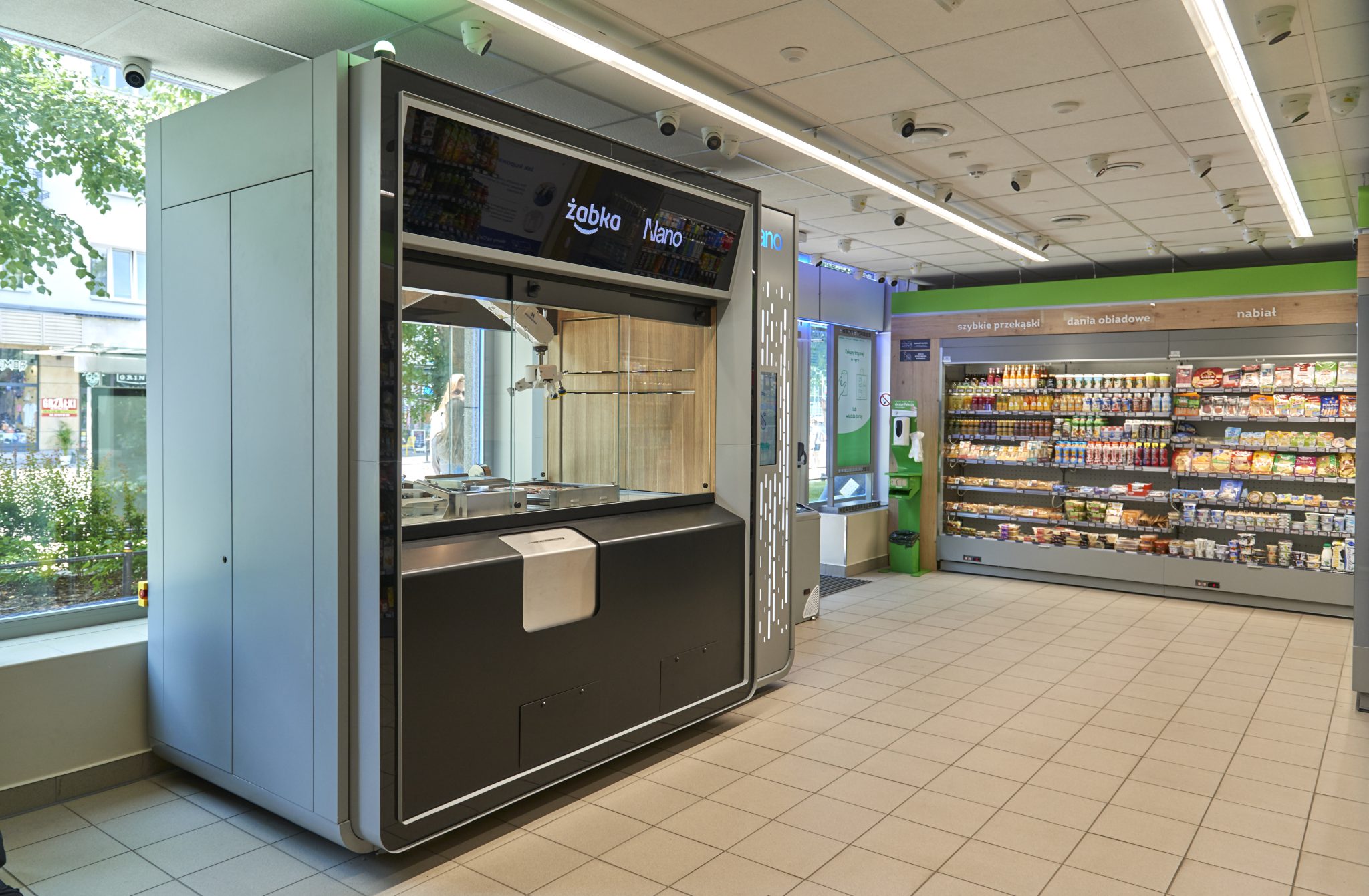
Ground Example: Żabka Nano Autonomous Stores
- System Architecture: A Python-based backend coordinates every store operation.
- Cloud Infrastructure: Microsoft Azure powers over 50 locations.
- Immediate Event Processing: Captures and handles events from multiple devices, including AI-powered computer vision technology.
- Data Streaming: Handles immediate data streaming and quick analytics with time-series databases.
Ecommerce Development Services
What is Ecommerce Development
Key Features of eCommerce Development
- Product Management: Tools that create, edit, and organize product listings with high-quality images and detailed descriptions
- Payment Processing: Integration with secure payment gateways that accept multiple payment methods
- Shopping Cart & Checkout: Efficient processes that minimize steps to reduce cart abandonment
- Inventory Management: Immediate tracking of stock levels with automated alerts
- Mobile Responsiveness: Design that adapts to different screen sizes for optimal browsing experiences
Benefits of Ecommerce Development
Tools & Technologies Used in Ecommerce Development
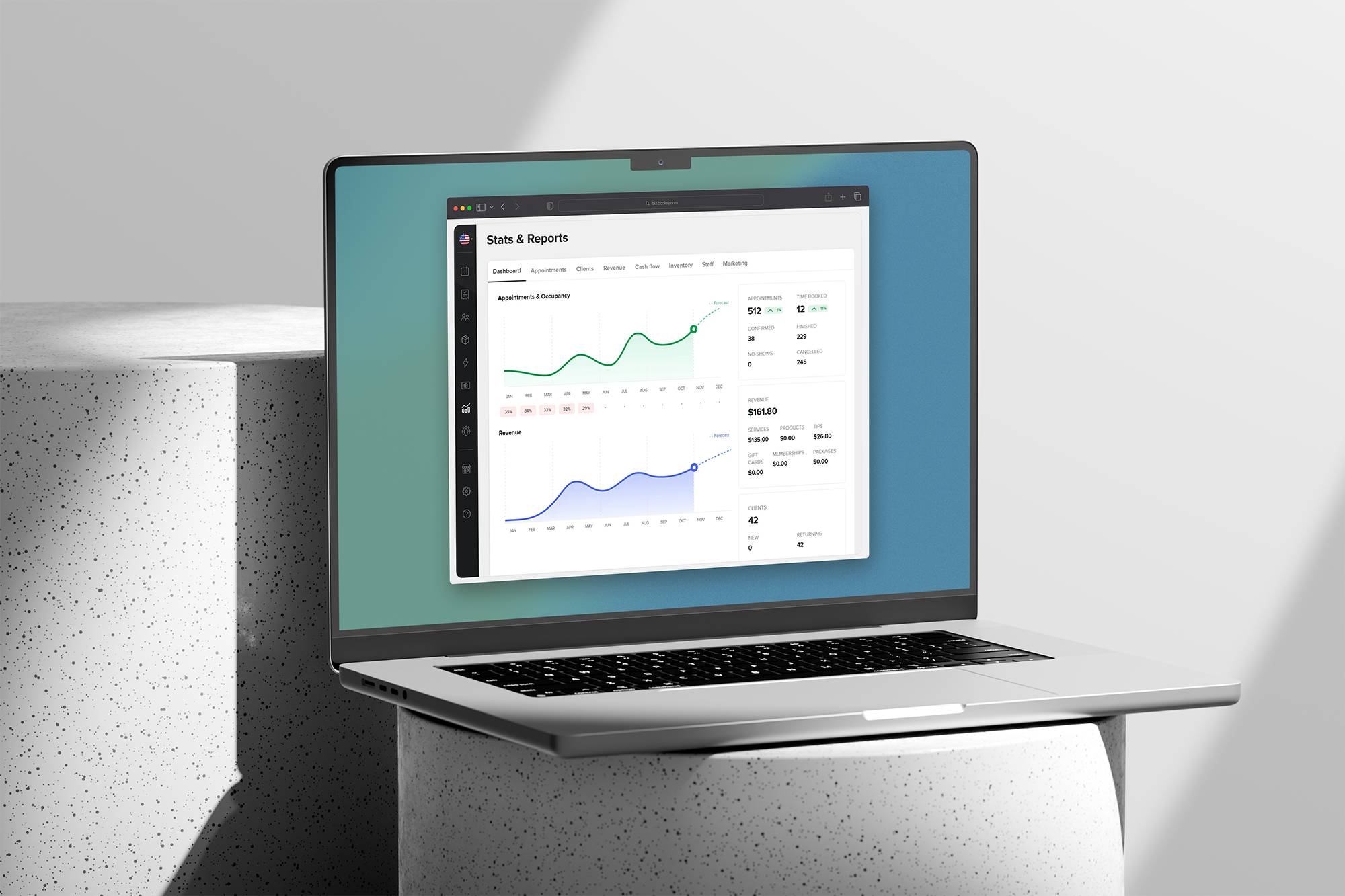
Real-World Example: Booksy B2B Marketplace
CMS Development Services
What is CMS Development
Key Features of CMS Development
- Publishing controls: Organizations can manage multiple publishers with proper permissions.
- Content editing tools: Makes uploading and editing content simple.
- Content staging: Helps test content changes before they go live.
- Analytics: Built-in tools measure performance.
- Security measures: Keeps content and user data safe from threats.
- Templates and themes: Design options that line up with your brand identity.
Benefits of CMS Development
Popular CMS Platforms
Real-World Example: WordPress for News Portals
API Development Services
What is API Development
Key Features of API Development
- Clear documentation that explains protocols, languages, and authentication methods
- Security layers, including authentication tokens and API keys, to protect data exchange
- Scalable architecture that handles growing request volumes
- Error-handling mechanisms to fix problems
- Consistent endpoints that give reliable access to resources
Benefits of API Development
Popular API Protocols and Tools
Real-World Example: Google Maps API Integration
Website Maintenance Services
What is Website Maintenance
Key Features of Website Maintenance
- Security measures, including regular patching, firewall updates, and vulnerability scans
- Performance optimization to improve loading speeds and server response times
- Content freshness to maintain relevance and credibility
- Technical upkeep, including fixing broken links and improving accessibility
- Backup procedures following the 3-2-1 rule (3 copies, 2 media types, 1 off-site)
Benefits of Website Maintenance
Common Maintenance Tasks
Real-Life Example: Monthly Maintenance for eCommerce Sites
SEO & Performance Optimization Services
What is SEO in Web Development
Key Features of SEO Services
- Content optimization: High-quality, keyword-optimized content that answers user questions
- Technical optimization: Better site structure, speed, and mobile responsiveness
- On-page factors: Optimized titles, meta descriptions, headers, and schema markup
- Off-page factors: Quality backlinks and established authority
- Local SEO: Location-based search optimization with correct business information
Benefits of SEO Optimization
Tools Used in SEO & Performance
- Surfer SEO: Content optimization guidance based on top-ranking pages
- Ahrefs: Backlink tracking and keyword research data
- Semrush: Complete keyword tracking and competitor analysis
- Google Search Console: Direct insights from Google about site performance
- PageSpeed Insights: Website speed testing and improvement suggestions
Real-Life Example: Nike Product Page Optimization
Comparison Table
| Type of Service | Key Features | Main Benefits | Core Technologies | Real-life Example |
| Frontend Development |
- Smooth navigation
- Appealing design - Mobile responsiveness - Cross-browser compatibility |
- Better user experience
- Higher conversion rates - Better brand image |
- HTML5
- CSS3 - JavaScript - React.js/Angular/Vue.js |
UBS Banking Simulation: Interactive demos of banking applications using React and Gatsby |
| Backend Development |
- Data management
- Business logic - Server-side processing - Authentication systems |
- Better security
- Easy scaling - Quick performance |
- Python
- Node.js - PHP - Java - Databases (MySQL, MongoDB) |
Żabka Nano: Python-based backend for autonomous stores on Microsoft Azure |
| Full-Stack Development |
- End-to-end capability
- Technology versatility - Unified development process |
- Cost savings
- Simplified processes - Complete ownership |
- LAMP Stack
- MEAN Stack - MERN Stack - Django Stack |
TransACT: Complete migration from .NET to Node.js/Vue.js stack |
| eCommerce Development |
- Product management
- Payment processing - Shopping cart - Inventory management |
- Wider market reach
- Lower operating costs - Informed business choices |
- Shopify
- Magento - WooCommerce - Payment gateways |
Booksy B2B Marketplace: Integrated eCommerce module with Elasticsearch |
| CMS Development |
- Publishing controls
- Content editing tools - Content staging - Analytics |
- Better team collaboration
- User-friendly interface - Built-in SEO tools |
- WordPress
- Shopify - Wix - Drupal |
WordPress for News Portals: Time Magazine, Vogue implementations |
| Custom Web App Development |
- User-specific functionality
- Third-party integration - Scalability architecture |
- Better efficiency
- Lower costs - Easy integration |
- Client-side technologies
- Server-side technologies - Database management |
Netflix: Microservices-based streaming platform |
| API Development |
- Clear documentation
- Security layers - Scalable architecture - Error handling |
- Smooth integration
- Faster development - Better collaboration |
- REST
- GraphQL - SOAP - gRPC |
Google Maps API: Location services integration |
| Website Maintenance |
- Security measures
- Performance optimization - Content freshness - Technical upkeep |
- Better security
- Faster performance - Lower bounce rates |
- Security tools
- Backup systems - Monitoring tools |
eCommerce maintenance: Regular payment gateway testing and security scans |
| SEO & Performance |
- Content optimization
- Technical optimization - On-page factors - Local SEO |
- Better visibility
- More credibility - Better user experience |
- Surfer SEO
- Ahrefs - Semrush - Google Search Console |
Nike: Product page optimization with local SEO integration |


