







What do you need to create a 3D product model?
- 3D scanning with a professional scanner. Costly, but the best way to mirror a physical object and its texture. It uses laser rays and photos taken with a video camera.
- Photogrammetry, stereovision, and SfM (Structure-from-Motion). Popular and requiring less expertise, this only uses (smartphone) pictures taken from different angles as input. It provides models of a bit lower quality but still acceptable for virtual try-on software.
- Deep Learning. Even easier, needing just one picture of an object. However, results are currently mediocre, working best on simple objects.
What is AR and VR in ecommerce?
AR ecommerce uses include:
- Virtual try-on solutions for clothes, makeup etc.
- Preview placement to visualize how an item such as a couch looks in your home before buying.
- Interactive user manuals to understand how a product works or how to assemble furniture.
What brands offer virtual try on?
Any brand can implement virtual try-ons as long as it makes business sense. Consumers are starting to expect this experience from online retailers, so it’s proliferating across the ecommerce ecosystem. Many brands in various industries have integrated virtual try-on technology into their customer experience. The capability is most common in the fashion, beauty, and eyewear industries. Renowned brands offering virtual try-ons include:
- Cosmetics and Skincare: NEONAIL, Sephora, L'Oréal, MAC
- Eyewear: Warby Parker, Ray-Ban, Lenskart
- Fashion and Footwear: Zara, ASOS, Adidas
- Jewelry: Tiffany & Co., Swarovski, Pandora
- Home Decor: IKEA, Home Depot, Wayfair
How does a virtual try-on work?
Virtual try-ons can be based on 3D models and AI, or augmented reality (AR) can be incorporated to create an experience that closely resembles real life.
In the case of VTO based on 3D models, customer measurements, typically of their body or room, are used to generate a model. Customers can then overlay products onto the model to determine if they fit.
VTO with augmented reality offers a more realistic experience, and the process unfolds as follows:
- The user opens the virtual try-on application on their device.
- Using the device's camera, the application scans and recognizes the relevant body part for the item (face for makeup or glasses, foot for shoes, etc.).
- The user selects the product they wish to try on from the catalog.
- The application overlays a virtual image of the product onto the live camera feed, adjusting for movements, angles, and lighting to provide a realistic and interactive fitting experience.
- The user can switch between different products, colors, or styles and often has the option to capture a photo or video of the try-on.
- If satisfied with the product, users can add it to their shopping cart and proceed to checkout directly from the application.
Examples of Virtual Try-On Apps
- Zalando fitting room: Enables customers to see how jeans would fit them using a true-to-life virtual avatar.
- Sephora Virtual Artist: Allows users to test various makeup products on their face using the device's camera.
- Warby Parker: Offers a glasses try-on feature that recommends frames based on the user's face shape.
- IKEA Place: Lets users virtually place furniture in their room to see how it looks and fits before purchasing.
- Zara AR: Showcases models wearing selected items from the online store, superimposed in the user's environment.
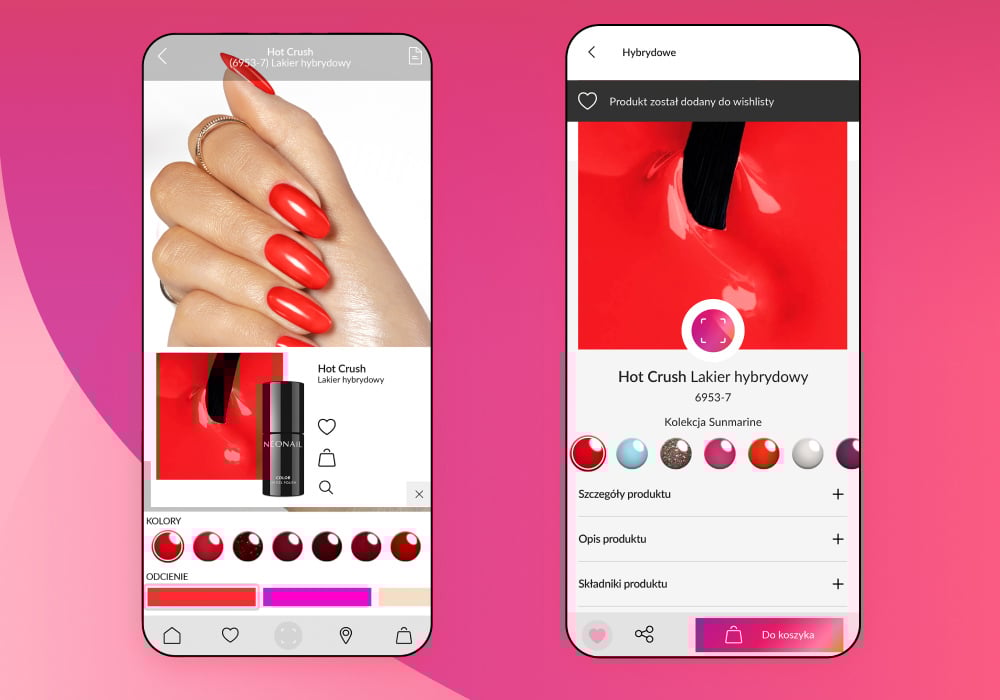
- NEONAIL Color Match: Provides a virtual try-on experience for nail products, allowing users to test a wide range of nail colors, shapes, and decorations in real time.
- Adidas' AR Shopping: Offers an AR shopping feature where users can virtually try on shoes before making a purchase.