
15 Real-World React Examples In 2025


Contents
React dominates today's web development landscape in ways that would have seemed impossible just a few years ago.
BBC's Simorgh serves millions of users worldwide, while industry giants like Netflix, PayPal, and Airbnb have built their platforms on this JavaScript library. The numbers tell a compelling story about React's rise to prominence.
Facebook originally created React for its own webpage, and Instagram relies heavily on it for features like geolocations and Google Maps integration. Netflix took things further by implementing React in their platform 'Gibbon', specifically designed for TV devices. Since its release as open-source software, React.js has simplified how we create smooth, interactive user experiences.
What makes these implementations so instructive for developers and business leaders? They showcase React's adaptability across vastly different industries and technical challenges. A streaming service faces different demands than a financial platform, yet both can benefit from React's component-based architecture.
We've gathered 15 remarkable React applications that demonstrate the library's real-world capabilities. Each example includes implementation details, distinctive features, and technology choices that contributed to their success. These aren't theoretical concepts—they're production applications serving real users and solving genuine business problems.
Let's examine these practical examples that can inform your next development decision.
Moonfare Fintech Platform
Private equity investing has traditionally been the exclusive domain of institutional investors and family offices. Moonfare changed that dynamic by creating a digital wealth management platform that opens these high-yield investment opportunities to individual investors.
Moonfare Project Purpose
The Berlin-based FinTech tackled a fundamental problem in wealth management: access barriers to private equity funds. Consider the market opportunity they identified—by some estimates, 50% of assets under management in private equity were expected to come from retail investors in 2023. That represents a massive shift from institutional dominance toward individual participation.
Moonfare's solution enables people to invest in top-tier private equity funds with lower minimums and greater flexibility than traditional channels offer. They essentially democratized an investment class that was previously out of reach for most individuals.
Moonfare React Implementation
The development team's choice of React.js wasn't arbitrary—it directly addresses the complex, data-driven nature of financial applications. Their architecture connects one main backend to multiple microservices, supporting both user-facing frontend and admin panel functionality.
What makes this implementation particularly interesting is the white-label capability. Partners can customize Moonfare's platform extensively while maintaining the underlying React infrastructure. This flexibility demonstrates how React's component-based approach scales beyond single-use applications.
Moonfare Unique Features
The platform stands out through several key innovations:
- Fully digital process: Every step from onboarding to distributions happens without paper
- Secondary market: Members can trade stakes as their needs evolve
- API integration: Investment platforms can now access private equity opportunities through their software interface
- Community engagement: Over 75,000 members connect through webinars, deal talks, and 50+ gatherings across 16+ countries
Moonfare Tech Stack
Their technology choices reflect careful consideration for production demands. React.js handles the frontend while Node.js powers the backend, with most code written in TypeScript for type safety.
The infrastructure relies heavily on Amazon Web Services—Elastic Kubernetes Service, AWS Lambda functions, Relational Database Service, DynamoDB, and CloudFront handle hosting and scalability needs. This combination creates a robust foundation for managing sensitive financial data while delivering smooth user experiences.

Anime Digital Network Streaming
Anime Digital Network (ADN)
faced a crisis that many growing platforms encounter. As the largest French-language animation streaming platform, launched in 2013, their success became their biggest challenge. The company discovered that legacy systems built on PHP and Joomla simply couldn't handle the traffic they were attracting.
faced a crisis that many growing platforms encounter. As the largest French-language animation streaming platform, launched in 2013, their success became their biggest challenge. The company discovered that legacy systems built on PHP and Joomla simply couldn't handle the traffic they were attracting.
ADN Project Purpose
The problems were impossible to ignore: frequent downtime during peak traffic periods, poor website performance, and technology that couldn't scale with their growing audience of anime fans across French-speaking countries. The platform needed a complete overhaul focused on long-term stability, reduced downtime, and the capacity to handle significantly higher traffic volumes.
ADN React Implementation
ADN's technical team made a bold decision—they completely rewrote the frontend using React while simultaneously migrating the backend from Joomla/PHP to Node.js. This wasn't a simple update; it was a ground-up rebuild hosted in the AWS cloud environment. The new implementation included automated deployment processes through GitLab CI, eliminating the service disruptions that had plagued the old system.
ADN Unique Features
The rebuilt platform delivers impressive content access with more than 500 series/films and 15,000 episodes available. Users can discover nostalgic classics from the 80s and 90s that aren't available elsewhere, plus exclusive content and previews reserved for subscribers. Everything streams in HD 1080p with first-rate sound and French dubbing.
ADN also implemented an interesting business model with subscription prices that decrease based on user seniority. The platform supports up to four simultaneous devices with compatibility across web, smartphones, smart TVs, and gaming consoles.
ADN Tech Stack
The modern architecture combines React for the frontend interface, Node.js for backend services, and AWS cloud infrastructure for scalability. The team adopted a microservices architecture for flexibility alongside an optimized database structure.
The results speak for themselves. ADN now handles substantial traffic with autoscaling solutions, achieves zero downtime during new releases, and maintains a stable environment ready for future growth.

Herdius Crypto Landing Page
Blockchain ventures face a peculiar communication challenge that traditional startups rarely encounter. Herdius, a Berlin-based platform, discovered this firsthand when it needed to attract ICO investors rather than pursuing conventional venture capital routes.
Herdius Project Purpose
The vision was ambitious: create a highly performant decentralized financial platform serving as next-generation infrastructure for the cryptocurrency ecosystem. Their proposed solution would function as a sidechain sitting between users and the root blockchains of all relevant cryptocurrencies.
The challenge wasn't technical—it was human. Balzas Deme, Herdius' founder, realized that their comprehensive white paper, while technically sound, created an unwelcoming barrier for potential investors. The document was lengthy, dense, and frankly intimidating for anyone not steeped in blockchain technicalities. He approached developers with a specific request: transform this technical document into a convincing, accessible narrative.
Herdius React Implementation
The development approach required understanding two distinct investor personalities identified during research. Emotional investors, just beginning their cryptocurrency journey, needed visual storytelling and trust-building elements. Rational investors demanded data and technical specifications presented clearly.
React's component architecture proved ideal for this dual approach. The team could create modular visual elements that conveyed complex concepts while maintaining the flexibility to present technical depth where needed. Each React component balanced visual storytelling with substantive information, ensuring both investor types found value without overwhelming either group.
Herdius Unique Features
The solution centered on isometric illustrations that transformed abstract blockchain concepts into tangible visuals. Nodes, connections, and energy flows became recognizable elements rather than theoretical constructs. Visual representations accompanied headings throughout the landing page, clarifying complex verbal descriptions through immediate visual context.
Design elements were specifically crafted to evoke trust and curiosity—crucial emotions for investment decisions. The team intuitive translated complex values like cryptocurrency, decentralization, and scalability into digestible visuals that made sense to newcomers while retaining accuracy for technical audiences.
Herdius Tech Stack
Three intensive weeks brought together two designers and one frontend developer in close collaboration. React provided the foundation, while specialized illustration tools created the isometric visuals that became the experience's centerpiece. This approach successfully launched Herdius's ICO, proving that React can effectively bridge the gap between complex technical concepts and diverse audiences seeking to understand them.

Aegon Savings Platform
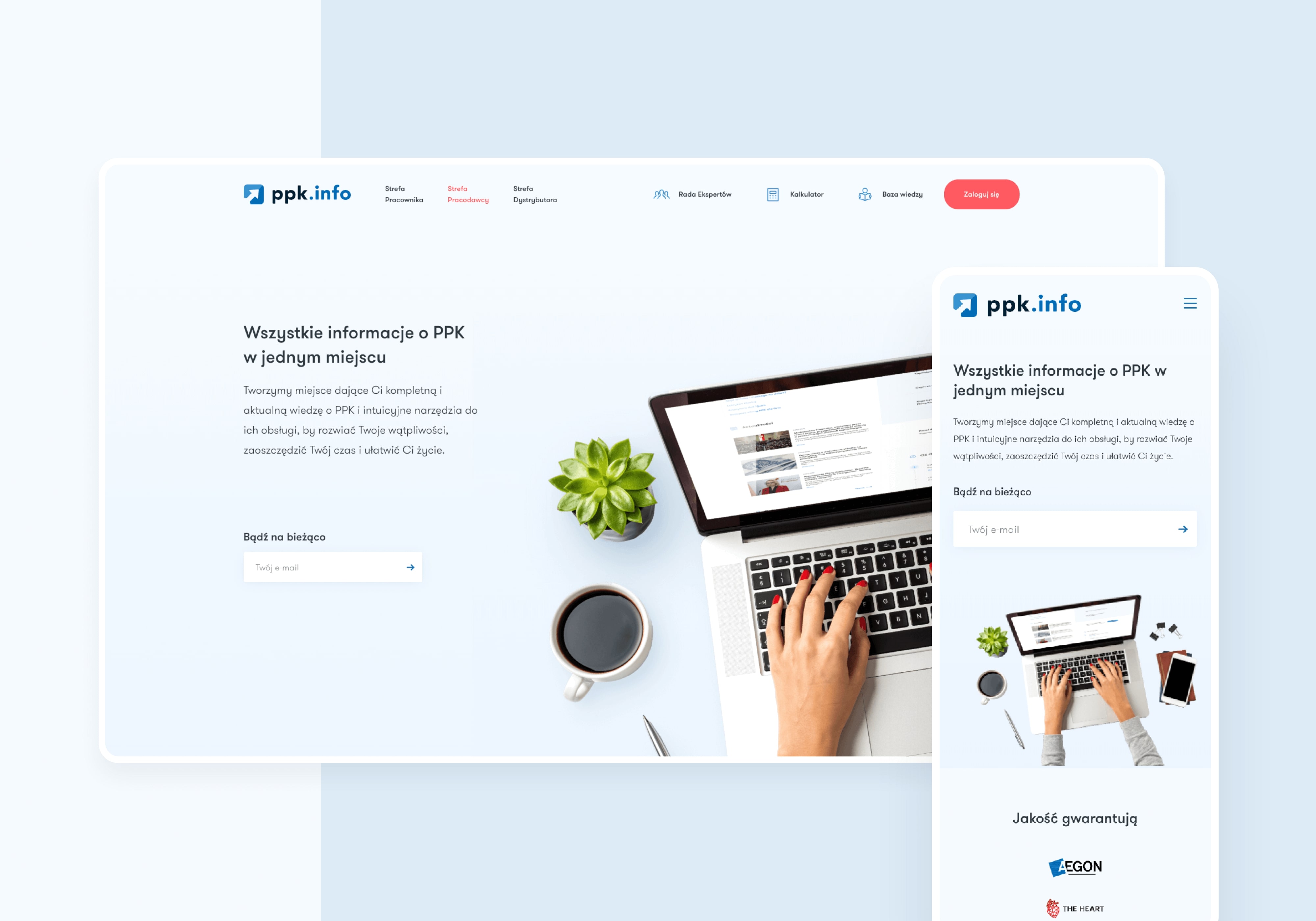
Aegon's financial platform represents a compelling case study in how established institutions adapt to digital-first expectations. This multinational life insurance company is actively transforming its UK operations into a leading digital savings and retirement platform, serving a market that demands both innovation and reliability.
Aegon Project Purpose
The company recognizes significant opportunities in the UK's expanding market for long-term savings and retirement solutions. Their strategic transformation centers on evolving Aegon UK into a premier digital platform that can simplify complex financial information while building scalable systems for changing market demands.
The business operates through three interconnected growth areas that showcase the platform's comprehensive approach. Their workplace platform offers retirement solutions for large and medium-sized employers, maintaining a top-three market position in winning new business. The adviser platform provides long-term savings and investment solutions to advisers and their customers, while the advice franchise delivers financial planning guidance to workplace platform customers and corporate partners.
Aegon React Implementation
React's efficiency in handling interactive components made it the natural choice for Aegon's web platform development. The implementation prioritizes user experience through intuitive interfaces that make financial planning more accessible to customers who need account access across multiple devices and situations.
This approach proves particularly valuable in financial services, where customers expect seamless experiences whether they're checking balances during lunch breaks or making investment decisions from home computers.
Aegon Unique Features
The platform currently manages approximately 2.5 million customers with £104 billion of assets under administration as of late 2023. Their growth trajectory aims to exceed £135 billion by 2028, reflecting both market expansion and platform capabilities.
What sets this implementation apart is how it balances the complex regulatory requirements of financial services with user-friendly design principles. The platform must handle everything from retirement calculations to investment portfolio management while maintaining the security and compliance standards that financial institutions require.
Aegon Tech Stack
The platform incorporates React for frontend development alongside technologies supporting increased digitalization and automation. Their digital transformation includes substantial investment in simplifying technology and increasing automation to enhance the online customer and adviser journeys already in place.
This technical foundation enables enhanced retirement propositions and personalized customer experiences that adapt as regulations and market conditions evolve. The architecture demonstrates how financial institutions can modernize legacy systems without sacrificing the reliability their customers expect.
Posiłek dla Seniora Web App
The COVID-19 pandemic exposed vulnerabilities in how we care for elderly populations. Posiłek dla Seniora (Meal for the Elderly) emerged as a humanitarian response that demonstrates React's potential beyond commercial applications.
Posiłek dla Seniora Project Purpose
Grupa Warszawa, a food service and event management business, recognized an urgent need during Poland's COVID-19 lockdown. Elderly citizens faced dual challenges: access to nutritious meals and social isolation. Their solution became a tech-for-good platform connecting local restaurants with seniors who needed daily meal delivery.
The project addressed more than hunger. Meal deliveries included human interaction and conversation—often the only social contact many recipients experienced during isolation. For seniors living in poverty and isolation, these brief connections proved as valuable as the meals themselves.

Posiłek dla Seniora React Implementation
React powered the fundraising web application that served as the platform's foundation. Contributors could support seniors through daily meal subscriptions or one-time donations. The team expanded accessibility by developing a companion mobile app using React Native, reaching both Android and iOS users.
Donor trust presented a critical implementation challenge. Secure payment processing and integration required careful attention to build the credibility essential for financial donations. The developers established a multi-environment Firebase project setup to ensure reliable functionality across all user touchpoints.
Posiłek dla Seniora Unique Features
Several capabilities distinguished this platform:
- Social media integration: Enhanced engagement through connected social modules
- Push notification system: Encouraged continued support for the cause
- User-friendly interface: Built from scratch, prioritizing seamless fundraising experiences
- Trust-building design: Established credibility is crucial for donation platforms
The platform's intuitive design directly influenced its remarkable impact. Smooth, accessible donation processes proved essential factors in the project's success.
Posiłek dla Seniora Tech Stack
The technology architecture combined:
- React for the web application frontend
- React Native for cross-platform mobile development
- Node.js powering backend services
- Firebase for multi-environment project setup
This React application delivered extraordinary results: over 40,000 meals prepared, supported by more than 15,000 donors, with total donations exceeding 1,000,000. The project proves React's flexibility extends beyond business applications into meaningful social impact initiatives.
Ticket Zone Web App
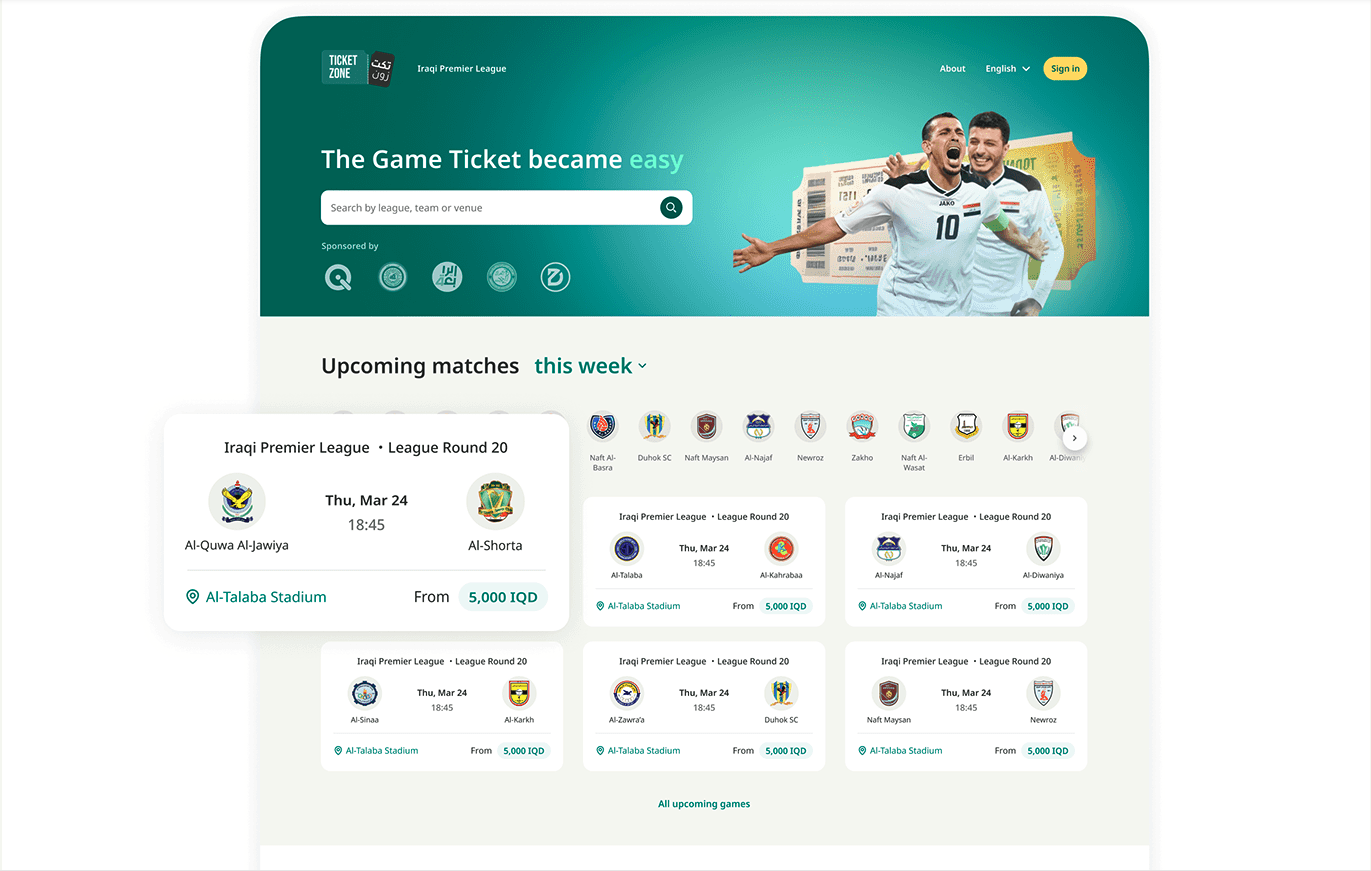
Event ticketing presents unique technical challenges that many developers underestimate. The Ticket Zone Web App tackles football ticket sales with a straightforward approach that prioritizes user experience over flashy features.
Ticket Zone Project Purpose
Football venues still rely heavily on paper-based ticketing systems, creating friction for both organizers and fans. Ticket Zone addresses this gap by digitizing the entire process—from event browsing to seat selection and final purchase. The platform focuses on creating smooth experiences for ticket buyers while giving event organizers better control over their inventory.
Ticket Zone React Implementation
The development team chose React's component-based architecture to build their ticket management system. Smart implementation decisions include:
- Status and priority filtering for efficient ticket sorting
- Real-time search across multiple data fields
- Dynamic color-coding that provides instant visual feedback
- Custom form validation prevents booking errors
State management plays a central role here, with React hooks like const [tickets, setTickets] = useState([]) handling ticket data efficiently. This approach keeps the interface responsive even when processing large event inventories.
Ticket Zone Unique Features
The platform's filtering system stands out for its simplicity—users can sort by both status and priority without getting lost in complex menus. Color-coded priority indicators (green for low, yellow for medium, red for high) provide immediate visual context that reduces cognitive load for users managing multiple events.
Ticket Zone Tech Stack
React forms the foundation, supported by Typescript for type safety, React-Router for smooth navigation, Tailwind CSS for consistent styling, and Ant Design components for polished interfaces. This combination delivers the reliability that ticketing platforms require while maintaining development efficiency.
Babbel B2B Dashboard
Babbel, the world's top-grossing language learning app with over 10 million subscriptions sold, faced a common challenge when expanding into enterprise markets. Their consumer-focused platform simply wasn't equipped for business needs.
Babbel Project Purpose
The limitations became apparent when Babbel approached corporate customers. Their B2C platform lacked essential business features like creating organizational groups or assigning admin access to specific members. Companies needed administrative oversight that the existing app couldn't provide.
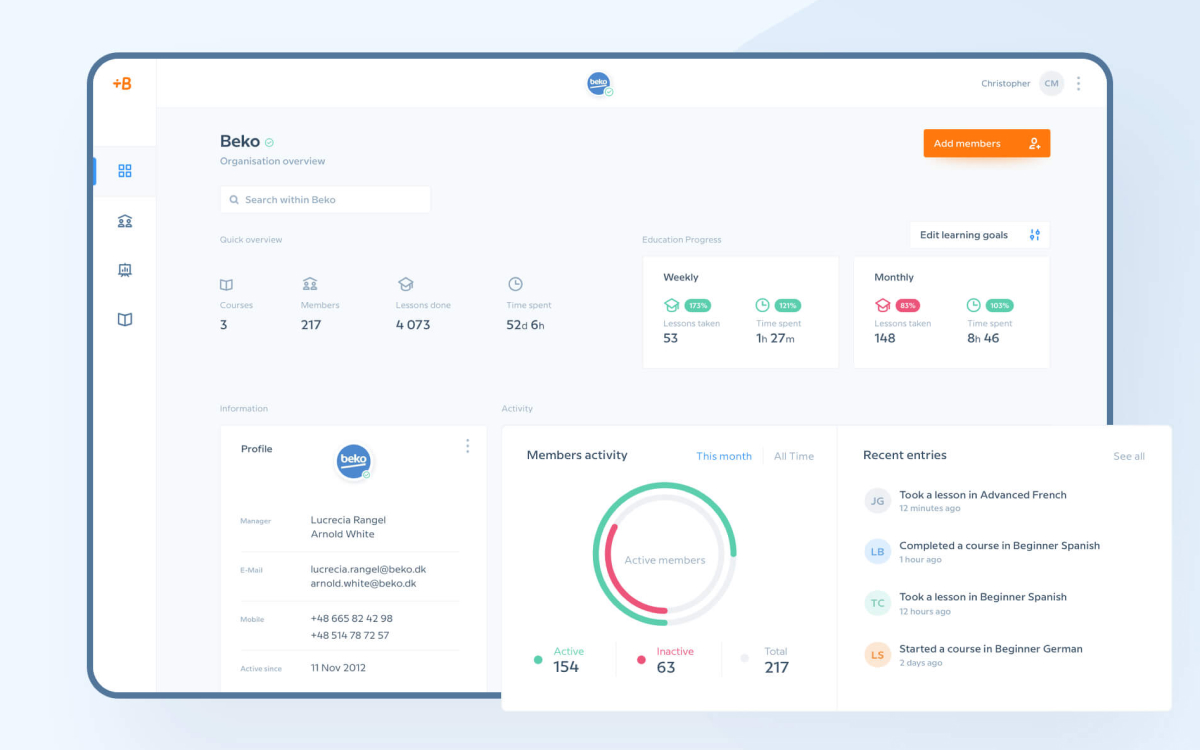
Babbel required an additional module that would prepare their app for a new B2B strategy and empower administrators with greater user management flexibility. The requirements were specific: handle large volumes of data, maintain alignment with Babbel's style guide, enable easy navigation across different views, and provide access to invoicing, usage statistics, and member information.
Babbel React Implementation
Netguru recommended ReactJS for the frontend development due to its performance capabilities even with substantial user bases. The project began with both teams participating in a scoping session to address existing problems and outline the project scope.
The UX design team then created intuitive user flows that would seamlessly integrate with the existing application while meeting corporate customers' needs. Development proceeded in two-week sprints, ensuring appropriate flexibility and constant feedback. This iterative approach allowed the teams to refine features based on real-world testing and business requirements.
Babbel Unique Features
The completed dashboard addresses corporate learning management through several key capabilities:
- Analytics tools showing how often team members use the app and the time spent on courses
- Simplified payment through a single bulk invoice for all registered users
- Organizational management allows businesses to create groups and assign admin access
These features transform individual language learning into a structured corporate training program with proper oversight and reporting capabilities.
Babbel Tech Stack
The dashboard employs React.js on the frontend paired with Ruby on Rails on the backend. This combination was chosen primarily to ensure optimal application performance regardless of team size. The tech stack enables Babbel to handle their large customer base efficiently while maintaining high standards for user experience.
The architecture supports both the existing consumer application and the new enterprise features without compromising either experience.
AI Sales Advisor
What happens when artificial intelligence meets React in a retail environment? Netguru's R&D department explored this question through an experimental sales advisor platform that pushes the boundaries of intelligent customer interactions.
AI Advisor Project Purpose
The project emerged from a simple premise: could AI assistants provide genuinely helpful product recommendations in real shopping scenarios? The team developed a functional virtual sales advisor designed to offer tailored suggestions to online shoppers. Two distinct testing scenarios validated the concept—a car rental advisor helping users navigate optimal rental choices, and a multicooker advisor recommending kitchen appliances across premium, mid-range, and budget categories.
AI Advisor React Implementation
React components handle the frontend while React (Reasoning + Action) agents power the intelligence behind the scenes. These agents operate through a continuous cycle of perceiving environments, reasoning about problems, and executing targeted actions. The system breaks down complex customer needs into manageable subtasks, then adapts its strategy based on each interaction's results. This iterative approach allows the AI to dynamically select appropriate tools and refine recommendations as conversations develop.
AI Advisor Unique Features
The platform distinguishes itself through several key capabilities. An AI-powered chatbot integrated with Azure OpenAI's GPT-4 model drives conversations while vector database analysis enables personalized recommendations across three distinct price tiers. Unlike basic chatbot implementations, this system offers multilingual support and omnichannel functionality spanning web, mobile, and in-store touchpoints.
AI Advisor Tech Stack
React.js provides frontend flexibility while Python handles backend operations, including an admin panel for managing recommendations. AWS cloud services ensure scalability, and Azure OpenAI integration delivers natural language processing through GPT-4. This architecture creates smooth interactions between users and AI-generated content, demonstrating how modern frameworks can support sophisticated machine learning applications.
UBS Interactive Demo
How do you demonstrate sophisticated banking applications when regulatory compliance forbids exposing real customer data? UBS faced this exact dilemma when trying to showcase their digital services to prospective clients. Their solution represents an elegant use of React technology that addresses a fundamental challenge in financial services marketing.
UBS Project Purpose
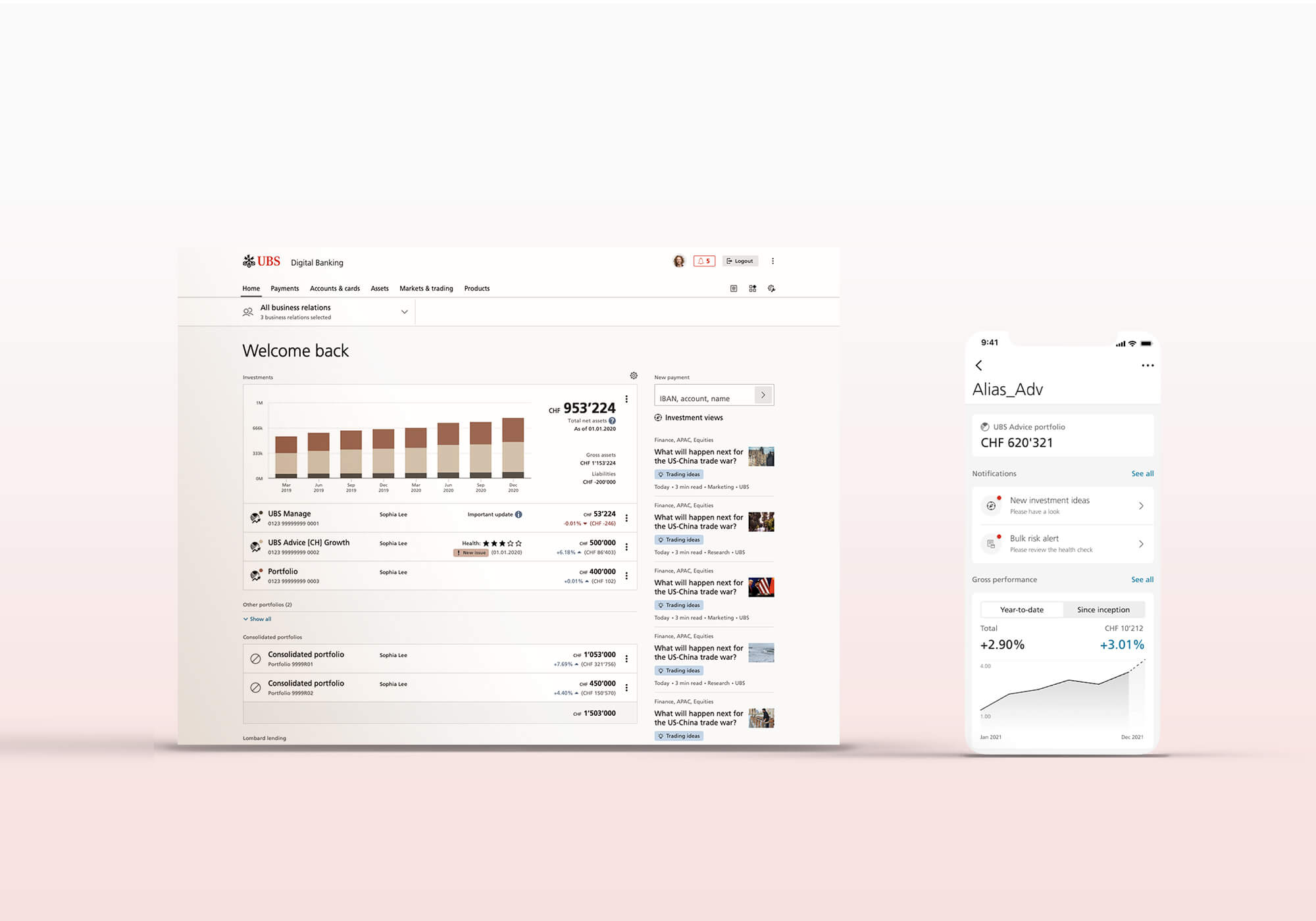
UBS required functional demonstrations of their banking applications that could operate without compromising strict data security protocols. The demos needed to serve several constituencies simultaneously: potential clients evaluating the platform, existing customers learning navigation, and financial advisors requiring training materials. Traditional screenshots or videos couldn't convey the interactive experience that sets modern banking applications apart.
UBS React Implementation
The development team paired React with the Gatsby framework to create demonstrations that mirror their production applications down to the smallest detail. Static site generation became the key technical decision—these demos operate entirely without backend connections, eliminating any risk of data exposure while maintaining full interactive functionality.
UBS Unique Features
Users interact with what feels like genuine banking applications, complete with realistic workflows and interface behaviors. The demo suite encompasses four distinct applications covering personal banking, wealth management, and business banking, with a fifth application for Asia-Pacific wealth management currently under development.
UBS Tech Stack
The technical architecture prioritizes both security and performance through React and Gatsby's static generation capabilities. These demos deliver complete interactive experiences through static files that require no server infrastructure while preserving the visual and functional fidelity of production banking applications.
Vital Voices Platform
Non-profit organizations represent a fascinating frontier for React development. The Vital Voices Network Hub illustrates how technology can serve missions that extend far beyond commercial interests—creating digital spaces where women leaders connect across continents.
Vital Voices Project Purpose
Vital Voices Global Partnership operates on a simple yet powerful belief: communities cannot advance without women's voices in leadership positions. Their digital platform emerged from a clear need—women worldwide needed a secure space to share ideas, build relationships, and offer mutual support.
Security concerns shaped every decision. Many members face real persecution for their opinions, making anonymity not just preferable but essential for their safety. This reality demanded a development approach that prioritized user protection above all else.
Vital Voices React Implementation
The development team faced an interesting challenge: building community-focused networking tools under tight deadlines while ensuring scalability for ambitious growth plans. React's component-based architecture proved ideal for creating consistent user experiences across a diverse membership base that varies significantly in age and technical proficiency.
The team delivered a minimum viable platform that prioritized essential functionality over flashy features. This pragmatic approach allowed them to launch quickly while maintaining the security standards their users required.
Vital Voices Unique Features
The platform balances openness with protection through dual conversation modes—public discussions for broader community engagement and private spaces for sensitive topics. Members can build comprehensive profiles including bios and social media connections, send private messages, and express opinions without fear.
Administrator controls enable swift responses to inappropriate content, ensuring the community remains supportive and constructive.
Vital Voices Tech Stack
React powered the frontend development while Python handled backend services. This combination delivered the performance and security requirements essential for a platform serving vulnerable populations worldwide.
The Know Hotel Review App
Sentiment analysis presents a fascinating challenge for React developers, particularly when building applications that need to surface emotional context from user-generated content. The Know Hotel Review app tackles this complexity head-on, creating an intelligent feedback system specifically designed for luxury hospitality.

The Know Project Purpose
The Know operates as a mystery shopper and insight service exclusively for high-end hotels. This application lets users add reviews to a hotel list and manages this data through an application context. Rather than competing with general review platforms, it focuses on helping luxury establishments identify specific service improvements through detailed guest feedback analysis.
Hotel managers face a particular challenge: parsing through lengthy reviews to identify actionable insights. The system addresses this by making sentiment analysis accessible, allowing managers to quickly spot both positive highlights and areas needing attention in guest experiences.
The Know React Implementation
The development team chose Create React App as their foundation, then built comprehensive testing coverage to ensure component reliability. They implemented React Testing Library—an open-source testing package that validates function outputs against expected values. This testing approach becomes crucial when dealing with dynamic content like sentiment-highlighted text.
The implementation's standout feature involves real-time text highlighting based on sentiment analysis. As users read reviews, critical feedback becomes instantly visible through intelligent markup that draws attention to specific concerns or praise.
The Know Unique Features
The application's tooltip functionality sets it apart from standard review platforms. Each highlighted text segment includes a contextual tooltip providing additional sentiment information. This approach helps hotel managers understand not just what guests mentioned, but the emotional weight behind specific topics.
Most review systems simply display text without deeper analysis. The Know transforms raw feedback into actionable intelligence, making it particularly valuable for luxury properties where service details matter significantly.
The Know Tech Stack
The technical foundation includes React paired with TypeScript for enhanced code reliability. Next.js handles routing and server-side capabilities, while Tailwind CSS manages styling and Zod provides validation. This combination creates a development environment well-suited for applications requiring both dynamic content and robust data handling.
CertForward Blockchain Platform
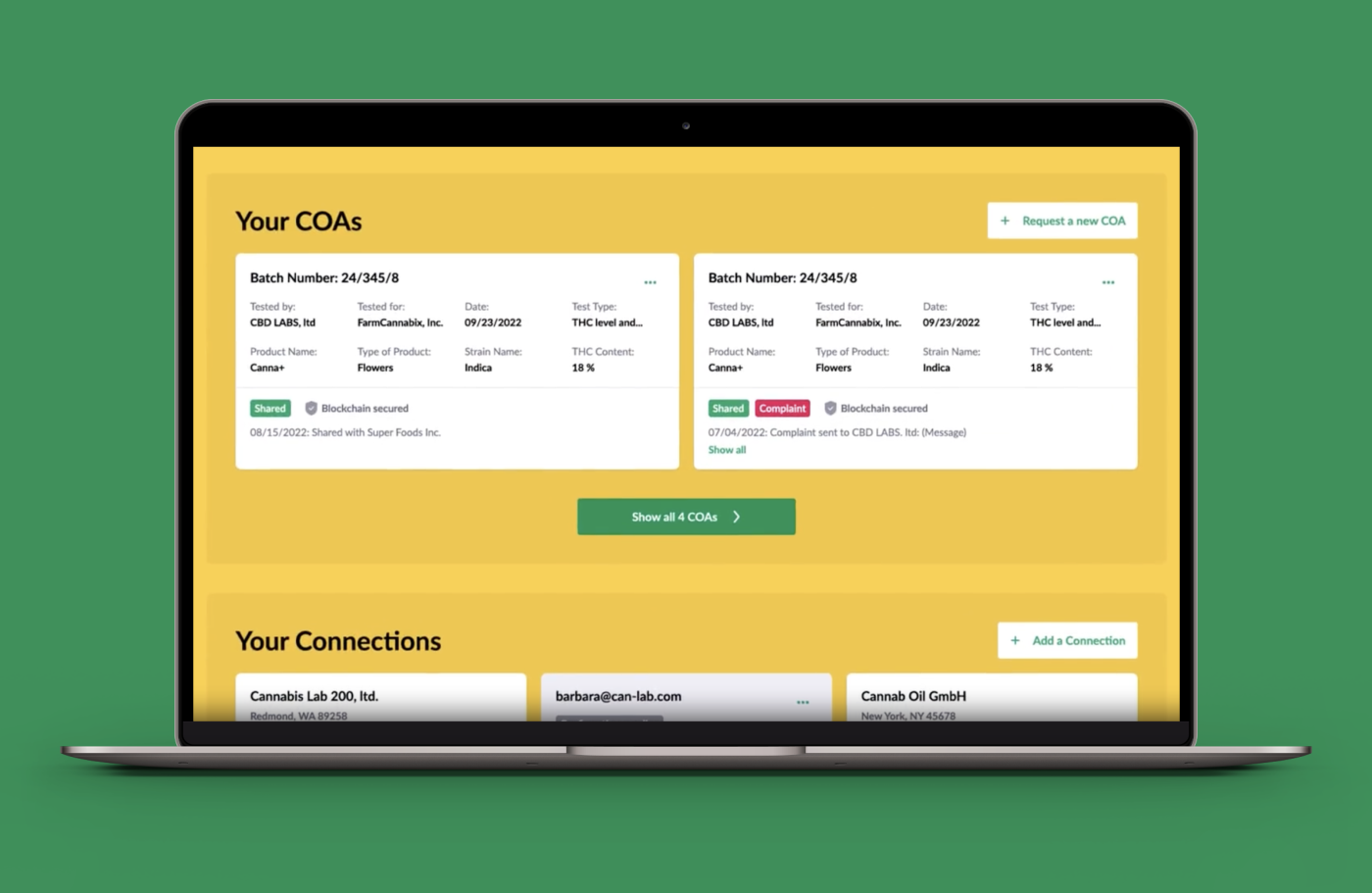
Cannabis industry players face a persistent problem: certificate manipulation undermines trust between growers, laboratories, and processors. CertForward was developed for MilliporeSigma to establish food market-like standards in this emerging industry. This blockchain-powered platform addresses certificate authenticity through tamper-proof systems for receiving, uploading, and sharing Certificates of Analysis (COAs).
CertForward Project Purpose
Certificate manipulation creates serious trust issues in cannabis commerce. Growers need reliable lab results, processors require verified product data, and consumers deserve authentic quality assurance. The project aims to address these concerns while facilitating trustworthy exchanges among all industry participants. Blockchain verification builds credibility by ensuring product testing assurance that no single party can alter.
CertForward React Implementation
Blockchain technology can intimidate users with its technical complexity. The frontend team utilized React's component architecture to translate highly technical blockchain operations into interfaces that feel familiar and intuitive. Within four months, developers implemented registration systems, subscription management, and the critical certificate verification functionality. React's strength here lies in isolating complex blockchain processes while presenting straightforward interactions that non-technical users can navigate confidently.
CertForward Unique Features
The platform delivers several capabilities that set it apart from traditional certificate systems:
- Digital tamper-proof certificates that preserve data integrity
- Complete blockchain verification for every COA, creating an unalterable audit trail
- Unlimited users, COAs, and business connections per company account
- Quick access to saved certificates through organized company profiles
CertForward Tech Stack
React handles the frontend presentation while blockchain technology manages certificate verification. Smart contracts automate the entire certificate lifecycle—from issuance and storage to retrieval and validation processes. This combination allows users to benefit from blockchain security without needing to understand the underlying technology.
Framer Website
Website builders typically force users to choose between visual simplicity and technical flexibility. Framer eliminates this compromise entirely—it's both a professional website builder and a React development environment rolled into one platform.
Framer Project Purpose
The platform was built to solve a fundamental problem in web development: making React's power accessible without requiring coding expertise. Traditional website builders produce static outputs that quickly become outdated, while custom development remains expensive and time-consuming. Framer bridges this gap by automatically converting visual designs into production-ready React components, essentially providing every user with their own React developer.
Framer React Implementation
React serves as Framer's invisible engine, handling the complex translations from visual design to functional code. Users design on a visual canvas while React 18 works behind the scenes, generating professionally structured components. The platform's Code Components feature allows developers to create custom React elements that non-technical users can then configure through visual property controls.
This approach means designers never see code unless they want to, yet their creations benefit from React's performance and maintainability advantages.
Framer Unique Features
Several capabilities distinguish Framer from conventional website builders:
- Code Components that blend custom React functionality with visual editing
- Auto-sizing systems ensure layouts work across different screen sizes
- Backward compatibility prevents older projects from breaking during updates
- Real-time preview showing changes instantly as users work
The platform also supports advanced interactions and animations that would typically require custom JavaScript development.
Framer Tech Stack
React 18 forms the foundation, specifically chosen for its Code Components compatibility and long-term stability. The platform includes an integrated code editor for developers who want to extend functionality, plus a sophisticated preview system for immediate testing. This architecture creates an unusual hybrid—a visual tool that produces genuinely robust, developer-quality output.
Fontshare Free Font Platform
Typography costs can quickly drain project budgets, especially when premium typefaces command hefty licensing fees. Fontshare addresses this common developer pain point by offering professional-grade fonts at no cost.
Fontshare Project Purpose
The Indian Type Foundry (ITF) created Fontshare to eliminate the typography budget barrier that affects countless projects. Their platform makes high-quality typefaces accessible to everyone, particularly benefiting small teams and individual developers who previously had to choose between expensive licensed fonts or questionable free alternatives scattered across the internet.
Fontshare React Implementation
React developers can integrate Fontshare fonts through a straightforward API approach. The implementation requires only a simple link element: <link href="https://api.fontshare.com/v2/css?f[]=font-name@weights&display=swap" rel="stylesheet">. This method eliminates the need to download, store, and manage font files locally, streamlining the development workflow considerably.
Fontshare Unique Features
The platform stands out through several key advantages:
- 100% free fonts for both personal and commercial projects
- "Closed Source" proprietary fonts available exclusively through Fontshare
- "Open Source" fonts carefully curated from trusted publishers
- Rigorous quality control ensures consistent font performance
- Unrestricted usage across print, web, mobile, and application projects
Fontshare Tech Stack
The service operates through both direct downloads and API access. For React applications, the API integration proves particularly valuable, allowing developers to implement custom typography without file management overhead. The system accommodates various font weights and display options, supporting responsive design requirements across different devices and screen sizes.
Garage Museum Website
Cultural institutions face unique challenges when bringing their collections into digital spaces. The Garage Museum of Contemporary Art in Moscow demonstrates how React can preserve artistic integrity while expanding access to contemporary culture.
Garage Museum Project Purpose
The Garage Museum website serves modern culture enthusiasts by providing easy access to exhibitions, events, and programs. Its primary goal is to complement the museum's physical space with a digital platform that maintains the institution's minimalist aesthetic. The site also aims to improve accessibility for visitors with special needs, reflecting broader goals of cultural inclusion.
What sets this project apart from commercial applications? The museum needed to balance technological sophistication with artistic sensibility—a challenge that requires different considerations than typical business applications.
Garage Museum React Implementation
The museum harnesses React for its digital initiatives, notably through "Garage Digital"—a platform allowing curators to commission new digital artworks while providing historical context for existing ones. This implementation creates what one curator described as "a digital limbo, where new art could exist and be seen".
The technical approach prioritizes user experience over flashy features, allowing the artwork itself to remain the focal point. React's component structure proves particularly valuable for museums, where content needs to be modular and easily updated as exhibitions change.
Garage Museum Unique Features
The website offers several distinctive elements:
- A dedicated "Stream" section on the homepage where visitors can easily locate exhibitions and events
- News content is strategically positioned at the bottom of the homepage
- Tags system enabling quick content filtering and navigation
- Bilingual content in both English and Russian
These features reflect the museum's understanding that digital art consumption differs from traditional gallery visits, requiring new ways to discover and engage with cultural content.
Garage Museum Tech Stack
The platform integrates React with gaming technologies, commissioning works that utilize video games and computer simulations. This approach reflects their philosophy that "the divide between digital sphere and everyday life is growing thinner".
Rather than treating technology as separate from artistic expression, the museum uses React as part of the creative process itself—demonstrating how development frameworks can serve cultural institutions beyond mere presentation.
Comparison Table
These 14 applications demonstrate React's adaptability across remarkably different industries and technical requirements. The following comparison highlights key implementation patterns and technology choices that contributed to each project's success:
| Project Name | Primary Purpose | Key Features | React Implementation | Additional Tech Stack |
| Moonfare FinTech | Democratize private equity investments |
- Fully digital process
- Secondary market - API integration - Community engagement |
Component-based architecture for data-driven financial applications |
- Node.js
- TypeScript - AWS Services |
| Anime Digital Network | Streaming service for French animation |
- 500+ series/films
- HD 1080p streaming - Multi-platform support |
Complete frontend rewrite with automated deployment |
- Node.js
- AWS Cloud - Microservices |
| Herdius | ICO landing page for blockchain platform |
- Isometric illustrations
- Visual storytelling - Technical depth translation |
Visual components for complex blockchain concepts | Node.js |
| Aegon Savings | Digital savings and retirement platform |
- Workplace platform
- Adviser platform - Advice franchise |
Interactive components and animations for financial planning | Not mentioned |
| Posiłek dla Seniora | Meal delivery for elderly during COVID-19 |
- Social media integration
- Push notifications - Donation system |
Web application for fundraising platform |
- React Native
- Node.js - Firebase |
| Ticket Zone | Digital ticket management system |
- Status/priority filtering
- Real-time search - Dynamic color-coding |
Component-based ticket management |
- TypeScript
- React-Router - Tailwind CSS |
| Babbel B2B | Corporate language learning dashboard |
- Analytics tools
- Bulk invoicing - Organization management |
Performance-focused implementation for large user bases | Ruby on Rails |
| AI Sales Advisor | AI-powered product recommendations |
- GPT-4 integration
- Multilingual support - Vector database analysis |
ReAct (Reasoning + Action) agents implementation |
- Python
- AWS - Azure OpenAI |
| UBS Demo | Interactive banking application demos |
- Multiple application demos
- Security-compliant showcases |
Static site generation with Gatsby | Gatsby |
| Vital Voices | Women leadership networking platform |
- Public/private discussions
- Profile management - Security features |
Community-centric networking tools | Python |
| CertForward | Blockchain certificate verification |
- Digital tamper-proof certificates
- Blockchain verification - Unlimited users |
Component architecture for blockchain operations | Smart Contracts |
| Framer | Visual website builder |
- Code Components
- Auto-sizing - Real-time preview |
React 18 for component translation | Built-in code editor |
| Fontshare | Free font distribution platform |
- Commercial-free fonts
- API integration - Quality control |
API-based font implementation | Font delivery API |
| Garage Museum | Cultural institution website |
- Bilingual content
- Stream section - Tags system |
Digital art platform integration | Gaming technologies |
What patterns emerge from this analysis? React consistently proves its worth across financial services, streaming platforms, blockchain applications, and cultural institutions alike. The technology choices reveal how teams pair React with complementary tools—Node.js appears frequently for backend services, while cloud platforms like AWS provide the scalability these applications require.
Conclusion
React has established itself as a foundational technology for modern web development, and these 15 examples demonstrate why. Each project we've examined solves different problems for different audiences, yet they all benefit from React's core strengths: component reusability, predictable state management, and efficient rendering.
What becomes clear from these implementations is React's remarkable flexibility. Moonfare's financial platform requires different capabilities than Garage Museum's cultural website, yet both teams found React suitable for their specific challenges. This adaptability explains why companies continue choosing React for projects ranging from humanitarian initiatives to enterprise banking systems.
The technology combinations we've seen also reveal an important pattern. React rarely works in isolation—it integrates smoothly with backend technologies like Node.js and Python, cloud services from AWS and Azure, and specialized tools for everything from blockchain verification to AI-powered recommendations. This ecosystem compatibility makes React valuable not just as a frontend library, but as part of larger technical architectures.
Several themes emerge when we look at these projects together. Performance matters, especially for platforms like Anime Digital Network that serve millions of users. User experience design remains critical, as evidenced by Babbel's focus on intuitive interfaces for corporate customers. Security considerations drive implementation decisions, particularly for financial services like UBS and Aegon.
Perhaps most importantly, these examples show that React succeeds when teams understand their users' needs first, then apply the technology appropriately. The most effective implementations—from Posiłek dla Seniora's donation platform to Framer's visual website builder—prioritize user outcomes over technical complexity.
For teams considering React for their next project, these examples offer practical guidance. The choice isn't just about React itself, but about how it fits within your broader technical strategy, user requirements, and business objectives. React provides the foundation, but success depends on thoughtful implementation tailored to your specific context.


