
Cut Returns and Grow LTV: Why Trust Now Beats Speed in Ecommerce

Contents
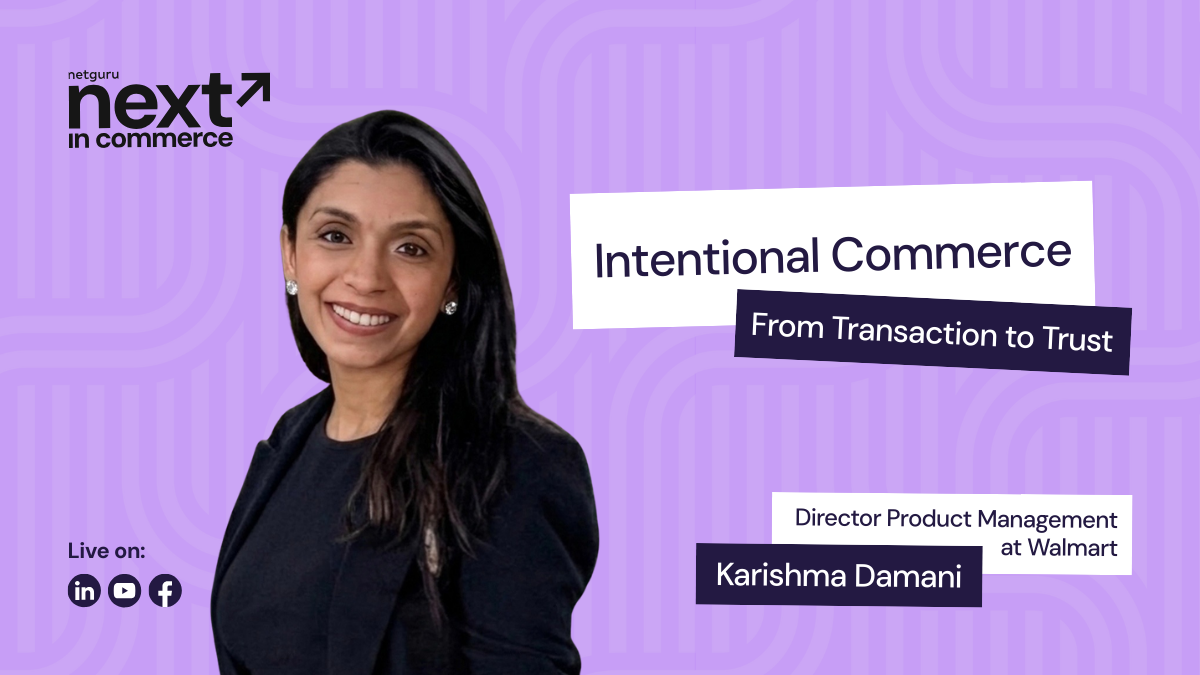
Frictionless isn’t flawless. Karishma Damani, Director of Product Management at Walmart, explains why trust now beats speed in ecommerce in this Next in Commerce podcast session.
Key insights for ecommerce leaders
- Optimize for decision quality: Compete on confidence and trust, not clicks and speed.
- Design purposeful friction: Remove bugs and clutter, add reflective pauses that cut returns.
- Balance customer and business outcomes: Preserve discovery and upsell moments while guiding choices.
- Personalization without manipulation: Offer evidence and clarity tailored to context, not pressure.
From the front lines: Karishma Damani’s perspective
Damani has spent nearly two decades shaping growth across ecommerce, marketing, and subscription businesses. Her vantage point blends scale with nuance: she has seen how frictionless checkout can inflate the top line, then quietly tax the enterprise with cancellations, returns, and churn. That journey forged a conviction — speed is table stakes, trust is the differentiator.
For a deeper dive across evaluation, security, and continuous monitoring, see our practical guide to purposeful friction in ecommerce.
Trust is the new KPI.
From speed to certainty: defining intentional commerce
The old playbook obsessed over fewer clicks and faster checkout. Damani argues the next edge is decision clarity — guiding shoppers to choices they won’t regret. The challenge is twofold: today’s customers are skeptical due to fake reviews and glossy photos, and businesses are paying for impulsive purchases through higher return costs. The answer is intentional commerce — experiences that build confidence at the right moments.
Speed is a table stakes, so we will always have to chase speed. That is not a differentiator anymore. The differentiator is what you do for the customer and the confidence you give to them as they make the purchase.
Deep dive: Amazon’s two-click confirmation
Amazon moved from one-click to a brief confirmation step on “Buy Now.” That pause verifies address and payment and lets customers reflect for a second. It slightly slows the tap to transact, yet it reduces mistakes, returns, and doorstep pileups — a small friction that compounds into enterprise savings.
Small pauses, big payoffs.
The friction paradox: remove the bad, keep the good
Damani separates friction into three types. Stoppable friction blocks willing buyers — think broken buttons and crashed pages. Distracting friction scatters attention — banners, popups, and clutter. Both are bad and must go. Purposeful friction, though, helps customers decide — clarity on sizing, return patterns, and confirmations that reduce regret.
Bad friction needs to be removed.
Deep dive: sizing, returns, and honest nudges
Retailers now label products with notes like “this size runs large” or “frequently returned.” A skincare checkout might remind you that the jar you bought last month usually lasts two months. These signals prove the brand is on the customer’s side, trading a bit of short-term revenue for long-term loyalty.
Designing purposeful friction with system 1 and system 2
Most ecommerce decisions run on fast, emotional system 1. Intentional commerce invites system 2 — the slower, reflective mode — with timely prompts. The goal isn’t more steps; it is smarter steps that surface evidence, curb impulse, and fit the journey context.
There has to be a balance. It’s not overdoing it, because otherwise you’re losing the customer completely.
Deep dive: Duolingo, Netflix, and Chewy
Duolingo’s streaks, hearts, and nudges might seem like friction, yet they reinforce value by keeping learners accountable. Netflix’s cancellation flow adds a gentle reflective screen, not a roadblock, before you leave. Chewy mails hand-written condolence notes when auto-ship ends due to a pet’s passing — operationally “friction,” but a human gesture that earns lifelong advocacy.
The contrarian view: challenging the status quo
Frictionless is not always better. In a Dunkin experiment, a tap-to-reorder flow that skipped menus and staff prompts sped the morning routine, but revenue fell. The design erased discovery and upsell moments — no “add a hash brown” suggestion, no glance at a new donut. Intentional pauses protect these high-margin micro-moments while still respecting customer time.
Your strategic roadmap: what to do next
The 24-hour win: Audit your top five journeys for stoppable and distracting friction — broken elements, redundant fields, popups, and banner clutter. Ship quick fixes, then add one purposeful pause where decisions go wrong most often, such as size guidance or replenishment reminders.
The 90-day strategy: Stand up a cross-functional program to measure “speed to certainty.” Instrument return-driven KPIs, test confirmation moments in checkout, and pilot evidence cues on PDPs. Use personalization to target pauses — clarity without manipulation — and protect discovery touchpoints that drive attachment value.
Expert Q&A
Q: Who is driving the shift from speed to trust — customers or companies?
A: Both. Customers now seek evidence and clarity, not just fast checkout, and companies see the hidden costs of impulse buys. Meeting in the middle creates a healthier relationship.
Q: How do you balance helpful pauses without frustrating users?
A: Test purposefully. Remove all bugs and clutter first, then add brief, context-aware confirmations or guidance where regret is highest. Personalize cadence to the user and moment.
Q: Where does intentional commerce matter most along the journey?
A: Across the funnel. Provide evidence during discovery, keep checkout simple with smart confirmations, and invest post-purchase in setup guidance and value reinforcement to cut churn.
Conclusion
Intentional commerce reframes the goal from speed to buy to speed to certainty. By removing bad friction and adding the right reflective moments, brands reduce returns, grow loyalty, and protect margins — all while earning trust.


