
Tailor-Made CRM Built With Mendix for Rapid Delivery and Lower Costs

7
Months to a working CRM
Built and implemented, from website through database migration.
3x
Faster than traditional build
Our estimate of what conventional development would have cost in time.
10+
Years of data migrated
Moved out of the legacy system into the new one.
The client
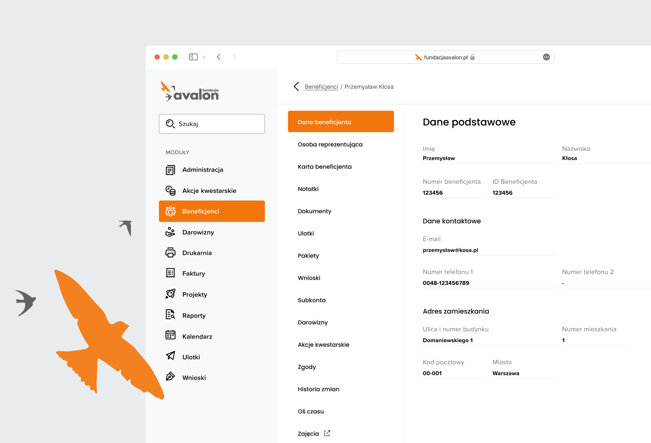
The Avalon Foundation supports people living with disabilities and with terminal or chronic illness, so that no part of their lives has to go on hold. Operating in Poland since 2006, it has helped over 14,000 people and transferred €60 million in funds.
The challengeWhat the teams actually needed
The foundation was paying for legacy software that was slowing its own people down, and wanted something more flexible and more affordable in its place.
Challenge 01A CRM working against its users
The Microsoft Dynamics 365 setup had cumbersome UX, unintuitive paths, unnecessary complexity and frequent downtime, all of which hit daily operations and productivity.
Challenge 02Reporting done by hand
Reporting was manual and tedious, which is a poor use of time in an organisation this size.
Challenge 03A website to match
Alongside the CRM, the foundation wanted its website rebuilt.
What we did
Low-code, so a decade of data could move quickly
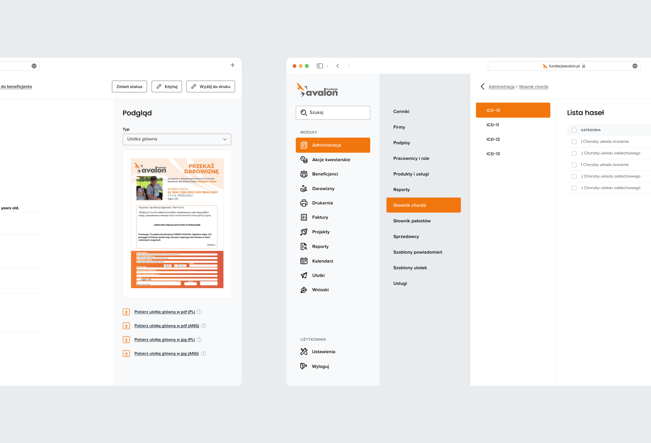
The collaboration opened with the website — advising at every step, improving UX and UI with a strong focus on accessibility — before the CRM work began.
Interviews before architecture
In-depth interviews with foundation members mapped the old system’s information architecture into a new structure, produced the basic UI and prepared reusable core screens.
Ten years of records, moved
The hardest part was the database: understanding the purpose and interconnections of the data, mapping the structure, then migrating over a decade of it.
Delivered piece by piece
The system arrived incrementally with constant client feedback and active testing. Two departments use it, each with its own modules, roles and permission-based access.
Feedback before release
Webinars before release, testing scenarios shared with the foundation, and the feedback that came back prioritised and implemented — plus integrations with the external systems the foundation relies on.
Client testimonial
Working with Netguru meant consulting at every step of the way – we loved the focus on constant improvement and tackling difficult topics upfront. Apart from transparency, the team excelled at speed and planning. We knew when we could count on the results, and we got them fast.
Tech stackThe tools that made it possible
01
Mendix
The low-code platform behind the CRM, chosen because conventional development would have taken at least three times as long.
02
Power BI
Reporting the team can generate themselves, instead of building it by hand.
More like thisOther places we scaled product teams for growth.
What’s next