
UX/UI Design and Prototyping for a Green Energy Sharing Platform

The client
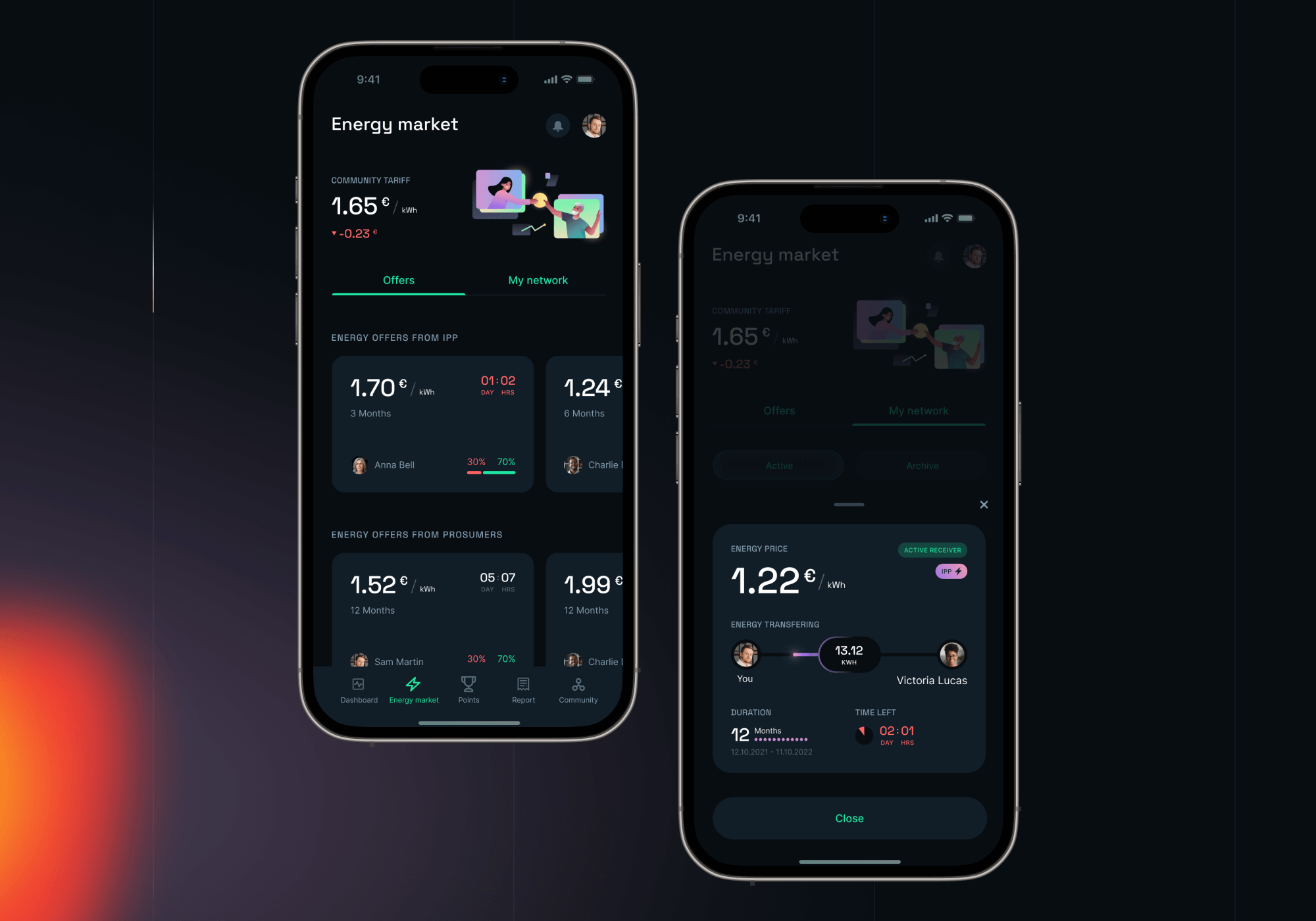
Storing energy is awkward: batteries are expensive and carry an environmental cost from manufacture through to disposal. Salzburg, an Austrian greentech company, had a different idea — share the surplus within a community instead of storing it.
On the platform, consumers buy green energy from prosumers, who generate their own, typically from solar PV. Salzburg AG brought the idea to life with our help.
The challengeWhat the teams actually needed
An energy-sharing platform has two sides to satisfy at once, and neither of them is a typical software user.
Challenge 01A brand that did not exist yet
Identity, archetype and tone of voice — plus guidelines for brand and communication — all had to be defined before the product could look like anything.
Challenge 02Understanding how people trade energy
Field and UX research was needed to learn how people actually use and interact with an energy-sharing platform, rather than assuming.
Challenge 03Impact people can see
Members needed a clear view of what they generate, what the community uses, the CO2 they save and how self-sufficient their own household has become.
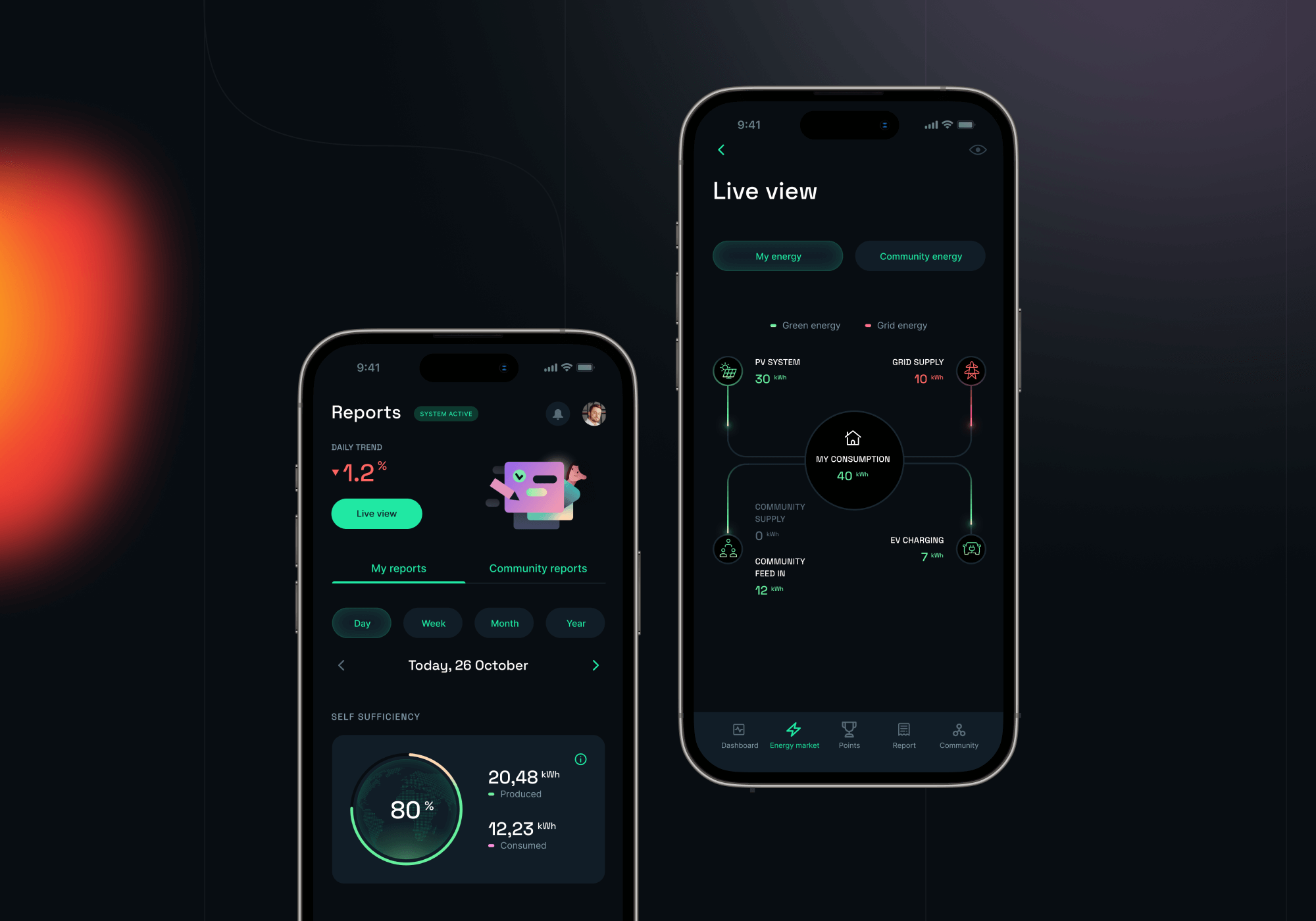
What we did
A clean energy digital centre, designed from the brand up
Branding workshops came first, then field and UX research, then wireframes, interaction design and prototyping, illustrations and user testing.
Identity before interface
Workshops defined the brand identity, archetype, guidelines and tone of voice, so the product and the brand would land on the same audience.
Wireframes, then the visual layer
High-fidelity wireframes set out components and layout, and only then did UI designers build one cohesive prototype — precision on the interface and a considered use of motion.
Profiles built around privacy
User profiles make personal data, household information and financial transactions easy to manage, with a setup process cut to minimal steps so contractors can explore the basics before verification finishes. Billing covers payment processing, history and multiple methods.
Start on one, finish on another
The designs work across devices, so a process begun on a desktop can be picked up on a phone exactly where it was left.
More like thisOther places we scaled product teams for growth.
What’s next