
Eric Ries on AI: Replace Speed With Validated Learning for Growth

Contents
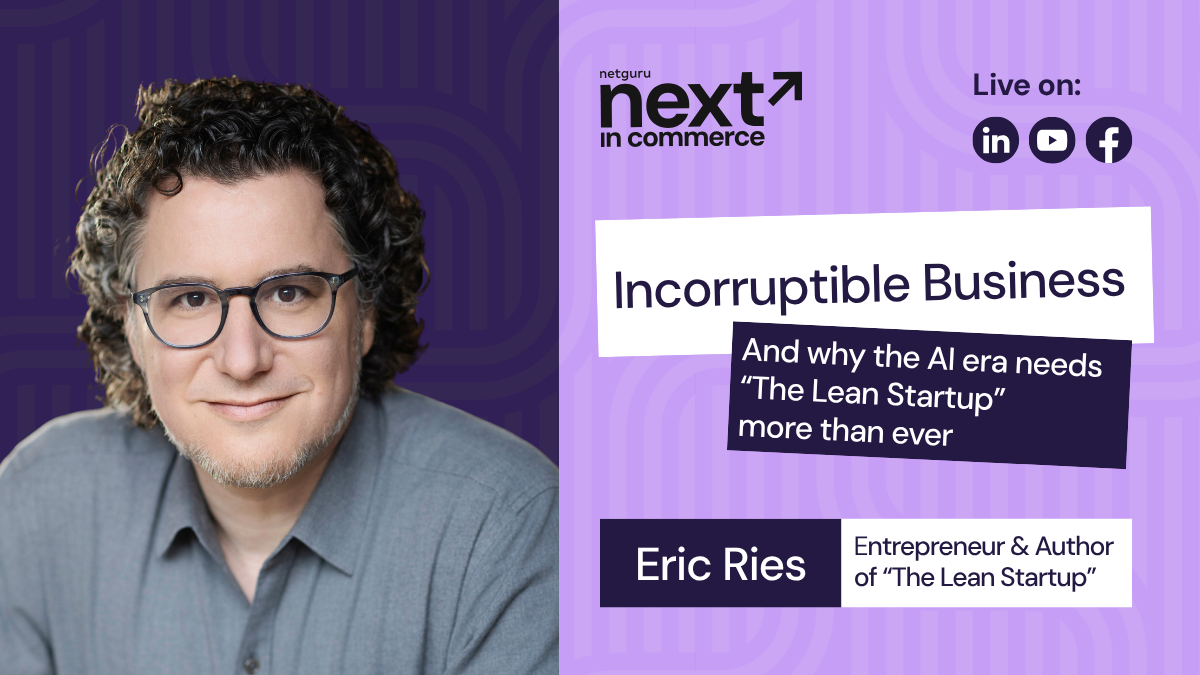
In the AI rush, speed without learning is a trap. Eric Ries — author of The Lean Startup and founder of Long Term Stock Exchange and Answer.AI — shares pragmatic guidance in this Next in Commerce session.
- Validated learning as KPI: Shift success metrics from shipping speed to evidence that customers changed behavior.
- Mission as architecture: Bake purpose into governance early, or incentives will rewrite your strategy later.
- Scenario-agnostic bets: Skill up on AI, policy disclosure, and data readiness — they pay off in most futures.
- Trust as power: Consistent principles attract talent, partners, and customers, compounding advantage.
From the front lines: Eric Ries’s perspective
Ries helped an era of founders replace heroics with systems. With The Lean Startup, he reframed progress as learning, not output. Then he built Long Term Stock Exchange to align markets with durable value. Now, with Answer.AI and his new book, Incorruptible, he is translating mission into structures that resist pressure. Across each chapter, the pattern holds: define a long-term goal, design feedback loops, then align incentives so the loops endure when money and momentum test your values.
Learning, not artifacts, moves the needle.
The AI-era MVP trap: speed vs learning
AI makes it effortless to generate code, content, and prototypes. That convenience tempts teams to mistake artifact velocity for progress. Ries argues the core challenge is preserving disciplined learning when friction vanishes.
His fix: keep the unit of progress explicit and measurable. Treat models as thought partners, but never outsource judgment. Run faster cycles, yet judge them only by what they teach about customers and viability.
"We say the unit of progress for a startup is validated learning."
Deep dive: real-world feedback as antidote
Ries warns of "LLM psychosis" — teams become enamored with AI-made artifacts that look impressive internally, yet miss the mark in the wild. The cure is external signal: ship to real customers, capture behavior change, and instrument decisions with evidence. In other words, Lean Startup still applies — AI just removes excuses.
Make AI accelerate your learning, not your illusions.
Building for the long term, not the next quarter
Lean loops only make sense in pursuit of a vision measured in years. Ries ties short-cycle experimentation to enduring value creation and argues that governance must protect this intent, especially when capital scales.
He differentiates outcomes from aims: shareholder return is a byproduct of principled execution, not the mission itself. Companies that codify purpose resist the slow drift of incentives and the seduction of quick wins that erode trust.
"Shareholder value is not the goal. It's the outcome of a healthy, vibrant company."
Deep dive: Anthropic’s line in the sand
When Anthropic’s founders anticipated unprecedented pressure, they engineered structures to hold the mission steady. According to Ries, the company recently declined a $200 million contract that conflicted with its principles and is willing to fight for its stance, even with the U.S. government. Two strengths stand out: internal alignment around human flourishing and structural integrity that can withstand external demands. The market rewards that consistency because trust compounds.
Operationalizing mission through governance
Purpose is not a poster — it is paperwork, process, and power. Ries offers practical steps leaders can implement now to reduce mission drift.
First, align the legal charter with your stated mission. If you are a Delaware corporation, a Public Benefit Corporation filing can close the gap between what you say and what the law expects you to do. Next, align decision rights via a director’s oath and explore ownership models with real checks and balances, such as foundation or employee ownership.
"It's always too early until it's too late."
Finally, cascade the mission through the operating system — business model, strategy, management cadence, and culture — so everyday choices reflect the same north star the charter encodes.
The contrarian view: challenging the status quo
Conventional wisdom praises novel corporate structures, yet Ries argues design details matter. He pushes back on claims that OpenAI mirrored Novo Nordisk, noting that the industrial foundation model relies on a two-tier check-and-balance system. A single board creates a point of failure, inviting instability. The takeaway: governance is an engineering discipline — vague imitation is not enough.
Your strategic roadmap: what to do next
The 24-hour win
- Run a charter-to-mission audit: does your legal purpose match your mission statement, or are they in conflict? If not, scope a PBC filing, and draft a simple director’s oath aligned to human flourishing.
The 90-day strategy
- Design and pilot a mission control system: codify director alignment, evaluate alternative ownership checks, and embed learning KPIs in product reviews, portfolio planning, and incentives. Translate mission into processes that survive scale and fundraising.
Expert Q&A
Q&A: How should teams stay disciplined when AI removes friction?
Ries says to treat AI as acceleration for experiments, not a shortcut for judgment. Keep the unit of progress as validated learning, and require real-world feedback to counter tool-driven bias.
Q&A: When should founders formalize the mission?
Earlier than feels comfortable. He calls it the "always too early until it’s too late" problem — you must codify protections before incentives harden and stakeholders make change difficult.
Q&A: How do you balance agility with safeguarding purpose?
Use short cycles to test pathways toward a long-term vision. Write mission into the charter, align the board, and then run lean experiments that serve that mission — agility inside guardrails.
Conclusion
AI has changed the speed of building, but not the definition of progress. Ries’s playbook is clear: measure learning, encode mission, and design structures that hold under pressure. For more nuance and examples, listen to the full conversation on LinkedIn.
Trust is the most underrated business asset.


