






UI motion design that makes your product feel as good as it works

We design purposeful microinteractions, transitions, and animated states that guide users, reduce perceived wait times, and give your product a finish that generic UI kits never will.

Trusted by

Book a discovery call

Motion design grounded in real product experience

18+

Years in business

Over eighteen years designing and building digital products across industries, from fintech to healthtech.

2,500+

Projects delivered

More than two and a half thousand products shipped, each one requiring considered UI craft at every interaction layer.

4.9/5

Average client rating

Clients rate our work 4.9 out of 5 — a score built on delivery quality and clear communication, not promises.

400+

In-house specialists

A team of over four hundred designers, engineers, and strategists working under one roof, so motion never gets lost in translation.

Building a community-driven design system for open-source video

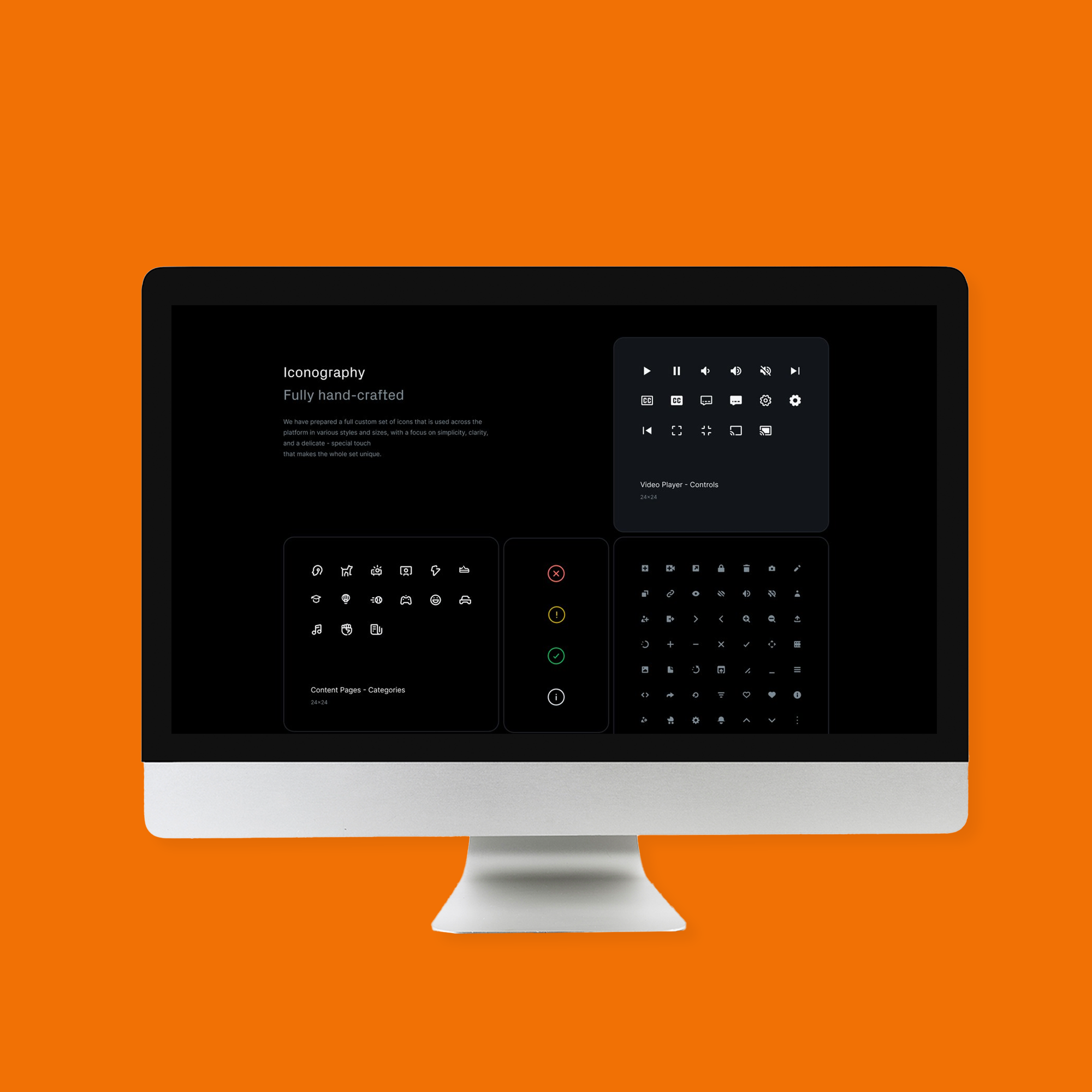
Joystream is an open-source, blockchain-based video platform built around community ownership and participation. As the team prepared to launch Atlas, their flagship dApp, they needed a highly customisable design system that could unify the experience across multiple applications whilst empowering community members to contribute to and build upon consistent design guidelines.

Netguru developed a comprehensive design system for Atlas from the ground up, delivering over 190 reusable global components, 175 design tokens, and more than 100 pages of documentation — alongside detailed Figma, design, and implementation guidelines. When Joystream launched as an MVP in October 2021, the Atlas design system provided a robust, scalable foundation that enabled ongoing development and platform improvements co-implemented directly by its users.

Getting to work with the amazing talent in the Netguru roster has turned out to be one of the most material positive impacts on how we build products at Joystream.

Bedeho Mender

Founder and CEO at Joystream

Read case study
Joystream orange square preview

Helping Countr relaunch a scalable social shopping platform

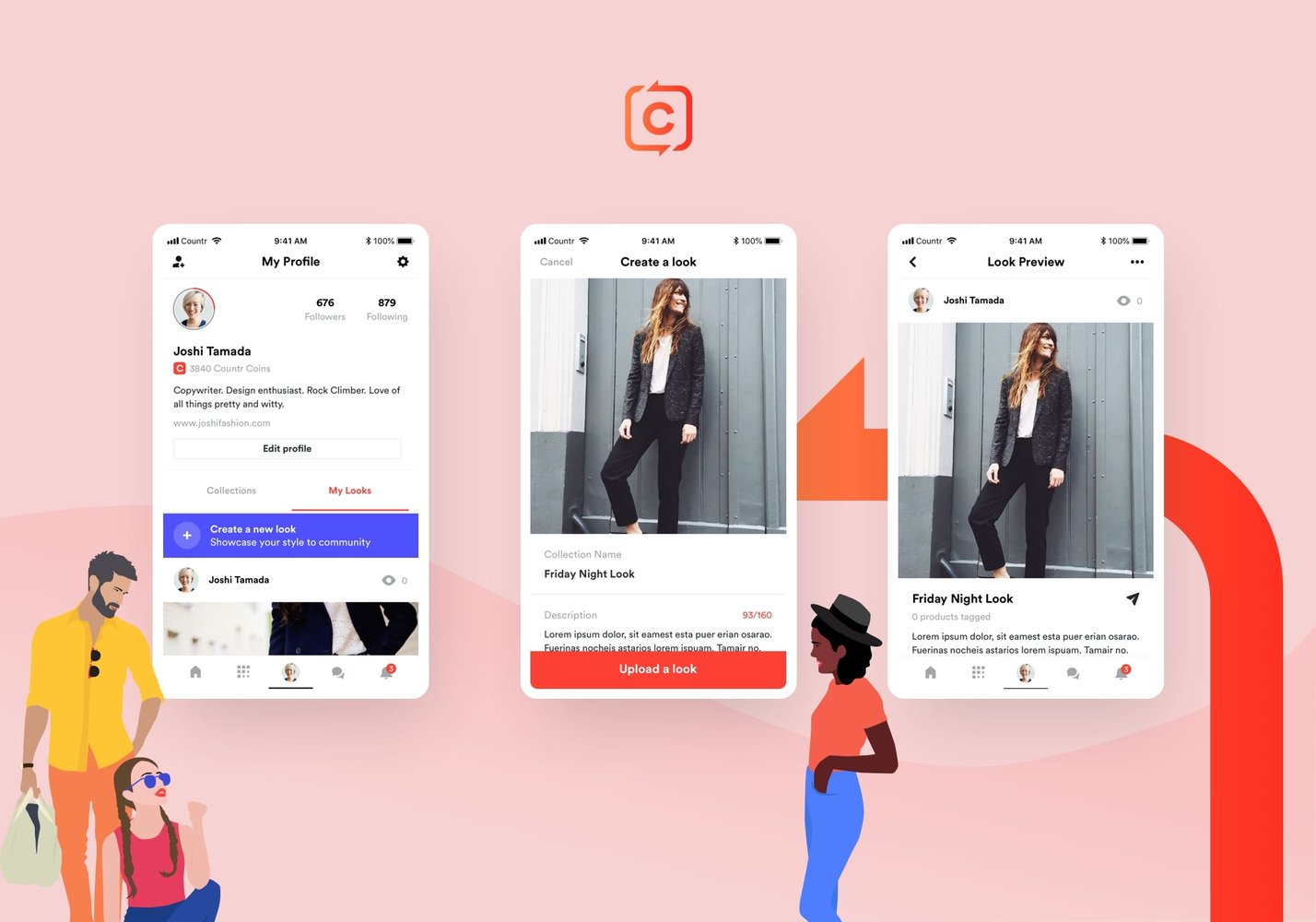
Countr is a social shopping app aiming to carve out a distinctive position in a competitive e-commerce landscape. Their alpha version, however, was held back by a fragile app architecture, legacy code in need of replacement, and no intelligent mechanism for surfacing relevant products to users — shortcomings that threatened to undermine the platform's ambitions before it had a chance to grow.

Netguru conducted a thorough code review, restructured the application for long-term scalability, and rewrote the legacy codebase. The team also developed a machine learning discovery algorithm that tailors product recommendations to individual user preferences, alongside features such as single-cart checkout and personalised feeds. The result was a successful relaunch met with positive user feedback — a platform now supporting over 160 retailers and powered by ML-driven discovery that continues to improve with every interaction.

Getting this app up and running was not easy.

Manon Roux

Founder of Countr

Read case study
Countr case study

What our clients say

Netguru's work has resulted in an improved average order value, increased basket size, and higher number of monthly active users. They're proactive, caring, and highly experienced.

Ayman Kaheel

CTO, Breadfast

They leave no stone unturned when it comes to understanding the business context. Thanks to their unique approach, we were able to reduce the workload on our operations team whilst improving the user experience.

Tiago Goncalves Cabaço

VP of Design, Careem

Netguru has been the best agency we've worked with so far. They are able to design new skills, features, and interactions within our model, with a great focus on speed to market.

Adi Pavlovic

Director of Innovation, Keller Williams

From motion brief to shipped animation — how our process works

Every engagement follows a structured path so your engineering team receives production-ready files, not a folder of ambiguous assets.

  1. Motion brief and audit

    We review your existing product, agree on the motion principles that fit your brand and user context, and define the scope of deliverables before a single frame is drawn.
  2. Motion principles document

    We produce a short written reference — covering easing curves, duration ranges, and interaction vocabulary — so every animation decision has a rationale your whole team can follow.
  3. Figma prototype and review

    Interactions are prototyped directly in Figma with Smart Animate or connected Principle files, giving stakeholders a clickable preview before any production work begins.
  4. Animation token definition

    Duration, easing, and delay values are named as design tokens — structured so they map directly to your existing token system or CSS custom properties.
  5. Production animation files

    Depending on your stack, we deliver Lottie JSON files exported from After Effects via Bodymovin, Rive state machines, or CSS/JS animation specs — whichever your engineers will actually use.
  6. Handoff documentation

    Each deliverable includes a spec sheet covering trigger conditions, timing, fallback behaviour, and the prefers-reduced-motion alternative, so engineers have no unanswered questions.
  7. QA and performance sign-off

    We test animations at 60fps on target devices, check Lottie file sizes against agreed budgets, and verify reduced-motion behaviour before marking any deliverable as complete.

Agency or freelancer — choosing the right model for your project

A freelance motion designer can be a good fit for a single, well-defined deliverable: a loading animation, a short onboarding sequence, or a set of icon transitions. The risk is coordination. Freelancers work outside your product team, which means context gets lost, revision cycles stretch, and handoff quality varies with whoever you hire.

An agency brings a structured process, cross-discipline coverage, and accountability across the full scope. At Netguru, motion designers work alongside product designers, front-end engineers, and QA — so the animation you approve in Figma is the one that ships in your product.

We offer two engagement models depending on your situation:

  • Project-based: a fixed scope covering a defined set of deliverables — suited to a product launch, a design system motion layer, or a specific feature area.
  • Retainer: an ongoing design capacity arrangement — suited to product teams that ship continuously and need motion expertise available across sprints.

What affects cost? Scope is the primary driver: the number of distinct animated states, the complexity of state machines in Rive, and the level of engineering collaboration required. Format matters too — CSS animations are faster to specify than After Effects compositions exported as Lottie.

Performance standards are not optional extras. We target 60 frames per second on mid-range devices as a baseline, keep Lottie file sizes within agreed budgets to protect page load, and include a prefers-reduced-motion alternative for every animation that carries meaning. These are part of our definition of done, not line items you negotiate.

Common questions about motion design services

What does a motion design deliverable actually look like?

Deliverables vary by format and purpose. A microinteraction might be a Figma prototype with timing annotations plus a Lottie JSON file. A state machine for a complex onboarding flow might be a Rive file with named states and transition logic. A set of CSS transitions might be delivered as a spec sheet with named tokens and code snippets. Every deliverable includes a written spec covering trigger, duration, easing, and the reduced-motion fallback.

How does handoff to our engineering team work?

We agree on your preferred format at the start of the engagement — Lottie, Rive, or CSS/JS specs. Files are delivered with accompanying documentation that covers implementation notes, trigger conditions, and fallback behaviour. We also offer a short handoff session with your engineers to walk through anything that needs context. Animation tokens are structured to integrate with your existing design token system where one exists.

How is motion design priced?

Pricing depends on scope: the number of animated states, the complexity of interactions, the output format, and the level of engineering collaboration required. Project-based engagements are scoped and quoted after an initial brief review. Retainer arrangements are agreed as a monthly capacity. We provide a clear scope document before any work begins so there are no surprises mid-project.

How do you handle accessibility — specifically prefers-reduced-motion?

Every animation that carries meaning or affects layout includes a prefers-reduced-motion alternative as a standard part of the deliverable. This might mean a cross-fade instead of a translate, an instant state change instead of a timed transition, or removing a looping animation entirely. Accessibility compliance is part of our definition of done, not a separate audit you need to commission.

What is the 60fps target and why does it matter?

Animations that drop below 60 frames per second feel janky — users notice even when they cannot name the cause. We design and test animations to maintain 60fps on mid-range devices, avoiding properties that trigger expensive browser repaints (such as width, height, or top/left) in favour of transform and opacity. For Lottie files, we agree a file-size budget per animation to protect page load performance.

When should we choose an agency over a freelancer?

A freelancer works well for a single, isolated deliverable with a clear brief. Choose an agency when motion needs to be consistent across a product or design system, when you need engineering collaboration built into the process, or when the scope is large enough that a single person would become a bottleneck. An agency also provides continuity — if a project extends or scope changes, the team absorbs it without restarting a hiring process.

Which animation formats do you support — Lottie, Rive, or CSS?

We work with all three. Lottie (JSON exported from After Effects via Bodymovin) suits illustrative animations and brand moments. Rive suits interactive state machines — loading spinners that respond to data, onboarding flows with branching logic. CSS and JS animation specs suit UI transitions and microinteractions that are better owned directly in code. We recommend a format based on your use case and your engineering team's stack, not on what is easiest for us to produce.

Ready to give your product motion that earns its place?

Tell us about your product and what you want users to feel. Our motion design team will review your brief and come back with a clear scope, a recommended format, and an honest timeline.

Book a scoping call