






Technology strategy consulting that turns IT investment into competitive advantage

We work with enterprise leaders to align technology decisions with business goals — reducing wasted spend, de-risking major bets, and building a roadmap that the whole organisation can act on.

Trusted by

Book a discovery call

What is technology strategy consulting?

Technology strategy consulting helps senior leaders decide what to build, buy, or change — and in what order — so that technology choices actively support business objectives rather than simply keep the lights on. Unlike IT consulting, which typically focuses on implementing a defined solution, or managed services, which operate existing systems on your behalf, technology strategy consulting sits upstream: it shapes the decisions before execution begins.

The distinction matters because the most expensive technology mistakes rarely happen during delivery. They happen when an organisation commits to the wrong architecture, invests in a platform it will outgrow, or modernises systems without a clear picture of dependencies. A technology strategy engagement addresses those questions first.

  • IT consulting — scoped around implementing, integrating, or optimising a specific system or technology.
  • Managed services — ongoing operational responsibility for running and maintaining existing infrastructure or applications.
  • Technology strategy consulting — advisory work that defines the direction, priorities, and governance framework for technology investment across the organisation.

Core service areas

From architecture decisions to operating model design, our engagements cover the areas where strategic clarity has the greatest impact on outcomes.

Architecture decisions

We assess your current architecture against future demand and recommend the structural changes — microservices, event-driven, cloud-native — that reduce technical debt and support growth.

Build vs. buy analysis

We evaluate whether custom development, a commercial product, or a hybrid approach best fits your capability needs, timeline, and total cost of ownership.

Modernisation planning

We identify which legacy systems to retire, re-platform, or incrementally refactor — and sequence that work so the business keeps running throughout.

Digital transformation strategy

We translate broad transformation ambitions into a concrete, prioritised programme of technology change with clear ownership and measurable milestones.

Operating model design

We help you decide how technology teams should be structured, governed, and measured — aligning engineering capacity with the products and outcomes that matter most.

Technology roadmap

We produce a prioritised, dependency-mapped roadmap that connects every initiative to a business objective, giving leadership a single source of truth for investment decisions.

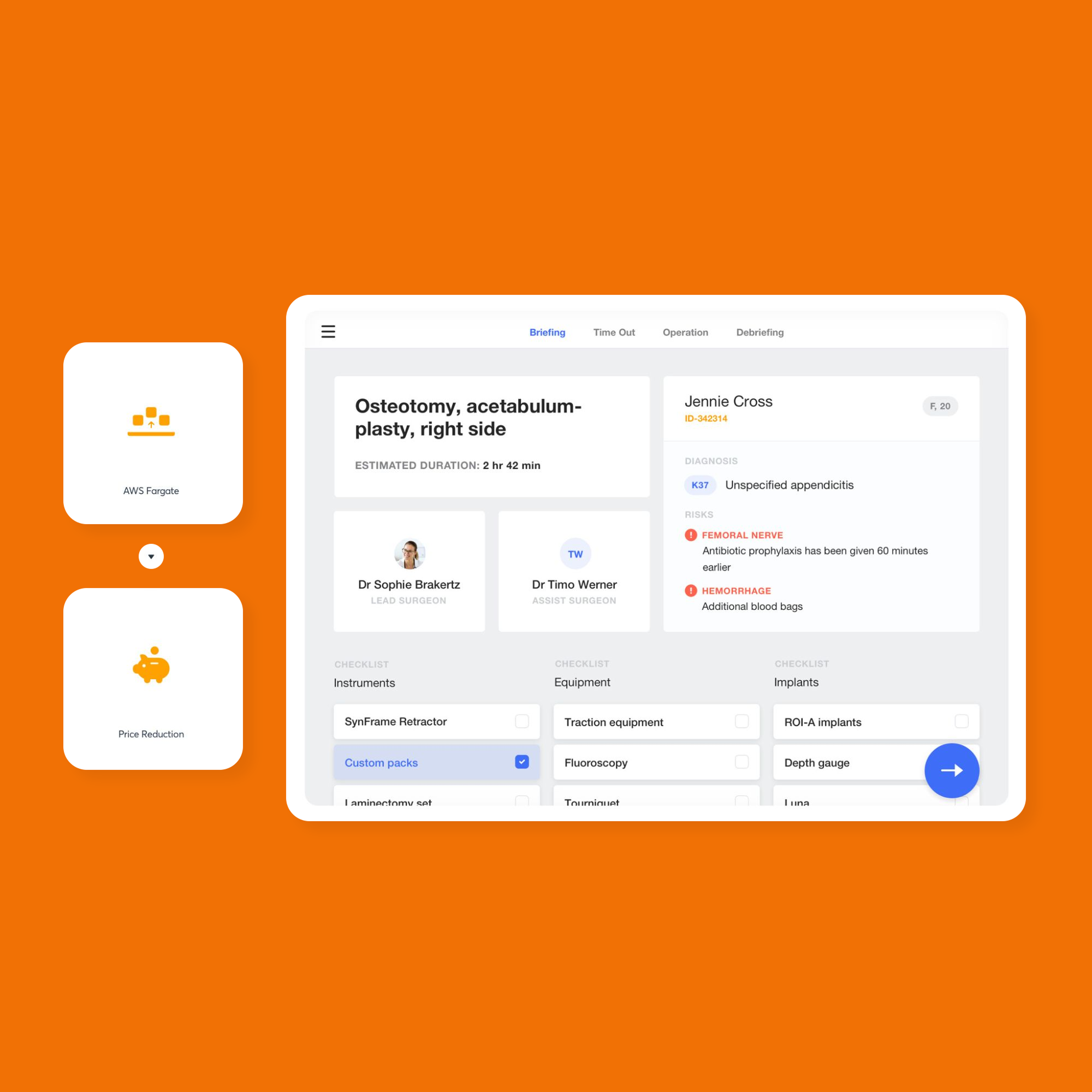
Helping Nodus Medical scale surgical platform infrastructure securely across Europe

Nodus Medical provides a mission-critical healthcare platform used by surgical teams across Europe. As demand grew, the company needed to scale its infrastructure in a way that guaranteed high availability, stringent security, and regulatory compliance — without putting clinical operations at risk.

Netguru's DevOps team migrated Nodus Medical's infrastructure to Amazon Web Services using AWS Fargate, establishing a secure multi-availability zone architecture with proper isolation, encryption, and comprehensive logging. The result was a scalable, highly available cloud environment with automated disaster recovery, full observability through DataDog and CloudWatch, and a maximum downtime of just five minutes in the event of an availability zone failure.

Since we operate in healthcare, where tolerance for critical issues is relatively low, we’re constantly improving the quality of our software.

Lukas Vogt

Former CEO at Nodus Medical

Read case study
Nodus Medical orange square preview

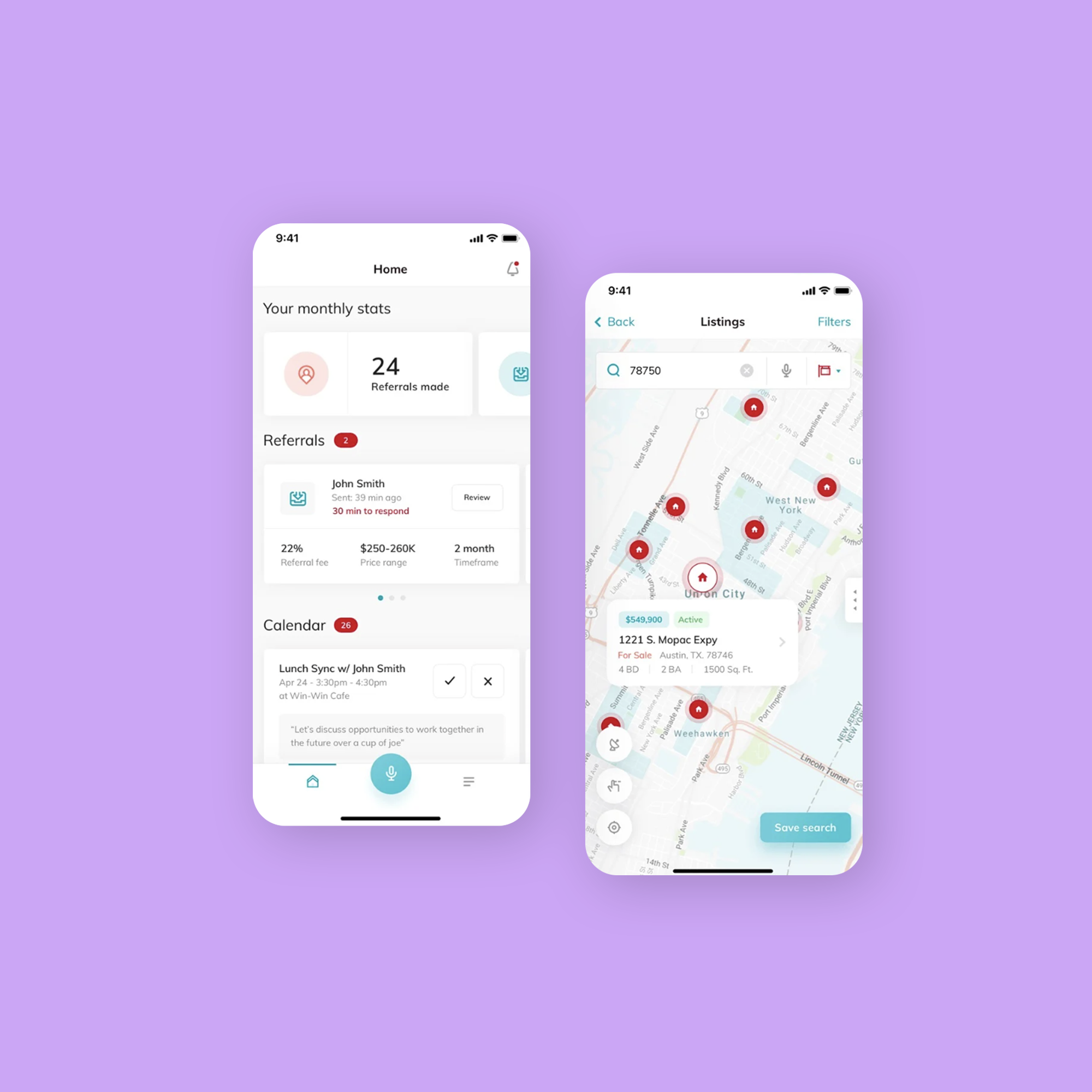
Helping Keller Williams become a technology-driven real estate powerhouse

Keller Williams, the world's largest real estate franchise, recognised that long-term agent success depended on owning its technology rather than relying on third-party solutions. To remain competitive, the business needed to build a suite of proprietary, AI-powered platforms from the ground up — a significant undertaking that required both deep technical expertise and the capacity to scale rapidly.

Netguru partnered with Keller Williams as a design and software partner, growing from a single-feature engagement in late 2017 to a 50+ person team by 2019. Working across React, React Native, Node.js, GraphQL, and Go, Netguru helped design and build Command, an AI-powered CRM, Kelle, an AI personal assistant, and a Consumer App — supported by a new design system. By October 2019, Command had surpassed 100,000 active users with over 40 million client contacts added, whilst Kelle reached more than 85,000 active users.

  • #1

    real estate franchise in the U.S.

  • 100%

    adoption of global design system

  • 0

    legacy UI left behind

Netguru has been the best agency we've worked with so far.

Adi Pavlovic

Director of Innovation at KW

Read case study
Keller Williams lavender square preview

What our clients say

Our first KPI is the time to hire, and Netguru provides candidates often and very fast. Another KPI is the retention of candidates. Our Netguru teammates stay as long as our in-house engineers.

Aleksander Heimrath

CTO, Candis GmbH

Netguru's expertise and collaborative approach were key in transforming our website into a dynamic and intuitive platform that truly reflects our vision.

Laura Mattiucci

Director Marketing & Communications, Cardano Foundation

Netguru's bar for talent is extremely high.

Scott Hickle

Product Manager, Esper

Frequently asked questions

What does a technology strategy consultant actually do?

A technology strategy consultant works with your senior leadership and engineering teams to assess the current state of your technology, identify gaps between your IT capabilities and your business goals, and produce a prioritised plan to close them. Day-to-day activities include stakeholder interviews, architecture reviews, vendor assessments, workshop facilitation, and the production of written deliverables such as current-state assessments, options analyses, and a technology roadmap.

The consultant acts as a bridge between business and technology — translating commercial priorities into architectural and investment decisions, and translating technical constraints into language that boards and executive teams can act on.

How is technology strategy consulting different from IT consulting?

IT consulting typically engages after a decision has already been made — to implement a new system, integrate two platforms, or migrate infrastructure to the cloud. The scope is defined by the solution.

Technology strategy consulting engages before those decisions are made. Its purpose is to ensure the right decision gets made in the first place, based on a clear understanding of business objectives, existing capabilities, and the trade-offs involved. The two disciplines are complementary, but strategy consulting reduces the risk that subsequent implementation work solves the wrong problem.

What deliverables should I expect from a technology strategy engagement?

The core deliverable is a prioritised technology roadmap — a structured document that maps each initiative to a business objective, surfaces dependencies between workstreams, and recommends a sequencing of investment. Supporting deliverables typically include a current-state technology assessment, an architecture options paper, a build-vs-buy analysis for key capability decisions, and a governance framework for ongoing decision-making.

All deliverables are written for two audiences: technical leads who need enough detail to act, and executive sponsors who need enough clarity to approve investment.

How is an engagement scoped and how long does it take?

Most engagements follow a structured five-stage process: Discovery, Assessment, Strategy, Prioritised Roadmap, and a Governance checkpoint. A focused engagement covering a single business unit or technology domain typically runs four to eight weeks. A full enterprise-wide strategy engagement, covering multiple domains and a longer planning horizon, generally runs ten to sixteen weeks.

Scope is agreed during an initial discovery call, where we align on the business questions the engagement needs to answer, the stakeholders who need to be involved, and the decisions the roadmap must support.

How do you prioritise initiatives on the technology roadmap?

Prioritisation combines three inputs: business impact (how directly does this initiative support a stated commercial or operational goal?), technical dependency (does this work need to happen before something else can proceed?), and delivery risk (how complex, uncertain, or disruptive is this change?). We use dependency mapping to sequence work so that foundational changes are completed before dependent initiatives begin, avoiding the common trap of starting high-visibility projects on unstable foundations.

The resulting roadmap is reviewed with both technical and business stakeholders before it is finalised, so that sequencing decisions are visible and agreed across the organisation.

Can Netguru also implement the strategy, or is this purely advisory?

We offer both. Some clients engage us purely for strategy and advisory work, then carry implementation in-house or with existing partners. Others choose to move directly from strategy into delivery with our engineering teams, which has the advantage of continuity — the people who shaped the roadmap understand the reasoning behind every decision.

We are explicit about this distinction at the outset so that clients can make an informed choice about how they want to work.

Not sure where your technology strategy has gaps?

A single discovery call is often enough to surface the two or three decisions that deserve closer scrutiny before your next planning cycle. There is no obligation and no pitch — just a focused conversation.

Book a discovery call