
App Development and VR Technology to Experience Real Estate on Mars
The client
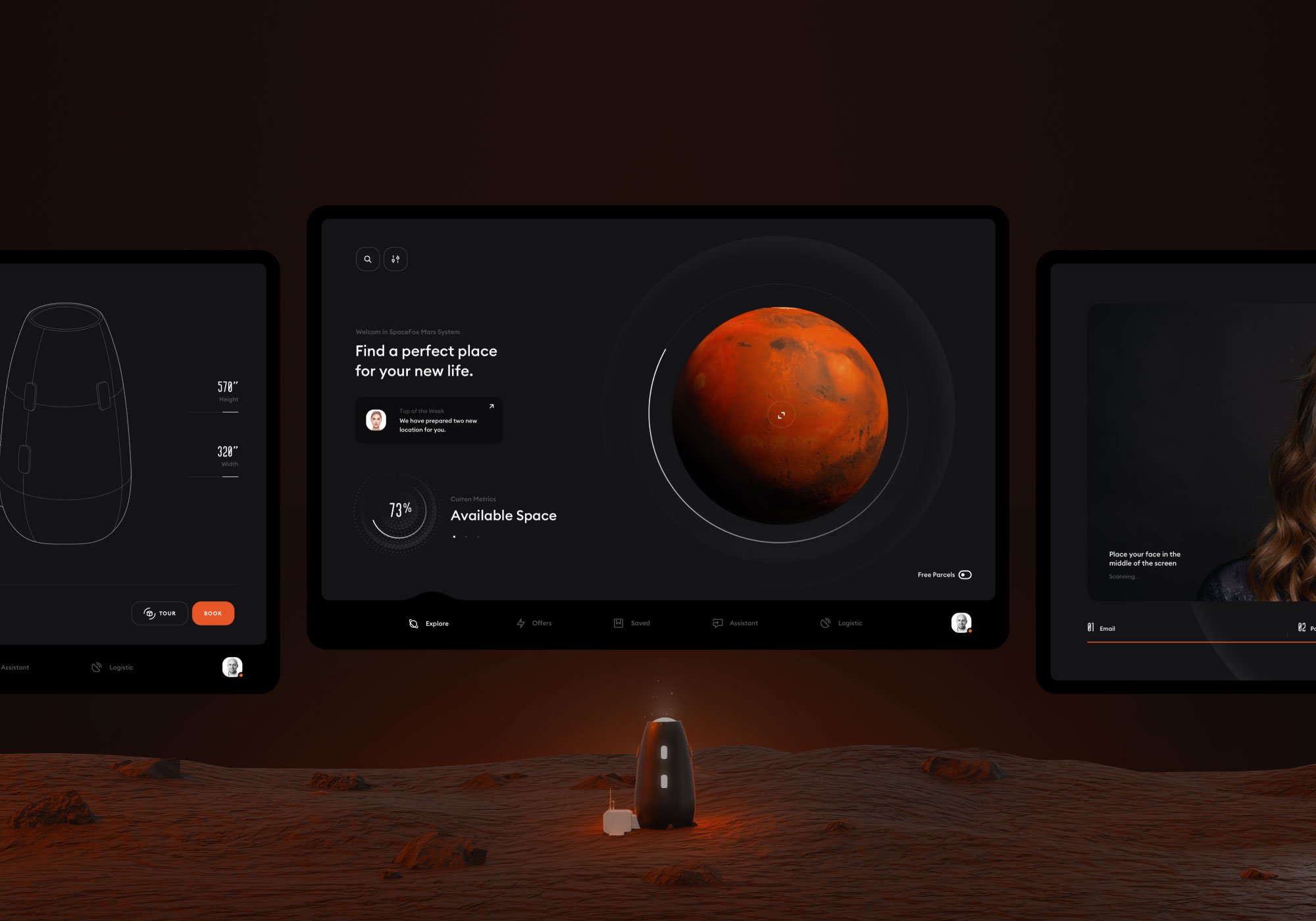
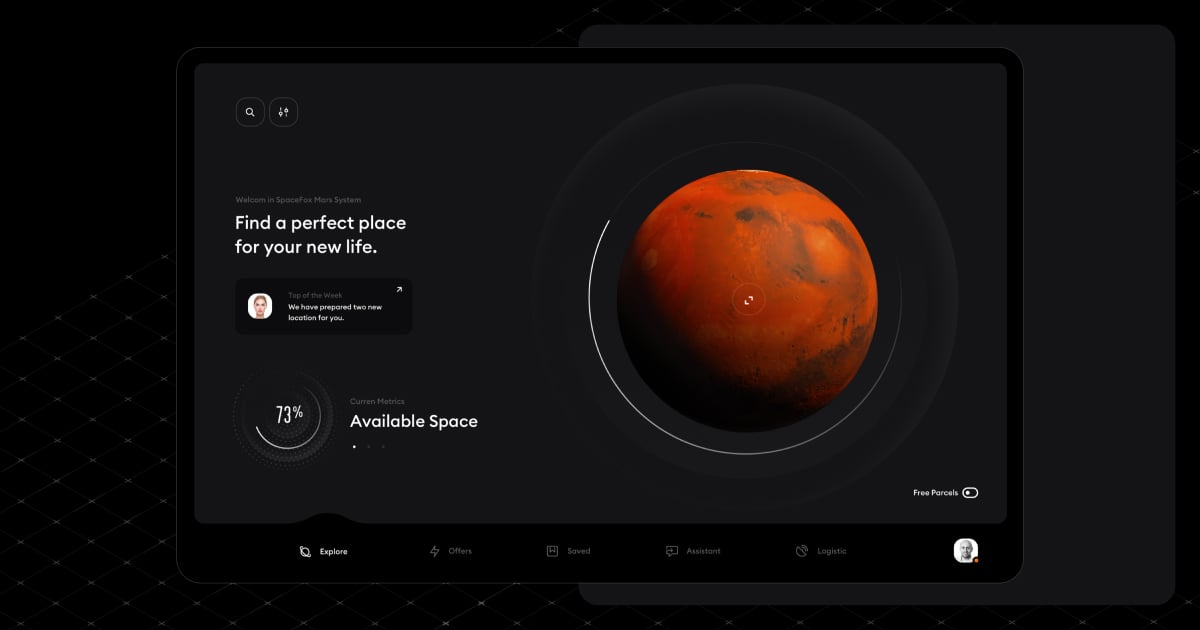
Spacefox began with a question inside Netguru: what if you could book or buy real estate in space, rent a house there, and walk through the interiors of the next generation in VR?
The harder question was how to make an interface that looks genuinely futuristic and remains implementable at the same time.
The challengeWhat the teams actually needed
An internal project with no client brief has to define its own boundaries, its own measures of success and the solutions worth building.
Challenge 01No content to design around
A product representing a futuristic vision has to be treated holistically, with the whole interactive environment carrying copy in an on-brand voice — so the wireframes came from research and imagination.
Challenge 02Futuristic without being unbuildable
The interface and interactions had to look like the future and still be implementable with real tools.
Challenge 03A side project, run remotely
Everyone took a different part while treating the whole thing as a side initiative, which made the remote process harder than expected.
What we did
Branding, 3D and a dark interface for the red planet
The scope covered desk research, moderate branding, technical documentation, interaction design and user interactions, plus modelling and rendering in 3D — with effort concentrated where it would most shape the MVP.
A name worth being attached to
Naming came out of research into who else operates in real estate, and a moderate but meaningful brand design followed the values suited to the target personas.
Screens chosen to stretch us
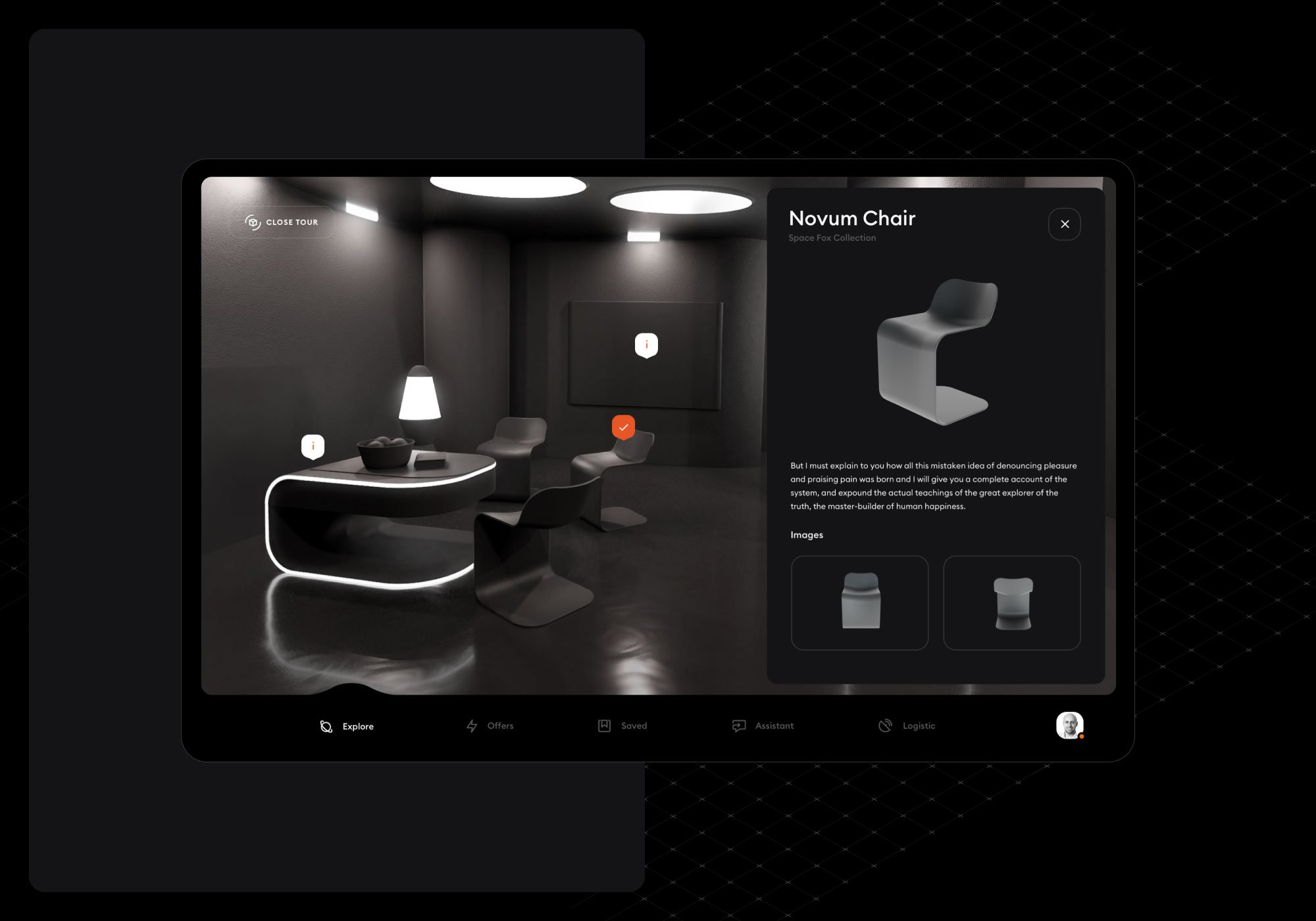
Out of the many possible screens and states, the ones picked for the MVP were those that let the team experiment with the newest technologies.
Dark, because Mars is red
A dark theme suits the setting and avoids the eye strain a light palette would cause against red hues, while letting the high-quality 3D models hold attention and enabling light-inspired animation and microinteractions.
A different view of the craft
The team came out of it knowing considerably more about tooling, tech integrations, interactions and 3D environments — and with a better remote process than it went in with.
Tech stackThe tools that made it possible
01
VR
The technology behind walking through an interior that does not exist yet.
02
3D modelling & rendering
The models the whole interface is built to show off.
More like thisOther places we scaled product teams for growth.
What’s next