
Portal development companies: 9 vendors compared for 2026


Contents
Portal development companies build authenticated, role-based web applications that give customers, partners, employees or patients self-service access to data and workflows from your ERP, CRM and other systems. What separates a capable vendor from a generic web agency is skill in identity, integration and tenancy. Below are nine vendor profiles with the same data fields, a comparison table, and the questions that test their claims.
What portal development companies build
Portal development companies build logged-in web applications where customers, partners, or employees see their own data and complete tasks themselves. Typical examples are a customer portal, a self-service portal, a B2B partner portal, and an employee portal. Projects stall when buyers scope a portal as a website with a login, because permissions, identity, and back-office integration carry most of the work.
The scope usually spans a discovery phase, permission and identity design, ERP and CRM integration, interface build, WCAG 2.2 accessibility testing, and post-launch support.
Authenticated web applications and portals typically include role-based access, identity integration, and ERP and CRM connectivity for enterprise clients. Portals are often paired with a companion enterprise mobile application, so teams planning that route should settle architecture, security, and integration questions early.
We recommend settling role-based access control and single sign-on (SAML and OpenID Connect) design first, because both set the integration and testing scope that follows. Role models tend to grow from a handful of roles to dozens once partner organizations join, and each customer's identity team has to approve its own federation setup.
A website serves anonymous visitors the same content. A portal authenticates a known user, shows data scoped to that user's organization and role, and lets them write back: approve an order, open a ticket, update a record.
Gated pages on a CMS cover read-only document access, but live ERP or CRM data with per-organization permissions calls for portal engineering. How much engineering depends on the number of user organizations, the identity providers involved, and whether the back-office systems expose APIs.
Types of portals and what each one demands technically
Portal types differ most in authentication and tenancy. A customer portal serves individuals of one organization through one identity store, while a B2B partner portal serves many companies, each with its own users, hierarchy, and often its own identity provider. Employee, vendor, patient, and self-service portals sit between those poles.
Customer portal development company
A customer portal development company should show it can run a single-organization model: one user directory, email or social login, MFA, and role-based access control with a short role list such as account owner and viewer. The hard parts are account linking, recovery flows, and CRM and billing integration. Choose the assurance level from what the portal exposes, using NIST SP 800-63.
Salesforce Experience Cloud fits when the CRM is already Salesforce. Liferay or a custom build fits when the portal carries workflows the CRM does not model.
B2B portal development companies
B2B portal development companies are tested on multi-tenancy. Each partner organization needs its own administrator, a parent-regional-branch hierarchy, isolated data, and single sign-on (SAML and OpenID Connect) against the partner's own identity provider, so offboarding happens on the partner's side.
Our view is that role-based access control alone produces a role explosion across hierarchies. Add attribute rules keyed to organization and region. Liferay's organization model and Salesforce Experience Cloud partner experiences cover common cases. Many distinct identity providers usually push teams toward a custom build on an identity broker.
The caveat: with only a handful of partners, per-partner federation is overbuilt. A shared login with enforced MFA ships faster.
The remaining types compared side by side:
| Portal type | Authentication | Tenancy | Technical demand | Vendor tags |
|---|---|---|---|---|
| Employee portal | SSO through the corporate IdP (SAML or OpenID Connect) | Single organization | Directory-driven roles, HR and ERP integration | Microsoft SharePoint, Liferay |
| Vendor portal | Federated or local accounts with MFA | Multi-tenant by supplier | Purchase order and invoice flows, ERP integration | Custom build, Liferay |
| Patient portal | Identity proofing, MFA | Single organization, per-patient record access | HIPAA right of access, audit logs, EHR integration | Healthcare-specialist or custom build |
| Self-service portal | Inherits from the host portal | Follows the host portal | Workflow engine, knowledge base, ticketing and CRM integration | Salesforce Experience Cloud, Liferay |
When shortlisting vendors, ask which row of this table each one has shipped, beyond the platforms it resells.
How portal vendors handle ERP, CRM and legacy integration
Portal vendors handle ERP and CRM integration by auditing API readiness first, then assigning each data object a sync model: real-time, event-driven, or batch. The audit belongs in the discovery phase. It records, for each system, the documented endpoints, authentication method, rate limits, sandbox availability, and whether write-back is supported.
Real-time calls through an API gateway suit lookups such as pricing and credit limits. Event-driven sync (webhooks or a message broker) suits status changes such as order shipped. Nightly batch ETL suits catalogs and invoice history.
The choice per object depends on how stale the data may be and how much load the source system tolerates. Single sign-on (SAML and OpenID Connect) is part of the same audit, because the portal's role-based access control depends on the claims each identity provider sends. The three failure modes below are the ones we would probe first:
| Failure mode | What breaks | Vendor mitigation | Question that exposes a weak answer |
|---|---|---|---|
| Undocumented legacy APIs | SOAP services, stored procedures, or file drops behave differently from what the one remaining developer remembers | Characterization tests against the legacy system, then an API facade behind the gateway so the portal never calls it directly; contract tests catch drift | "Which legacy endpoints did you reverse-engineer last time, and how do you detect a changed contract?" Answers like "we'll read the database directly" are a warning |
| Batch-only ERP exports | Users see yesterday's inventory or balance; re-running a failed file creates duplicates | Show an "as of" timestamp, key imports on the ERP record ID so reloads are idempotent, and use a live read-through call for the few fields that must be current | "What does a user see between exports, and what happens when the same file loads twice?" |
| Multiple partner identity providers | Each partner's SAML or OpenID Connect provider names attributes differently, rotates signing certificates on its own schedule, and drifts on clock skew | An identity broker such as Keycloak normalizes claims into one internal role model, with alerts on certificate expiry. Assertion handling should follow NIST SP 800-63C | "How do you onboard the tenth partner identity provider, and who is paged when a signing certificate expires?" |
The advice shifts with your stack. If the ERP is a current SaaS product with a maintained REST API, the legacy row mostly disappears, and a portal with one workforce identity provider does not need a broker. For a B2B partner portal with many companies, we recommend treating the broker as a day-one requirement.
Ask any shortlisted vendor to show a runbook from a previous integration: the retry policy, the dead-letter queue, and the reconciliation report between portal and ERP. A vendor that has run these in production can produce them quickly.
What a portal development engagement looks like, and what drives cost
A portal development engagement typically runs 5-8 months from discovery phase to launch, and four factors set the price: role count, integrations, compliance scope, and upstream API quality, in our planning experience.
The ranges below are our planning estimates for a mid-size portal with one or two ERP or CRM connections, not published benchmarks.
| Phase | Duration (estimate) | Output |
|---|---|---|
| Discovery | 2-4 weeks | Role matrix, integration audit, scoped backlog |
| Design and architecture | 3-5 weeks | Identity model, data flows, UX prototypes |
| Build | 10-16 weeks | Working portal, integrations, admin console |
| Hardening | 3-5 weeks | Security testing against OWASP ASVS, WCAG 2.2 checks, load tests |
| Launch and hypercare | 2-4 weeks | Production cutover, defect triage |
A baseline feature set for most portals:
- Single sign-on over SAML or OpenID Connect
- Role-based access control, with attribute rules where roles multiply
- Role-specific dashboards
- Search across content and connected records
- Workflow with approvals
- Alerts and notifications
- An admin console for users, roles, and content
What drives cost
- Roles: Each distinct role adds permission rules, a dashboard variant, and test cases. Role-based access control that depends on tenant or record attributes costs more than flat roles.
- Integrations: A read-only batch feed is the cheapest ERP and CRM integration. Bidirectional write-back with real-time sync costs the most, because conflict handling and retries must be built and tested.
- Compliance scope: HIPAA for patient portals or a WCAG 2.2 AA commitment adds audit logging, encryption controls, and independent testing.
- Upstream API quality: An undocumented or rate-limited legacy ERP forces a middleware layer. The discovery audit should price that layer before the build starts.
Custom build or platform
The trade-offs side by side:
| Option | Cost shape | Fits | Strain point |
|---|---|---|---|
| Custom build | Highest upfront, no per-user licence | Unusual workflows, deep write-back, many tenants | You own patching and upgrades |
| Liferay DXP | Subscription plus implementation partner | Configurable partner or employee portals | Heavy customization raises upgrade cost |
| SharePoint | Bundled with Microsoft 365 for internal users | Employee portal in a Microsoft shop | External identity and customer-facing UX need extra work |
| Salesforce Experience Cloud | Per-login or per-member licences | Customer or self-service portal on Salesforce CRM | Licence cost grows with external users; ERP data needs a separate integration layer |
We recommend a platform when the portal is mostly a front end on one system of record, and a custom build when workflows or tenancy are the product. Model three-year licence cost at your projected external user count before deciding.
Login-based Experience Cloud licenses provision 20 login licenses for each monthly login purchased, so 1,000 logins yields 20,000 licenses (Salesforce Help: Experience Cloud User Licenses, 2025).
After hypercare, support usually moves to a retainer with severity tiers. Get response and resolution times per tier in writing (an illustrative P1 target is a one-hour response), and confirm who owns hosting, since uptime depends on it.
Netguru
Netguru company background
Netguru is a certified B Corporation™ headquartered in Poznań, Poland, with additional offices in Warsaw, Kraków, Wrocław, Gdańsk, and Białystok.
The company was founded in 2008 and has served major brands including IKEA, VW, OLX, Żabka, Careem, and Vinted across the US, UK, DACH, and MENA regions.
Netguru has appeared three times in Deloitte's Technology Fast 50 Central Europe ranking and twice on the Financial Times' FT 1000 list of Europe's fastest-growing companies.
Portals are one flavour of custom web application development. The same evaluation criteria apply to portals, SaaS products, and internal platforms.
The company specializes in developing front-end and back-end web applications, mobile applications, product design, and consulting. Over 400 professionals work at Netguru, and the company has delivered more than 3,500 projects for clients worldwide. For teams whose portal is evolving into a transactional platform, our review of vetted marketplace development companies shows how other vendors approach platform builds and integrations.
Netguru portal development services
Netguru builds digital commerce platforms, marketplaces, and omnichannel experiences, many of them AI-driven. The company offers end-to-end web portal development services that include website development, web application development, ecommerce solutions, and dedicated CMS development.
Their service spectrum spans ideation, market research, wireframing, prototyping, UI/UX design, coding, QA testing, cybersecurity, consulting, and ongoing maintenance. For fintech clients, the team also does fintech app development that embeds compliant financial products into customer-facing portals.
Netguru portal projects and case studies
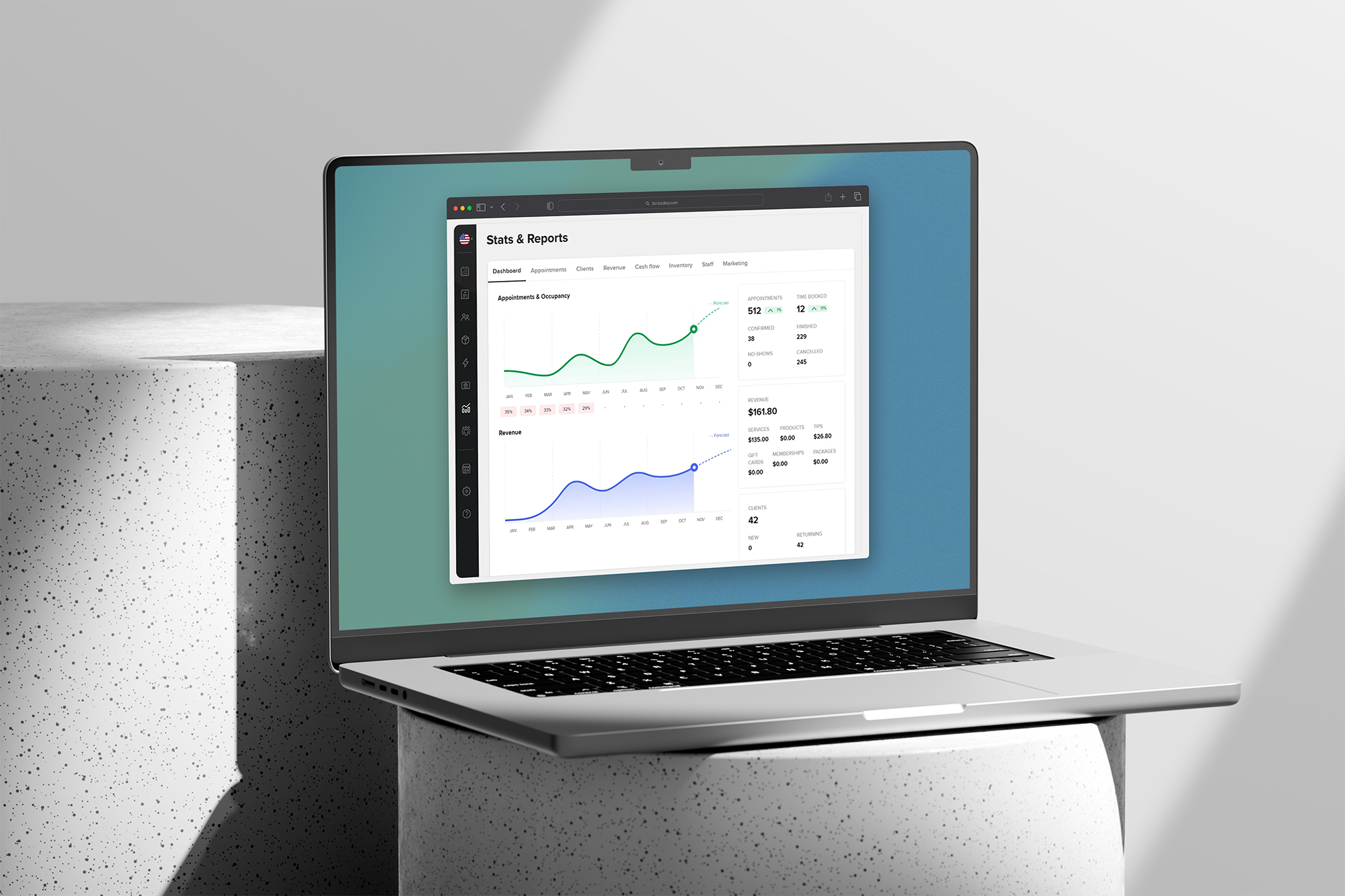
Netguru's portal development expertise spans multiple industries. They built a B2B marketplace for Booksy that integrates inventory management with booking systems and now supports over 300,000 beauty professionals worldwide. The platform included migration to Elasticsearch for intelligent product searches across 30,000+ items.
Netguru developed Vinted GO's logistics integration portal from 2022 to 2024 and created an adapter-based system that normalizes different carrier APIs. New carrier integrations shipped on schedule for each market launch.
For Babbel, Netguru built a B2B admin portal with React.js and Ruby on Rails that took the language-learning company into the B2B market, with enterprise customers such as Hyundai, Paramount, N26 and Bacardi.
For NewGlobe, an AI tool cut teacher guide production from 4 hours to about 45 seconds per guide.
Netguru's team of five built a PropTech platform from scratch for Home Made within 13 weeks. Home Made then raised £850,000 in seed funding.
Netguru technology stack
Netguru uses React.js, Vue.js, and Angular for frontend development. Server-side technologies include Python, Ruby on Rails, and Node.js. Cloud deployment employs Google Cloud, Amazon Web Services, and Microsoft Azure. The company also specializes in no-code and low-code solutions using platforms like Webflow and Mendix.
For teams comparing Netguru against other options, our ranking of the best custom web application developer options for 2026 puts this stack in a wider market context.
Why choose Netguru
Clients rate Netguru 4.9 on average, and its client NPS is 68. Portal projects benefit from that mix of product design, engineering and integration work under one team, and from ISO 27001 certification for security-sensitive builds.
Elogic Commerce
Elogic Commerce company background
Founded in 2009 and headquartered in Tallinn, Estonia, Elogic Commerce brings commerce engineering depth to B2B portal projects where customer self-service, partner workflows, ERP integration, and marketplace logic need to operate as one system.
The company is listed with 50-249 employees, a $25,000+ minimum project size, and a $50-$99 hourly rate.
Elogic Commerce works with mid-market and enterprise businesses, especially manufacturers, distributors, wholesalers, technology companies, and hybrid B2B/B2C brands, serving clients across North America and Europe through offices in New York, London, Stockholm, Dresden, and Prague.
Elogic Commerce portal development services
Elogic Commerce develops B2B customer portals, vendor portals, dealer portals, marketplace portals, and self-service commerce platforms. Elogic’s portal work covers secure buyer environments with custom catalogs, account-specific pricing, contract terms, order history, invoice management, RFQ flows, approval workflows, and self-service reordering.
The company also builds supplier and vendor portals with procurement visibility, inventory management, payment tracking, shipment updates, and integrations with ERP, CRM, PIM, OMS, and WMS systems.
Elogic Commerce portal projects and case studies
Elogic’s portal-related work includes Dorina, a global lingerie brand that needed to scale D2C commerce while keeping B2B operations connected. The team delivered a Shopify Plus and Colect-based setup with Microsoft Dynamics 365 as the ERP layer and Plytix as the PIM system.
The project supported D2C and Brand Supplier Portal operations, improved data consistency across D2C and B2B channels to approximately 99.8%, and generated $3.7 million in additional ecommerce revenue from the new D2C channel within the first 12 months.
For PetHQ, a UAE/Dubai pet care retailer, Elogic Commerce moved B2B sales from manual management to a dedicated B2B-ready Shopify Plus website with custom registration, order quotation flow, quick order functionality, and a wholesale channel for more than 1,400 B2B buyers and suppliers.
The company also worked with TeamViewer on Adobe Commerce optimization, global payment orchestration, subscription workflows, partner-driven license sales, and customer and partner portal enhancements.
Elogic Commerce technology stack
Elogic Commerce works with Adobe Commerce, Shopify Plus, Salesforce Commerce Cloud, BigCommerce, commercetools, Hyvä, and headless or composable commerce architectures.
The integration work covers SAP S/4HANA, Microsoft Dynamics 365, NetSuite, Infor, Epicor, Odoo, Akeneo, Pimcore, secure API orchestration, role-based access control, approval hierarchies, contract pricing, and real-time inventory.
Elogic’s work for BUFF® also shows enterprise-scale Adobe Commerce optimization with Akeneo PIM, Oracle ERP systems, frontend modernization, and product data accuracy improvements.
Why choose Elogic Commerce
Elogic Commerce is a strong choice for companies that need portal development for complex commerce operations, including B2B customer portals, vendor portals, dealer portals, marketplace portals, ERP-connected commerce platforms, replatforming, and long-term optimization.
Purrweb
Purrweb company background
Purrweb has specialized in developing MVPs and full-scale applications for startups and established businesses since 2014. The company operates with a team of over 200 specialists that includes developers, UI/UX designers, QA engineers, project managers, analysts, and DevOps professionals.
The company has completed 550+ projects spanning fintech, healthcare, logistics, IoT, and e-commerce sectors. They deliver prototypes within 72 hours and release 94% of projects ahead of schedule.
Purrweb portal development services
Purrweb provides full-cycle web portal development services covering analytics, system analysis, UI/UX design, and custom software development. The company builds B2B portals, lead generation platforms, and solutions for specific industries.
Their development process has a discovery phase analysis, design concept creation, parallel QA testing, and post-launch maintenance. Project teams have a project manager, a UI/UX designer, 2-3 developers, and a QA engineer. Development timeframes average 3-6 months, with MVP delivery in around 3 months.
Purrweb portal projects and case studies
Purrweb developed Kem, a P2P payment application that addresses Kuwait's limited online banking access. The platform makes it possible for users to send and request money through a secure fintech solution. This helped the client meet banking partner requirements for MVP demonstration.
For the European B2B market, the team created Look4pro, a web platform that operates as a classifieds board for small and medium-sized businesses. The project featured multilingual support (English, French, German, Spanish, Russian), Stripe payment integration, and a subscription-based monetization model. The platform received positive feedback at a Swiss startup conference.
Purrweb technology stack
Purrweb’s frontend work relies on React.js, with React Native for cross-platform mobile applications. Backend development uses Nest.js as the primary Node.js framework. Desktop applications use Electron technology. Database solutions include Redis, PostgreSQL, MongoDB, and MySQL. Infrastructure deployment spans AWS, Heroku, Jenkins, and Nginx. Additional technologies include Flutter, WebRTC, and PWA for specialized requirements.
Why choose Purrweb
Purrweb says cross-platform development with React Native and Flutter saves clients up to 30% of their budget by merging Android and iOS workflows. Project costs range from USD 45,000 to USD 130,000 on average. The company's longest partnership has lasted 7 years.
They launched and improved 3 projects during this time, with one reaching USD 5 million annual turnover. Clients praise the professionalism of project managers, engineering teams, and QA specialists. They note on-time delivery within planned budgets.
Dev Technosys
Dev Technosys company background
Dev Technosys began operations in 2010 and has grown into an ISO 9001:2015 and CMMI Level 3 certified web portal development company. The Hindu has featured the company for its web portal work in digital transformation and accessible design.
The company operates with 150+ skilled developers and designers and has completed over 1,500 projects. The company maintains a 95% client retention rate and serves businesses across 30+ countries, including the US, Canada, the UK, Germany, and the Netherlands.
Dev Technosys portal development services
Dev Technosys creates secure, scalable, and user-friendly web portals centered around simplified navigation and customized user experiences.
Their custom web portal development covers three panel types: user panels for customer self-service, operator panels for content management and service oversight, and admin panels for performance monitoring and data insights. Portal consulting services include technology planning, module selection, workflow mapping, and risk mitigation.
The company builds customer portals, vendor platforms, enterprise dashboards, and internal management tools designed to simplify and automate daily tasks.
Dev Technosys portal projects and case studies
Client feedback reflects strong project outcomes across multiple sectors. A healthcare client praised Dev Technosys for delivering a secure, HIPAA-compliant medical app with clear communication and technical expertise. The team developed a multi-vendor platform with smooth UI/UX design and payment gateway integration for a UK-based eCommerce client.
A UAE logistics company reported improved efficiency and reduced costs through custom features like live tracking and route optimization. A video streaming platform built for a Spanish client supports live streaming and on-demand hosting with resilient backend infrastructure.
Dev Technosys technology stack
The company uses AI-powered solutions to improve user experiences through intelligent automation and tailored features. IoT-powered web portals enable faster decision-making and device management. Blockchain-enabled portals provide trust, compliance, and traceability for organizations prioritizing security.
Dev Technosys works with technologies including AI, Blockchain, Flutter, React Native, Laravel, and Node.js. The team observes global regulations such as GDPR, ISO, and SOC 2 and implements encryption, secure APIs, multi-factor authentication, and role-based access control.
Why choose Dev Technosys
Dev Technosys offers flexible engagement models, including fixed-cost, hourly, and dedicated resource options. Hourly rates range from USD 25.00 to USD 45.00. The company provides 24/7 support, updates, performance monitoring, and troubleshooting to keep portals secure and functional.
Major organizations, including NASSCOM and GoodFirms, have acknowledged their technological depth and service quality. The company achieved a 5/5 rating on Clutch and maintains recognition on platforms like GoodFirms, AppFutura, and DesignRush.
Itransition
Itransition company background
Itransition has provided end-to-end software engineering services since 1998. Companies use these services to carry out full-scale digital transformations. The company operates globally with 3,000+ professionals in the US and European offices.
Over its 25+ year history, Itransition has served over 800 clients from dozens of business verticals spanning 40 countries.
The team composition has 99% holding BS, MSc, or PhD degrees, with 86% being senior and middle-level specialists. 70% of staff have worked with Itransition for 2+ years.
Itransition portal development services
Itransition offers full-cycle web portal development services. The company handles projects end-to-end, from auditing business needs and creating MVPs to final portal development and deployment. The development team performs analysis of business needs and audits technology environments to define requirements for future portals.
Services cover both custom portal development from scratch and platform-based solutions. The choice depends on needs, required functionality, available human resources, and budget. Portal migration services help transfer solutions to more flexible and modern platforms when legacy systems no longer meet changing business needs.
The company also delivers customer portals, vendor platforms, and employee self-service portals.
Itransition portal projects and case studies
Itransition delivered a new version of an internet banking portal for Rietumu Banka, one of the largest private banks in the Baltic region, with over €1.6 billion in assets.
The team created a modular architecture using AngularJS for the frontend and a Java-based backend with Gate API integration. The solution helped the bank align its digital channels with what clients expected. For real estate, Itransition built a property management portal connecting developers and buyers globally.
The portal attracted 100+ real estate development companies. The team developed it using PHP with the Laravel framework, Vue.js, and MySQL.
Itransition technology stack
The company uses AngularJS, Java, PHP, Laravel, Vue.js, Bootstrap, MySQL, Elasticsearch, and the WebSocket protocol. Integration capabilities include PayPal, Stripe, SendGrid, and Zoom. Itransition is an ISO 9001 and ISO 27001 certified partner of Microsoft, Amazon, Salesforce, and Atlassian.
Why choose Itransition
Project estimates range between USD 10,000 and USD 250,000, with averages around USD 50,000. The company has completed 1,530+ projects and keeps 50 clients who have stayed 5+ years.
Classic Informatics
Classic Informatics company background
Classic Informatics specializes in AI, Data, and Digital solutions. The company helps businesses operate intelligently and scale around the world. Since its founding in 2002, it has delivered 2,000+ projects to 500+ clients. It operates from multiple international locations, including Gurugram (headquarters), Chandigarh, Sydney, and London. The company maintains a team of 50-249 employees.
Classic Informatics portal development services
Patient portals are Classic Informatics’ main portal specialty, built as custom solutions for healthcare providers. Its full-stack web development services cover end-to-end platforms under one roof, with a focus on user-centered applications. Clients include enterprises, startups, and organizations in retail, eCommerce, healthcare, telehealth, fintech, travel, logistics, and entertainment.
Classic Informatics portal projects and case studies
Classic Informatics partnered with Healius Limited, an Australian healthcare company that runs 80+ websites holding patient and doctor data. The team migrated all 80+ websites from Episerver CMS to WordPress. They established an IT infrastructure on AWS managed by cloud and DevOps engineers. The team implemented CI/CD pipelines that ensure zero downtime during updates, autoscaling infrastructure, disaster recovery, proper load balancing, and caching.
Classic Informatics technology stack
The company works with WordPress, AWS, DevOps, CI/CD, MongoDB, Node.js, React.js, Selenium, PHP, Blockchain, and Artificial Intelligence. Classic Informatics uses Agile and DevOps practices to accelerate product delivery.
Why choose Classic Informatics
Project investments range from USD 30,000 to USD 500,000. Hourly rates fall between USD 25 and USD 49, with a minimum project size of USD 10,000+. Clients praise their skill in guiding offshore coordination. They deliver solid code within tight deadlines and offer affordable pricing with easy collaboration.
WillowTree
WillowTree company background
WillowTree was founded in 2007 and is headquartered in Charlottesville, Virginia. TELUS International agreed to acquire it for about USD 1.2 billion in late 2022, and WillowTree now operates as part of TELUS Digital, TELUS International’s new name.
The company operates 13 global studios across the United States, Canada, Brazil, Poland, Portugal, Spain, and Romania. WillowTree has more than 1,000 digital strategists, designers, engineers, and project managers. The company has built over 400 custom mobile and web apps.
WillowTree portal development services
WillowTree works with consumer brands on personalized experiences across the customer journey. The company designs and builds mobile apps and websites while launching personalized and automated marketing campaigns. Their lean, global teams minimize the time from idea to outcome.
Core competencies include mobile and web app development, cloud/API integration, and enterprise-grade applications. Data and AI consulting is a recent addition to its portfolio. The focus is on generative AI engineering, agentic automation, and AI-driven digital experiences.
WillowTree portal projects and case studies
The Regal Cinemas mobile app won customer experience awards. WillowTree delivered a high-speed rail customer app for Brightline and a companion app for the Pepsi Super Bowl Halftime Show. Their client roster has Fortune 500 companies such as Johnson & Johnson, PepsiCo, FOX News, TimeWarner, and Marriott.
WillowTree technology stack
WillowTree uses technologies that include React, Objective-C, Redis, Google Closure, reCAPTCHA, Amazon SES, jQuery, and Cloudflare. The company achieves an industry-leading Net Promoter Score (NPS) of 70+.
Why choose WillowTree
WillowTree’s global delivery model uses engineering centers in Noida, India, and Porto Alegre, Brazil, which allows the company to scale resources for massive enterprise clients.
AMP Agency
AMP Agency company background
Advantage Solutions unified Amp Agency and Advantage Unified Commerce in 2024 to form AMP (Advantage Marketing Partners), a full-service agency that combines creativity, media, retail, and commerce capabilities.
The consolidation brought together 10 legacy agencies, including AUC, Upshot, IN Marketing, Edge, and eShopportunity, into a single integrated model. Chief Marketer named AMP to its Top Agencies of the Year list.
AMP Agency portal development services
AMP delivers web development and analytics services through six practice areas: strategy and intelligence, creative and content, retail and commerce expertise, media and measurement, digital and social, and ad activation and amplification.
Website design projects begin with audits that evaluate messaging, user experience, accessibility, SEO, and technical performance. The team analyzes content alignment and identifies UX friction points.
The team also runs WCAG compliance reviews, checks search visibility, and assesses technology frameworks for efficiency and scalability.
AMP Agency portal projects and case studies
AMP's case studies demonstrate expertise in consumer brands like Aquaphor and Promised Land Dairy.
AMP Agency technology stack
The agency's proprietary Alchemy platform processes 40 million daily data points for media and performance intelligence. AMP integrates with client systems, including TPM, CDP, and PIM. It uses AI for media optimization, segmentation, and creative development. Nudgenomics applies behavioral science to decode buyer behavior.
Why choose AMP Agency
AMP specializes in serving mid-size challenger brands that scale omnichannel growth.
The Software House
The Software House company background
Three former frontline software developers founded The Software House in 2012 in Warsaw, Poland. The company employs 294 professionals across 4 continents and maintains partnerships spanning 4+ years with GOconnectIT and 8+ years with Speakers' Corner. Financial Times recognized them in the FT 1000 list. Deloitte honored them with the Technology Fast 500 EMEA 2017 and Technology Fast 50 CEE 2017 awards.
The Software House portal development services
The Software House delivers agile development teams that specialize in Node.js, React.js, Symfony, and Laravel. Services include full-cycle product design and development, data engineering, and modern software architecture, including microservices and serverless solutions. The company handles portal modernization and legacy system transformation as an AWS Partner. They also provide DevOps team support to increase capacity.
The Software House portal projects and case studies
A moving company reduced customer calls by 40% through a self-service app. StageClip cut monthly AWS bills by 93% after architecture rebuilding. Payment processing accelerated from days to minutes for xpate. PetMediaGroup achieved 400% revenue growth after implementing a unified platform that manages 6 marketplaces.
The Software House technology stack
Core technologies include Node.js, React.js, Symfony, and Laravel. The company maintains AWS partnership credentials and specializes in microservices, serverless architectures, and cloud migrations.
Why choose The Software House
The company maintains a 98% client recommendation rate and launches projects within weeks. Clients describe its team members as co-founders.
Comparison table: The 9 leading portal development companies for 2026
| Company | Founded | Headquarters | Team Size | Projects Completed | Key Technologies | Notable Clients/Industries | Portal Specializations |
|---|---|---|---|---|---|---|---|
| Netguru | 2008 | Poznań, Poland | 400+ professionals | 3,500+ projects | React.js, Vue.js, Angular, Python, Ruby on Rails, Node.js, AWS, Google Cloud, Azure, Webflow, Mendix | IKEA, VW, OLX, Żabka, Careem, Vinted, Booksy, Babbel, Hyundai, Pirelli | B2B marketplaces, logistics integration portals, admin portals, PropTech platforms, AI-powered platforms, ecommerce, payment platforms |
| Elogic Commerce | 2009 | Tallinn, Estonia | 50–249 employees | 500+ commerce projects | Adobe Commerce, Shopify Plus, Salesforce Commerce Cloud, BigCommerce, commercetools, Hyvä, ERP/CRM/PIM/OMS/WMS integrations | TeamViewer, Dorina, PetHQ, BUFF®; B2B, B2B2C, wholesale, technology, fashion, retail, manufacturing, marketplaces | B2B customer portals, vendor portals, dealer portals, marketplace portals, self-service commerce, RFQ workflows, approval workflows, account-specific pricing, Brand Supplier Portals, ERP-integrated commerce platforms |
| Purrweb | 2014 | Not stated | 200+ specialists | 550+ projects | React.js, React Native, Nest.js, Node.js, Electron, Redis, PostgreSQL, MongoDB, MySQL, AWS, Flutter, WebRTC | Fintech, healthcare, logistics, IoT, e-commerce sectors | P2P payment platforms, B2B classifieds, exhibition applications, lead generation tools, MVP development |
| Dev Technosys | 2010 | Not stated | 150+ developers and designers | 1,500+ projects | AI, Blockchain, Flutter, React Native, Laravel, Node.js | Healthcare, eCommerce (UK), logistics (UAE), video streaming (Spain) | Customer portals, vendor platforms, enterprise dashboards, HIPAA-compliant medical portals, multi-vendor platforms |
| Itransition | 1998 | Not stated | 3,000+ professionals | 1,530+ projects | AngularJS, Java, PHP, Laravel, Vue.js, Bootstrap, MySQL, Elasticsearch, WebSocket, PayPal, Stripe | Rietumu Banka, real estate developers (100+ companies) | Internet banking portals, property management portals, customer portals, vendor platforms, employee self-service portals |
| Classic Informatics | 2002 | Gurugram, India | 50-249 employees | 2,000+ projects | WordPress, AWS, DevOps, CI/CD, MongoDB, Node.js, React.js, Selenium, PHP, Blockchain, AI | Healius Limited (Australia - 80+ healthcare websites) | Patient portals, healthcare solutions, full-stack platforms for retail, eCommerce, FinTech, travel, logistics |
| WillowTree (TELUS Digital) | 2007 | Charlottesville, Virginia | 1,000+ professionals | 400+ apps | React, Objective-C, Redis, Google Closure, reCAPTCHA, Amazon SES, jQuery, Cloudflare | Johnson & Johnson, PepsiCo, FOX News, TimeWarner, Marriott, Regal Cinemas, Brightline | Mobile and web apps, customer experience portals, high-speed rail apps, enterprise-grade applications, AI-powered experiences |
| AMP Agency | 2024 (consolidation) | Not stated | Not stated | Not stated | Alchemy platform (40M daily data points), AI, TPM, CDP, PIM integration, Nudgenomics | Aquaphor, Promised Land Dairy, mid-size challenger brands | Web development, analytics, omnichannel commerce, media optimization, behavioral science applications |
| The Software House | 2012 | Warsaw, Poland | 294 professionals | Not stated | Node.js, React.js, Symfony, Laravel, React Native, AWS, microservices, serverless | GOconnectIT, Speakers' Corner, StageClip, xpate, PetMediaGroup | Self-service portals, legacy system transformation, cloud migrations, unified marketplace platforms |
Checklist for verifying vendor claims
Run these checks before a shortlist call:
- Portal type match: Ask for a live or demoed portal with your user type (customer, B2B partner, or employee), not a marketing site or mobile app.
- Integration evidence: Ask which ERP or CRM was connected, through an API gateway, event-driven sync, or batch ETL, and who owned the upstream API changes.
- Identity design: Ask how they handled SAML or OpenID Connect federation and role-based access control, and which OWASP ASVS level they tested against.
- Compliance proof: For healthcare, request the vendor's HIPAA safeguards documentation and signed BAA terms. For public-facing portals, ask for a WCAG 2.2 conformance report.
- Reference call: Speak to a client whose portal has been live for 12 months or more, because launch-day references hide maintenance cost.
- Outcome figures: Ask for measured results from a past portal, such as adoption or support-ticket change, with the baseline and the measurement period.
- Profile cross-check: Compare the vendor's team-size and project-count claims against its Clutch profile, noting the access date.
Check ERP integration first, because it carries the most delivery risk on a portal project.
Conclusion
The right portal development partner depends on who your portal serves, which systems it has to connect to and which compliance rules apply. The nine companies above cover different ground: B2B commerce portals, patient portals, banking portals, MVP-stage products and enterprise platforms.
Shortlist two or three whose case studies match your portal type and your ERP or CRM, then run the checklist above before you compare prices. Integration and identity work decide most of the cost and risk, so weigh them above the stack list.


