
Fintech app development: Process, stack & cost (2026)


Contents
Most fintech projects that miss their launch window don't fail because of bad code. They fail because compliance scope was underestimated in sprint one, a banking-as-a-service platform was chosen without understanding its long-term constraints, or KYC/AML onboarding was treated as a feature rather than a regulatory architecture. By the time those gaps surface, the cost is months and budget, not a refactor.
Clarifying technical ownership and integration roles early — such as who bridges engineering decisions with client constraints — can prevent costly misalignments as your fintech build scales.
This guide is for CTOs and VPs of Engineering planning a fintech build. It covers the six main app categories and their compliance tiers, tech stack trade-offs for mobile and backend, PCI-DSS, PSD2, KYC/AML and GDPR architecture decisions, a realistic development process from discovery to launch, and cost breakdowns by complexity tier — so you can make the decisions that matter before a line of code is written.
TL;DR, what you need to know before you start
Our team has shipped fintech products for Moove, Zeller, FairMoney, Spendesk, and Pismo, handling PCI-DSS certification, SEPA onboarding, and KYC integration across three continents.
The recurring failure mode is underestimating compliance scope in sprint 1.
- Compliance cost is a foundation, not a feature. PCI-DSS Level 1 certification alone adds $50k, $500k to your build depending on card data scope; think of it as structural engineering, not an add-on.
- Your KYC/AML onboarding flow determines your time-to-revenue. A poorly scoped identity verification layer can delay go-live by 3-6 months. We saw this in practice with Moove: $150M in annual recurring revenue.
- Banking-as-a-service platform selection locks your financial network architecture for years, evaluate Solarisbank, Railsr, or Treezor before writing a line of code.
- React Native vs Flutter is a real tradeoff for compliance-heavy UIs, not a preference debate, biometric authentication (FIDO2) surface area differs between the two.
- Zeller onboarded 10,000+ businesses in 8 months. FairMoney, Nigeria's #1 fintech app, integrated a new KYC provider in under 3 months and hit an NPS of 9. That velocity only happens when account provisioning, security controls, and digital wallet flows are designed together from day one.
Fintech app categories and build complexity
Your build complexity is determined by your product category before a single line of code is written. The table below maps the six main fintech app types to their compliance tier, architectural demands, and a realistic complexity rating.
| Category | Examples | Compliance surface | Complexity |
|---|---|---|---|
| Neobanking | Current accounts, debit cards | PCI-DSS Level 1, KYC/AML, PSD2, GDPR | High |
| Payments | SEPA payment processing, wallets, remittance | PCI-DSS, PSD2 SCA, AML transaction monitoring | High |
| Wealthtech | Digital investment platforms, robo-advisors | MiFID II, KYC, custody rules | Medium, High |
| Insurtech | Policy management, claims automation | Solvency II, FCA rules vary by market | Medium |
| Regtech | AML rules engines, fraud scoring, reporting | Data residency, audit log requirements | Medium |
| Embedded finance | Banking-as-a-service platform integrations, BNPL | Depends on the licensed partner's regime | Low, Medium |
Payments and neobanking consistently sit at the top of the complexity curve. SEPA payment processing alone requires scheme membership or a licensed acquirer relationship, message formatting to ISO 20022, and idempotency keys on every transaction endpoint to survive network retries without double-posting. Add SCA under PSD2 and you're looking at a dedicated authentication service before you've written a single account management screen.
Embedded finance looks deceptively simple, you're offloading the licence to a banking-as-a-service platform, but the integration surface for ledger reconciliation, account event streaming, and regulatory reporting back to the sponsor bank is substantial. We saw this in practice with Spendesk: completed BPCE PS certification, confirmed compliance with SEPA regulations and stable communication with the bank, acquired its first BIC and IBAN, deployed to production, and successfully executed its first outgoing and incoming test payments. shows what a well-structured core banking layer looks like in production: the Pismo platform achieved a 4.5 App Store rating, which reflects what clean account-state management and real-time financial data pipelines deliver to end users. Success at this scale depends on choosing the right mobile banking features that support real-time operations and keep customers engaged.
For wealthtech, think MiFID II suitability assessments as data models, not just legal disclaimers. For regtech software, the content of your audit log schema is itself a compliance artifact, log completeness and tamper-evidence are tested during regulatory review, not just during development.
Locate your category here before continuing to the feature and stack sections. The compliance scope you accept at this stage determines your team size, your cloud network topology, and your launch timeline.
Regulatory compliance architecture: PCI-dss, psd2, kyc/aml, GDPR
Compliance scope is the first architectural decision in fintech app development, not an afterthought. Get it wrong early and you're refactoring data flows six months before launch.
PCI-dss level 1 vs level 4: The transaction threshold that changes your architecture
According to PCI-DSS standards, Level 1 compliance applies to any entity processing over six million card transactions per year; Level 4 covers merchants processing fewer than 20,000 e-commerce transactions annually. The gap between them is not just paperwork, it's the difference between a full on-site QSA audit and a self-assessment questionnaire.
Architecturally, Level 1 demands network segmentation that isolates your cardholder data environment (CDE) from every other system. Think dedicated VPCs, strict firewall rules between your payment processing service and your core app backend, and tokenization before card data ever touches your log pipeline. Level 4 can survive a lighter topology, but if your fintech app has any realistic growth path, designing to Level 1 from day one costs less than a retrofit. The PCI Security Standards Council publishes the full SAQ and ROC requirements, the delta in control count between Level 4 SAQ-A and a Level 1 ROC runs to several hundred line items.
PSD2 and strong customer authentication
PSD2 open banking directive mandates Strong Customer Authentication (SCA) for electronic payments in the EU, per the EBA RTS on SCA and Common and Secure Communication (EBA/RTS/2017/02). SCA requires two of three factors: something you know, something you have, something you are. For a fintech app, this means FIDO2 attestation for biometric factors and a secure channel for OTP delivery, not SMS (which fails the binding requirement under strict EBA interpretation), but authenticator apps or hardware tokens.
PSD2 also opens the door to third-party provider (TPP) access via open banking APIs. If your product sits in the Account Information Service Provider (AISP) or Payment Initiation Service Provider (PISP) category, you need a dedicated interface compliant with Berlin Group or STET standards, not a screen-scraping fallback.
KYC/AML: Design your onboarding flow around the rules engine
A KYC/AML onboarding flow is not a document checklist. It's a rules engine that classifies each user against FATF risk categories, screens against sanctions lists (OFAC, UN, EU), and triggers enhanced due diligence for politically exposed persons (PEPs). Per FATF's Guidance on Risk-Based Approach for the Banking Sector, your AML program design must be proportionate to the risk profile of your customer base and product type.
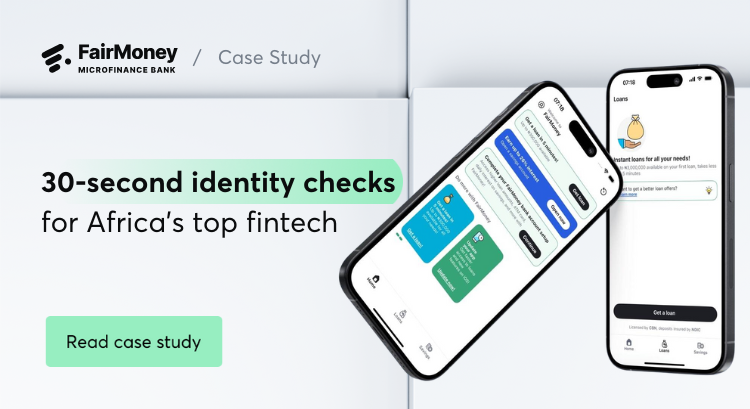
The key architectural decision is whether to build a proprietary rules engine or integrate a KYC provider via API. Building gives you maximum control over the decision logic; integrating gives you speed. FairMoney shows that a well-scoped API integration can clear full KYC in a production environment faster than most teams expect: Netguru integrated a new KYC provider in under 3 months, with an NPS of 9 from end users.
GDPR data residency and SOC 2 type II
GDPR data residency requirements force explicit decisions about where financial and personal data is stored and processed. For EU users, personal data cannot leave the EEA without Standard Contractual Clauses (SCCs) or an adequacy decision. In practice, this means your cloud region choices (eu-west-1, not us-east-1) and your vendor contracts need to reflect this before you write the first database migration.
SOC 2 Type II audit readiness should run in parallel with development, not after launch. Security controls — access logging, encryption at rest and in transit, incident response procedures — need to be operational for the audit observation period, typically 6-12 months. Solarisbank, which manages over 1 million credit cards on Netguru-built infrastructure, demonstrates that banking-level certification is achievable within a structured development timeline when compliance controls are built into the architecture from the start rather than bolted on.
47.9% of financial services organizations achieved full PCI DSS compliance in 2017 (Verizon PCI DSS Qualified Security Assessors data (2017))
PSD2 strong customer authentication, what it requires in your codebase
PSD2's Strong Customer Authentication requirement forces a concrete architectural decision: every payment or account access above the risk threshold needs at least two independent factors from possession, knowledge, and inherence, and those factors must be dynamically linked to the specific transaction amount and payee.
In your codebase, that means three distinct layers:
- SCA exemption engine: evaluate each request against the EBA/RTS/2017/02 exemption criteria, transaction risk analysis (TRA) under €30, low-value payments, trusted beneficiary whitelists, and corporate payment exemptions. Log every exemption decision with its rationale; regulators and your acquiring bank will audit this.
- FIDO2 attestation flow: the biometric authentication (FIDO2) credential is bound to the user's device at registration via a WebAuthn attestation object. On each SCA-required transaction, the relying party (your backend) verifies the authenticator assertion against the stored public key. The critical detail: the clientDataHash must include the transaction amount and payee account, this is the dynamic linking requirement. Without it, you pass biometric auth but fail PSD2.
- Dynamic linking payload: your app constructs a transaction-specific challenge (authData content), sends it to the authenticator, and the signed response proves the user approved this transaction, not just opened the app.
We recommend keeping SCA exemption logic in a dedicated service rather than scattering conditionals across payment handlers, it makes audit trails cleaner and exemption policy updates surgical rather than risky.
Post-launch compliance: Transaction monitoring, re-kyc, SAR obligations
Launch is when your AML obligations get serious, not easier. A KYC/AML onboarding flow that passed regulatory review at go-live will drift out of calibration within months if your rules engine isn't actively tuned against emerging transaction patterns.
Three areas demand ongoing engineering attention:
- Rules engine tuning: AML transaction monitoring rules, velocity checks, structuring detection, geographic risk scoring, require quarterly recalibration against your actual account network. False-positive rates above 30% signal a miscalibrated threshold, not a compliant one. Log every rule trigger with full transaction context so your compliance team can audit decisions, not just outcomes.
- Re-KYC triggers: Financial institutions are expected to refresh customer identity data on material changes, a business customer doubling transaction volume, a retail user accessing digital wealth products, a new high-risk jurisdiction appearing in their account activity. Build re-KYC as an event-driven workflow, not a scheduled batch job.
- SAR filing: Per FATF Recommendation 20, suspicious activity reports must be filed without tipping off the subject. That means your software needs a separate, access-controlled SAR queue, not a flag visible in the standard compliance dashboard.
SOC 2 Type II audit preparation forces this discipline. Auditors look for evidence that controls operated continuously, not just that they existed at point-in-time.
Fintech tech stack: Mobile, backend, cloud, and integrations
Stack choices in fintech app development compound: a decision made at sprint one about your mobile framework or backend runtime will constrain your security posture, compliance audit trail, and third-party integration surface two years later. Think through the trade-offs before you commit.
Node.js backend and the event loop advantage
For real-time payment notifications, Node.js event-driven architecture is the right call. The non-blocking event loop handles thousands of concurrent webhook callbacks, from Stripe Connect, card network settlement events, or SEPA payment status updates, without spawning a thread per connection. A thread-per-request model under burst payment load is how you get latency spikes at exactly the wrong moment.
Idempotency keys are non-negotiable in any payment API layer built on Node.js. Every POST to a payment endpoint must accept and store a client-generated idempotency key so that network retries don't double-charge an account. Stripe Connect enforces this pattern; your internal development services should too.
Cloud and integrations
AWS Financial Services provides the compliance-aligned infrastructure layer most fintech teams need: PCI-DSS Level 1 certified data centers, AWS PrivateLink for keeping card data off the public internet, and CloudTrail for the immutable audit log your security team will need at QSA assessment time. Azure is a viable alternative for teams already in the Microsoft network, but AWS has broader fintech-specific managed services in 2026.
For financial data aggregation, Plaid API integration remains the fastest path to read-only account access across US and European institutions. Pair it with Stripe Connect for marketplace payment flows and you cover the majority of consumer fintech use cases without building a banking-as-a-service platform from scratch. For financial data aggregation, Plaid API integration remains the fastest path to read-only account access across US and European institutions, though teams handling sensitive financial data should review secure API implementation best practices before production deployment.
Moove illustrates what a production-grade mobile fintech stack can deliver: a vehicle financing app scaled to $150M in annual recurring revenue, with real-time transaction feeds, multi-currency account logic, and KYC/AML onboarding flow all running on a cloud-native backend.
React Native vs flutter for compliance-heavy financial UIs
React Native wins on developer availability and JavaScript library depth; Flutter wins on rendering consistency and custom UI control. For a compliance-heavy financial app, the deciding factor is usually neither performance nor aesthetics, it's how well each framework handles PCI-DSS overlay rendering and FIDO2 biometric authentication libraries.
| Criterion | React Native | Flutter |
|---|---|---|
| FIDO2 / biometric auth | react-native-biometrics (FIDO2-compliant, actively maintained) | local_auth plugin, solid, but attestation support varies by OEM |
| PCI-DSS secure input overlays | Native bridge to platform text inputs; lower custom renderer risk | Skia-rendered inputs bypass platform secure text; requires additional PCI control validation |
| Custom financial UI (charts, account dashboards) | Third-party libs; Hermes engine adds ~15% JS parse speed | Skia gives pixel-perfect control; better for dense data-rich screens |
| Hiring pool | Larger; React/JS developers transition quickly | Smaller Dart talent pool; longer ramp for fintech-specific security patterns |
| Code sharing with web | High, shared logic with React web apps | Low, Dart doesn't reuse web assets |
The Flutter Skia renderer is the sharpest edge here. Because Flutter draws every pixel itself rather than delegating to native platform controls, a developer building a card-number entry field must explicitly ensure the field content never passes through Skia's in-memory canvas in plaintext, a non-obvious PCI requirement that trips teams unfamiliar with the framework's rendering pipeline. React Native's bridge to native UITextField (iOS) and EditText (Android) inherits platform-level secure text handling by default.
For FIDO2 attestation specifically, React Native's react-native-passkeys library (updated for passkey support in 2024) covers both platform authenticator and roaming authenticator flows. Flutter's equivalent is less mature on the attestation verification side; teams typically fall back to a WebView-based FIDO2 flow, which introduces its own security review surface.
Our view: choose React Native if your team has a JavaScript background and you need KYC/AML onboarding screens shared with a web app. Choose Flutter if design consistency across a digital banking product is non-negotiable and you have budget to hire or train Dart developers who understand the Skia security implications.
Fintech app development process: Discovery to launch
A fintech app typically takes 4-9 months from kickoff to production launch, depending on regulatory complexity and whether you're integrating a banking-as-a-service platform or building payment rails from scratch.
The six phases below are the sequence we use; each has a hard exit criterion before the next begins. Firms that skip or compress phases tend to rescope during build, which drives up cost and delays compliance sign-off.
Phase 1, Discovery (3-4 weeks) Map user journeys, define the regulatory perimeter (which licenses you need, which markets you're targeting), and produce an architecture decision record. The output is a scoped feature list and a risk log. This is also when a fintech software development company should validate which technology choices are non-negotiable from a compliance standpoint. Skip this phase and you will rescope during build, which costs more.
Phase 2, Architecture (2-3 weeks) Choose your data residency model, define the event-driven vs. request-response split (real-time payment notifications push toward event-driven Node.js), and lock in third-party dependencies. Plaid API integration, for example, needs to be confirmed at architecture stage: the account data aggregation model affects your KYC/AML onboarding flow design before a single screen is built. This is also when PCI-DSS scoping decisions should be made, because they determine the compliance burden your software development team carries throughout the build.
Phase 3, MVP Scoping (1-2 weeks) This is the phase most teams rush. The MVP trade-off is: what is the minimum financial feature set that satisfies your regulator and delivers value? Authentication (FIDO2), basic account management, and one core transaction type is usually enough. Adding full KYC/AML onboarding and a second payment method belongs in v1.1, not v1.0. Applications that try to launch with every feature rarely launch on time.
Phase 4, Build (8-16 weeks) Sprint-based development with security reviews embedded per sprint, not bolted on at the end. Compliance expertise needs to be active throughout: schedule a compliance checkpoint at the end of every two-week sprint cycle, covering code review findings, any new regulatory guidance, and open items from the risk log. For digital wallets and payment apps, Level 1 vs. Level 4 PCI-DSS determines whether your developers need to produce a Report on Compliance or a Self-Assessment Questionnaire. Catching these issues sprint by sprint prevents a last-minute pile-up before the audit phase.
Phase 5, Compliance Audit (3-6 weeks) External pen testing, AML transaction monitoring rules engine validation, and any certification submissions. SEPA certification, for instance, requires documented test cases for credit transfers and return handling. This phase cannot be compressed without regulatory risk, and no development company should treat it as optional or parallelisable with active feature development.
Phase 6, Launch and Post-Launch Monitoring (ongoing) Production rollout with a defined incident response log, followed by continuous compliance monitoring on a structured cadence: review transaction monitoring rules monthly, audit access controls quarterly, and run a full internal compliance review every six months. Regulations continue to evolve; PSD2 technical standards (EBA/RTS/2017/02) have been updated repeatedly since 2019, and your monitoring framework needs to track regulatory changes, not just catch bugs. Fintech solutions that treat post-launch as a passive phase tend to accumulate compliance debt quickly.
Moonfare, a digital platform for private market investments, compressed its go-to-market timeline by establishing clear regulatory scoping and a solid technical foundation during discovery — avoiding the retrofit costs that come from treating compliance as an afterthought.
The 4-9 month range compresses toward 4 months when a mature banking-as-a-service platform handles the financial infrastructure and your company is building product logic on top, not reimplementing payment network connectivity.
AI and ML in fintech: Fraud detection, credit scoring, robo-advisory
ML-based fraud detection separates production-grade fintech apps from demos. The gap is almost always in feature engineering, not model choice.
Fraud detection: velocity and geo-anomaly signals
A random forest or gradient boosting model trained on raw transaction fields catches maybe 60% of fraud. Real lift comes from derived features: transaction velocity per account over 1-minute, 5-minute, and 60-minute windows; device fingerprint consistency; geo-anomaly scores that flag a card used in Lagos and London within two hours. We log these features at event ingestion time, not at inference time, so the model sees the same signal in training and production.
For real-time scoring, the inference path needs to stay under 200ms. In practice, that means precomputed velocity counters in Redis, a lightweight model served via ONNX Runtime, and async logging to your data warehouse for retraining. Python handles model training; the serving layer lives in Node.js or Go.
Credit scoring: the thin-file problem
Traditional credit bureaus exclude roughly 24% of adults globally are credit-invisible (World Bank Global Findex Database 2021) (see also AI Credit Scoring Boosts Lending Accuracy by 85%: New Industry Study) of adults entirely. Thin-file scoring replaces bureau data with alternative signals: Plaid API integration gives you 24 months of cash-flow history, payroll cadence, and recurring bill payment behavior, inputs a FICO score never sees. Gradient boosting models trained on these features consistently outperform bureau-only baselines on underbanked populations. FairMoney used this approach to become Nigeria's leading fintech app, extending credit access to users that traditional bureau-only scoring would have excluded entirely.
Robo-advisory: MiFID II constraints shape the architecture
MiFID II Article 25 requires a documented suitability assessment before any investment recommendation. That means your robo-advisory logic can't be a black box, regulators expect explainable outputs. Use decision-tree or linear models for the suitability layer, reserve neural networks for portfolio optimization where explainability requirements are lower. Every recommendation event should log the input parameters, model version, and output, both for audit trails and for retraining.
Fintech App Development Cost Breakdown (2026)
Cost ranges for fintech app development are meaningless without anchoring them to compliance tier. A payments MVP with no PCI-DSS scope costs a fraction of a card-issuing platform that must achieve PCI-DSS Level 1 compliance. The difference is not just audit fees: it is architecture, and any fintech software development company that quotes without clarifying scope is comparing the wrong things.
| Complexity tier | Typical scope | Estimated cost range | Key cost drivers |
|---|---|---|---|
| MVP | Single financial service (e.g., wallet, P2P transfers), basic KYC, sandbox integrations | $80k, $180k | Plaid API integration, basic AML rules engine, BaaS platform fees |
| Mid-market | Multi-account management, SEPA payment processing, full KYC/AML onboarding flow, React Native or Flutter mobile app | $200k, $500k | SCA implementation, real-time notification architecture, security testing |
| Enterprise | Card issuing or lending, PCI-DSS Level 1 compliance, SOC 2 Type II audit, multi-jurisdiction regulatory coverage | $600k, $1.5M+ | QSA assessment, penetration testing cycles, dedicated compliance engineering |
Cost by discipline: what firms actually spend
Mobile development is often the most visible budget line for consumer-facing applications. A single-platform MVP (iOS or Android) typically runs $30k, $60k; cross-platform React Native or Flutter builds for mid-market solutions add $50k, $120k depending on feature depth, biometric authentication requirements, and offline data-sync complexity.
Backend and DevOps form a second major layer. Cloud infrastructure design, CI/CD pipelines, secrets management, and real-time event architecture together account for $40k, $150k on mid-market and enterprise projects. Firms building in regulated environments also require dedicated staging and production environment separation, which adds meaningful DevOps engineering time.
Compliance and security costs are routinely underbudgeted. A SOC 2 Type II audit runs $30k, $80k depending on scope and auditor. PCI-DSS Level 1 certification requires a Qualified Security Assessor (QSA) on-site assessment: budget $50k, $150k for the assessment alone, before remediation. Ongoing compliance monitoring technology, including automated controls testing and log aggregation tooling, adds $15k, $40k per year. These are not one-time costs.
Third-party integrations carry both licensing and engineering costs. Core banking APIs, KYC/identity verification providers, fraud detection services, and payment scheme connectivity (SEPA, FPS, card networks) typically add $20k, $80k in integration engineering across mid-market software development engagements. SEPA Credit Transfer and Direct Debit certification through a scheme participant requires scheme testing, which adds 6-10 weeks of work to a mid-market build.
Spendesk is a useful reference point here: achieving BPCE PS certification and full SEPA compliance added meaningful engineering time to the timeline, but building those controls into the architecture from the start made the certification process predictable rather than a last-minute scramble.
In our experience across 20+ fintech engagements, compliance engineering accounts for 25-35% of total build cost on mid-market and enterprise projects, a figure most initial estimates log at under 15%. Any development company quoting below that threshold should be asked to show where compliance expertise is costed.
Simple: $50K, $70K; Medium: $100K, $130K; Complex: $150K, $200K+ (Cleveroad, 2026). For a detailed breakdown of each phase, see our step-by-step development guide.
How much does fintech app development cost in 2026?
How long does fintech app development take from discovery to launch?
React Native vs flutter, which is better for a compliance-heavy fintech app?
What does psd2 compliance actually require in your app architecture?
How do you build kyc/aml in a fintech app without slowing onboarding?
Should we build a fintech app in-house or hire a specialist development partner?
What tech stack do most production banking apps use today?
Build in-house or partner? How to evaluate a fintech dev partner
PCI-DSS Level 1 compliance and KYC/AML onboarding flow are the two areas where in-house teams most often underestimate scope, and where a wrong call costs months, not weeks.
Think of partner evaluation across five criteria:
| Criterion | What to verify |
|---|---|
| Compliance track record | Ask for evidence of PCI-DSS Level 1 or PSD2 delivery: not claims, but audit logs and certification dates |
| BaaS partnerships | Do they have active network relationships with banking-as-a-service platforms or Plaid API integration experience? |
| Mobile framework depth | Can they articulate the security trade-offs between React Native and Flutter for a financial app, not just output preference? |
| Audit support | Will they produce the documentation your QSA needs, or does that work fall back to your team? |
| NDA and data residency | Are contractual boundaries around financial account data and digital infrastructure clear before discovery starts? |
Netguru has delivered fintech app development across 18+ years, holding ISO 27001 certification and a 4.9/5 Clutch rating across 900+ clients, content that matters when a prospective partner sits in front of your security review board.


