









Web Development Services

Custom web application development, ecommerce and headless CMS websites for product teams. We design, build and run them from the discovery phase to production support, rated 4.8 out of 5 on Clutch and ISO 27001 certified.

Trusted by

Estimate your project

Web development backed by real delivery

17+

Years in the market

Building web and mobile products for companies since 2008.

3,500+

Projects delivered

From MVPs to enterprise platforms, for startups and global brands.

900+

Clients worldwide

Product teams in 50+ countries across the US, UK, Europe and MENA.

4.8/5

Rating on Clutch

The average across 73 client reviews on our public Clutch profile.

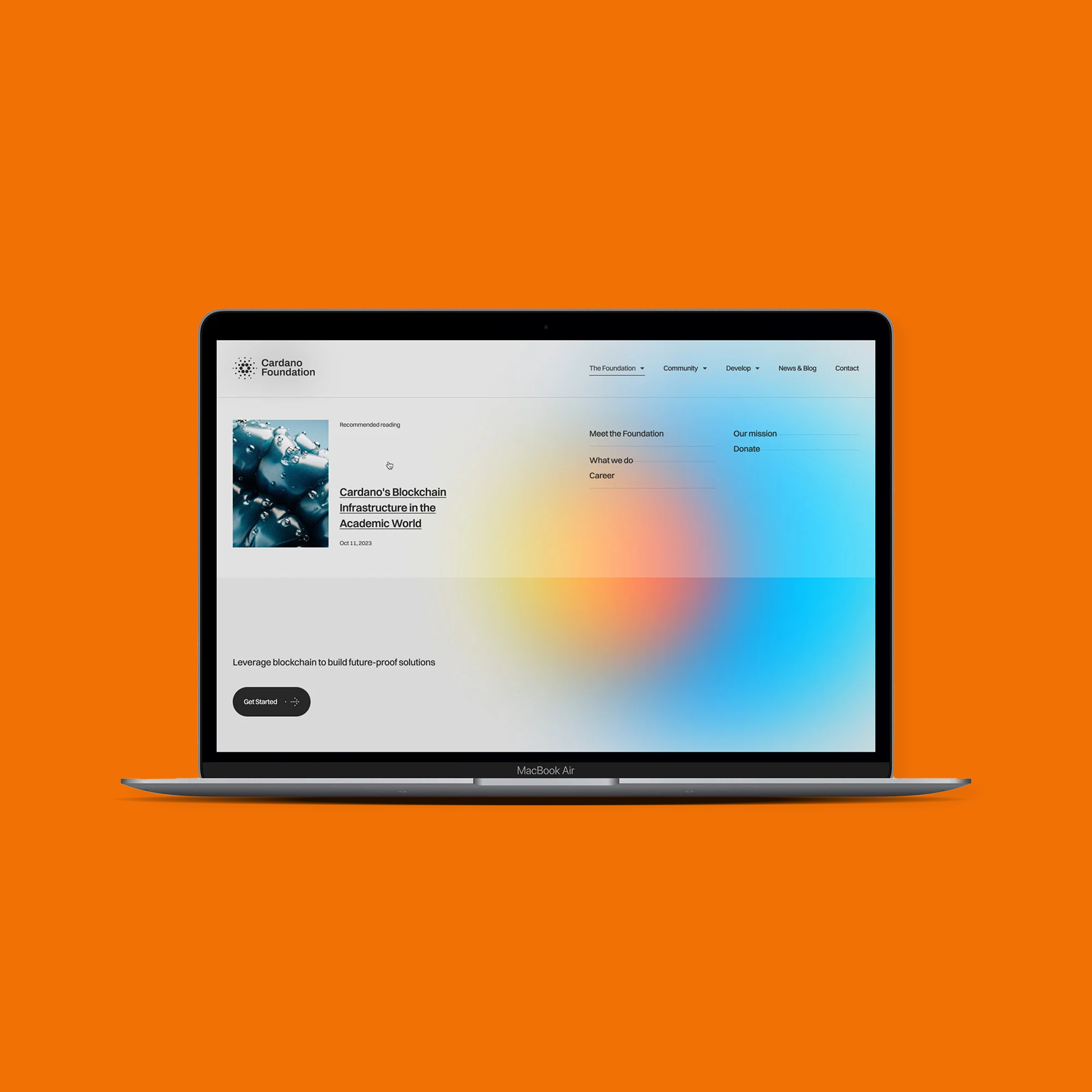
Cardano Foundation: a website redesign that brought 24% more sessions

The Cardano Foundation's website no longer matched its growing role in blockchain, and it had to serve individual users, enterprises and the developer community at once.

Netguru redesigned the site and connected the new front end to the Foundation's existing back-end systems, working alongside its internal team. Locofy turned Figma designs into production-ready front-end code for key components. Sessions grew 24%, engaged sessions 20% and total events 54%.

  • 01

    Locofy

  • 02

    Tailwind CSS

  • 03

    TypeScript

Netguru’s expertise and collaborative approach were key in transforming our website into a dynamic and intuitive platform that truly reflects our vision.

Laura Mattiucci

Director Marketing and Communications at Cardano Foundation

Read case study
Cardano orange square preview

How we run a web development project

Six steps, each with a clear output and a decision point for you.

  1. Discovery

    Workshops with your stakeholders and users to agree goals, risks and architecture. You receive a scoped backlog, an architecture outline and an estimate.
  2. Design

    User flows, wireframes and UI in Figma, tested with real users. You receive a clickable prototype and a design system with accessibility notes.
  3. Build

    Two-week sprints with a demo at the end of each. You receive working software on staging every sprint, plus the repository and documentation.
  4. QA

    Automated regression, manual testing, an accessibility audit and Core Web Vitals checks before release. You receive test, accessibility and performance reports.
  5. Launch

    A release plan with rollback steps, load checks and monitoring in place before go-live. You receive the production release, a runbook and analytics set up.
  6. Run

    Monitoring and support under a service level agreement (SLA), with dependency updates and security patches while we keep shipping your roadmap. You receive regular reports and a prioritized backlog.

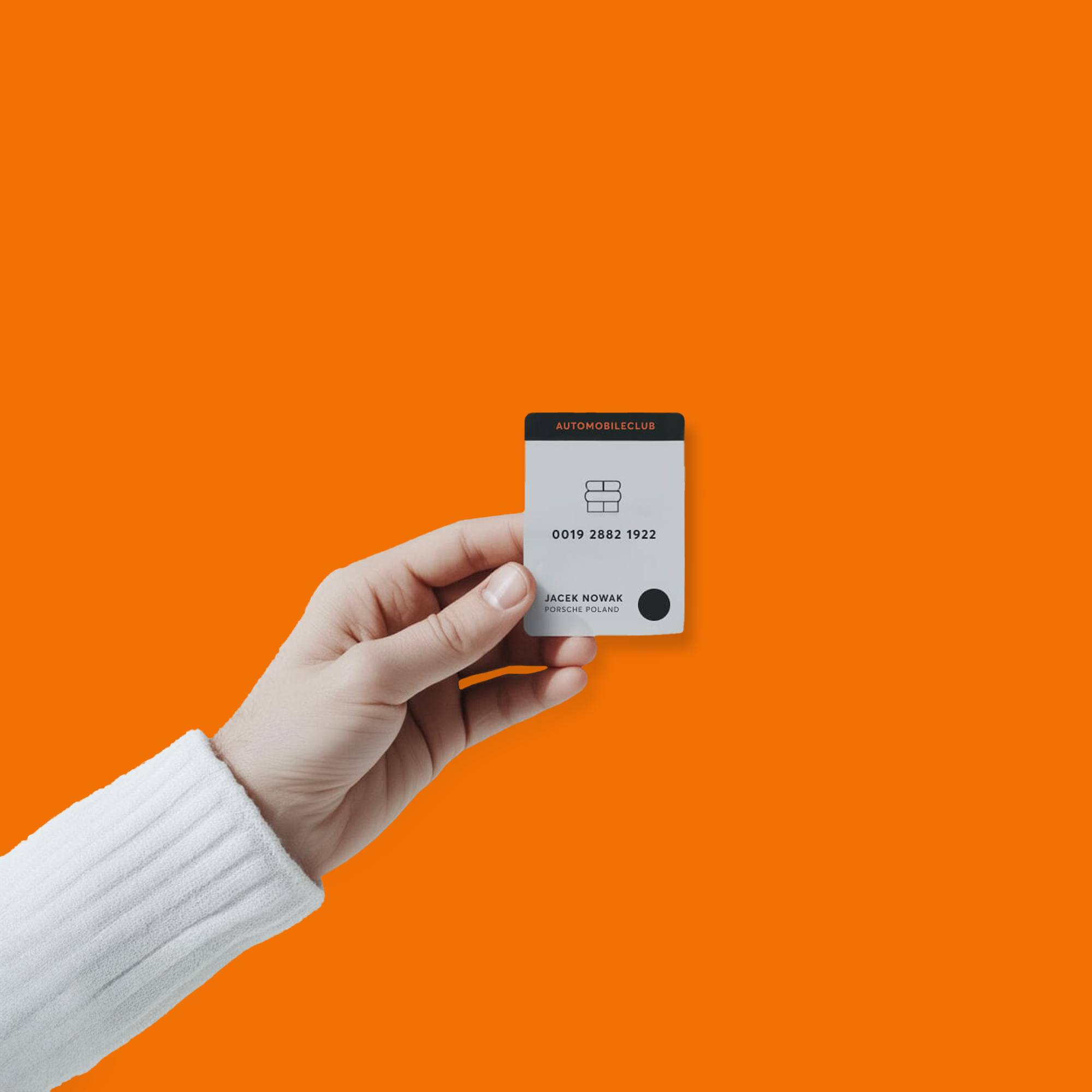
Solaris: secure web and mobile front ends for 1M+ credit cards

Europe's largest automobile club chose Solaris to manage more than a million credit cards, which called for a secure back end, reliable transactions and room to grow.

Netguru built the web and mobile front ends and a middle layer of purpose-built APIs on Node.js and AWS, connecting the club's app to Solaris' services for card registration, transactions and verification. 3DS and SMS verification, data masking and two-factor authentication protect customer data, and Solaris owns all IP and code.

Netguru has proven to be a very supportive partner, able to react fast to changing situations and tackle all the challenges that came their way.

Jan Ahrens

Head of Engineering (B2C Banking) at Solaris SE

Read case study
Automobile club orange square preview

How we build web applications that last

The engineering standards behind every web development project we deliver.

Performance: Core Web Vitals

Budgets for LCP, INP and CLS set at design stage and checked in every pull request, with real-user field data after launch.

Accessibility: WCAG 2.2

Automated axe and Playwright checks in CI plus manual screen-reader audits, with an IAAP-certified accessibility specialist on the team.

Security: OWASP Top 10 and ISO 27001

Each OWASP Top 10 risk mapped to a control, with dependency scanning in CI, under Netguru's ISO 27001-certified security management.

AI features in web applications

Assistants grounded in your own data. For a heating systems manufacturer selling into 20+ countries, we built a multilingual support assistant that answers from its CMS.

What our clients say

Rated 4.8 out of 5 on Clutch across 73 client reviews.

Excellence and speed. It’s rare to get both, and Netguru delivers.

Mark Greiner

Digital Innovation Manager at Merck KGaA Darmstadt

Their team, with high-level expertise, has not only improved the site's design and functionality but has also incorporated advanced tools that significantly enhance lead generation capabilities.

Magdalena Kuć-Kawczyńska

Head of Marketing, Polpharma API

Netguru has been the best agency we've worked with so far. They are able to design new skills, features, and interactions within our model, with a great focus on speed to market.

Adi Pavlovic

Director of Innovation, Keller Williams

Technologies and partners

Technology partners: Microsoft, AWS, VTEX and Webflow (Premium Partner).

Web development questions, answered

What are web development services?

Web development services cover everything needed to design, build, launch and maintain a website or web application: UX and UI design, front-end and back-end development, API integration, testing, hosting and ongoing support.

Website development vs web application development comes down to what people do on it: a website informs and converts visitors, while a web application is software your users log into, so it needs accounts, permissions, business logic and integrations. Most of our projects are custom web applications, and we also build responsive websites and run redesigns and migrations.

A custom build fits when your core process is the product. When your process is standard, an ecommerce platform, a headless CMS or Webflow usually costs less, and our guide to types of web development services compares the options.

What drives the cost of a web development project?

Five things move the price: scope (user roles, screens and business rules), the number and age of the systems you integrate with, compliance requirements such as GDPR or PCI DSS, the size and seniority of the team, and the timeline. A discovery phase turns each of these into a line you can inspect before you commit, and our web application development cost guide explains how they add up. Need a number sooner? A short discovery phase gets you an estimate you can plan a budget around.

Fixed-price vs time-and-materials contract: which fits?

A fixed-price contract works when requirements are clear after discovery: scope, timeline and budget are agreed up front, and changes go through a change request. Time and materials works when priorities shift from sprint to sprint, because you pay for the time spent and re-plan at every review. A dedicated team suits long-running products, and team extension adds specific skills, such as senior React or Node.js engineers, to your in-house team.

We usually recommend fixed price for a well-defined scope such as a website redesign, and time and materials for a product whose priorities will change once real users arrive.

How long does a web development project take?

It depends on scope and integrations, so the discovery phase ends with a timeline and milestones you can plan around. Because we work in two-week sprints, you see working software on a staging environment from the first sprint, not only at the end.

How do you choose a web development company?

Shortlist on evidence, then check the contract. Before you sign with any web development company, ask for:

  • case studies that name the stack and the outcome, plus public reviews you can read yourself
  • proof of security practice, such as ISO 27001 certification
  • code ownership and IP assignment: who owns the code and the IP when the project ends
  • a statement of work that lists scope, deliverables, acceptance criteria and how changes are handled
  • a service level agreement (SLA) for support after launch

We recommend starting with a paid discovery phase: it is the lowest-risk way to see how a team works before you commit to the full build.

Should we choose React or Next.js?

Next.js is a framework built on React, so the choice is about rendering. Our default for anything public-facing is Next.js with the App Router, because pages that need search visibility, a fast first load or server-side data get them without extra plumbing. Plain React is fine for authenticated dashboards where search indexing does not matter.

When does a headless CMS make sense?

A headless CMS fits when content feeds several channels, such as a site, an app and a partner portal, or when developers need full control of the front end. For a single marketing site with standard layouts, an off-the-shelf CMS or Webflow costs less to run, and we would pick Webflow when the marketing team needs to ship pages without developers.

Can you modernize our legacy web application?

Yes. We assess the existing system first, then choose between rehosting, refactoring or a staged rebuild that keeps the old application running while new parts go live. Our replatforming and modernization services cover the full migration, and our guide to rebuilding legacy web apps explains how to pick the right path.

We use server-side rendering or static generation for pages that need to be indexed, and we keep Core Web Vitals within Google's "good" thresholds: LCP within 2.5 seconds, INP within 200 milliseconds and CLS below 0.1. INP replaced First Input Delay as a Core Web Vital in March 2024, and it is the first metric heavy client-side code breaks.

A CMS migration with 301 redirect mapping done before launch keeps your rankings: we map every indexed URL to its new address and crawl the staging site the way Googlebot will, as our website redesign guide explains step by step.

How do you handle accessibility and security?

We build to WCAG 2.2, the W3C standard published in October 2023, with automated axe and Playwright checks in CI and manual screen-reader audits by an IAAP-certified accessibility specialist. For security, we map each risk in the OWASP Top 10 to a control in code review and CI, under Netguru's ISO 27001-certified security management.

Talk to our web development expert

Tell us about your project and we will get back to you within one business day.

Barbara Rybicka

Commercial Director

Click for the details