





React JS Development Company

React JS development services for web apps and SaaS products: React and Next.js builds, React Native, migrations and senior React developers. Rated 4.9 out of 5 by our clients.

Trusted by

Estimate your project

React development services we deliver

Six service lines, each with a clear output and a typical use case.

Custom React web apps

Customer portals, marketplaces and SaaS dashboards built with React.js, TypeScript and reusable components, ready for real user traffic.

Enterprise app development

Role-based internal platforms with single sign-on, audit trails and OWASP Top 10 checks, built for operations and finance teams.

Micro-frontends

Separate teams ship separate parts of one product through micro-frontend architecture, which suits large platforms where release schedules collide.

Progressive web apps

Installable web apps with offline support for mobile-first audiences, using Next.js server-side rendering where search matters. React Native fits when you need store distribution.

Migration and modernization

Legacy AngularJS or server-rendered pages move to React through incremental migration, so the live product keeps running while screens change.

React consulting and audits

Architecture and code reviews cover bundle size, rendering performance and data flow, and end with a ranked list of fixes for your developers.

React development backed by real delivery

17+

Years in the market

Building web, mobile and AI products since 2008.

3,500+

Projects delivered

From MVPs to enterprise platforms.

900+

Clients worldwide

Product teams in 50+ countries.

4.9/5

Average client rating

How our clients rate their work with Netguru.

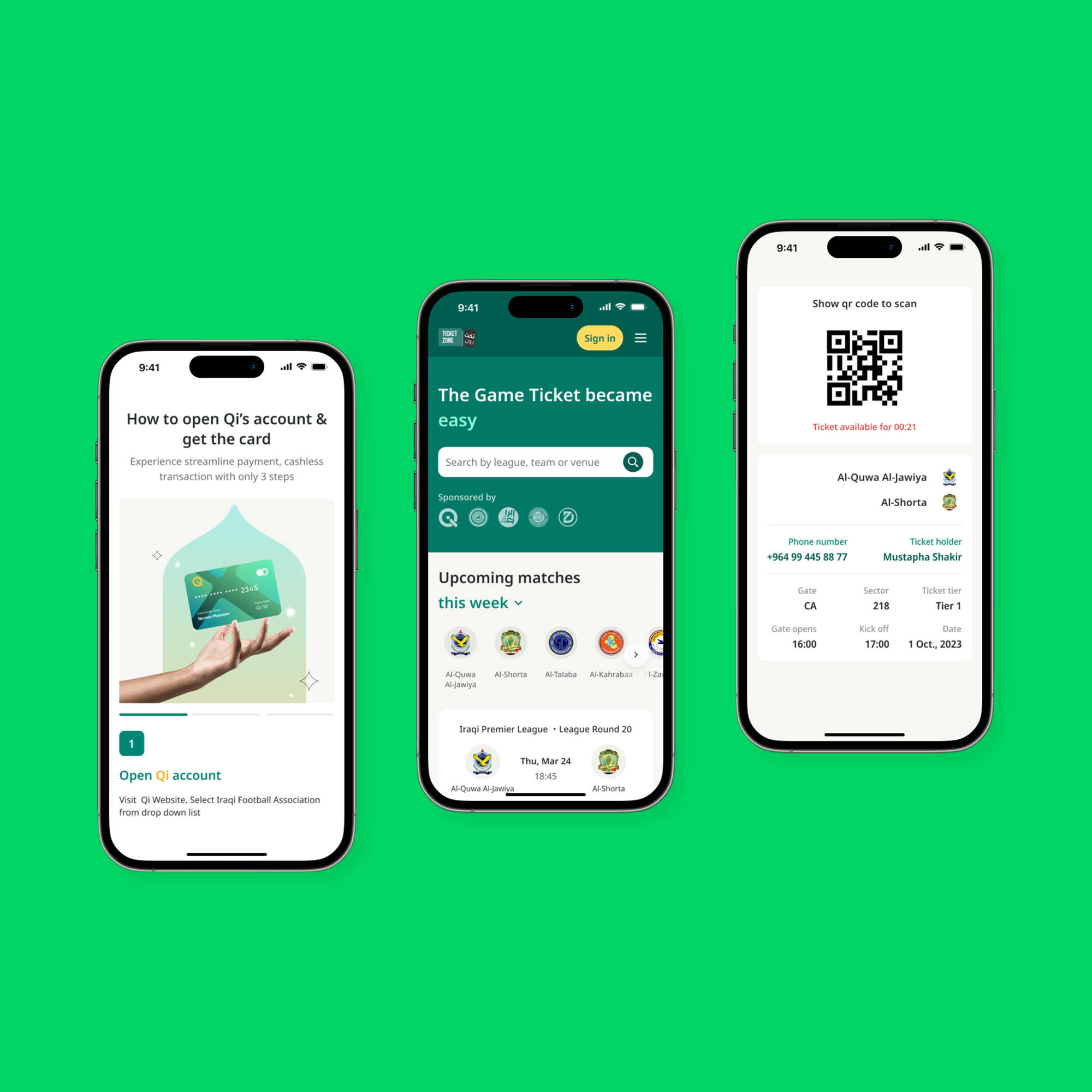
Ticket Zone: a React ticketing app live in two months

Ticket Zone set out to replace stadium queues and forged tickets with the first digital football ticketing in Iraq, for fans who mostly buy on their phones.

Netguru built a responsive React web app with custom QR codes, a React Native scanner for stewards and a Node.js backend on AWS. The MVP went live in two months.

  • #1

    Football ticketing in Iraq

  • 2

    Months to an MVP

  • 100%

    From UX to release

The Ticket Zone platform's user-friendly design and robust functionality not only met but exceeded our expectations.

Saif Al Mufti

CEO at Digital Zone – Qi Group

Read case study
Digital Zone green square preview

How a React project runs, step by step

Every step ends with something you can review, test or deploy.

  1. Discovery

    We map users, roles, integrations and constraints with your stakeholders. You receive a scoped backlog, a risk list and an estimate built on the cost drivers.
  2. Architecture and UX

    Designers and engineers agree on component structure, routing, data flow and the design system. You receive clickable prototypes and a written architecture decision record.
  3. Build

    Engineers deliver in sprints with TypeScript, code review and continuous integration on every pull request. You receive a working increment to review after each sprint.
  4. QA

    Automated unit, integration and end-to-end tests run beside manual checks for accessibility and performance. You receive test reports and a list of known issues.
  5. Launch

    We prepare cloud environments, monitoring and a rollback plan before go-live. You receive a deployed production app and a runbook for your team.
  6. Support

    Engineers fix defects, upgrade dependencies and ship improvements under agreed support terms. You receive release notes and a codebase that stays current.

Moonfare: a private equity platform rebuilt on React and Node.js

Moonfare opens top-tier private equity funds to individual investors from around EUR 50,000, so its platform has to earn trust at first sight.

After reviewing the existing code, Netguru rebuilt it with React on the front end, Node.js on the back end and AWS underneath. The first release came after three months.

  • 3

    Months to first release

  • €50,000

    Minimum investment

We have built our product on a very simple recipe: building an outstanding team of industry experts and having a relentless drive for listening to our users.

Gerardo Bonilla

Product Manager at Moonfare

Read case study
Moonfare orange square preview

The React tech stack and why we chose it

Each tool earns its place by solving a problem we meet on production projects.

Next.js

Next.js server-side rendering and static generation give fast first loads and crawlable pages for marketing, e-commerce and content routes.

TypeScript

Typed props and API contracts catch mistakes at build time, which keeps large codebases readable as new developers join.

State management

State management (Redux Toolkit, Zustand, TanStack Query) is matched to the job: Redux Toolkit for shared business logic, Zustand for light stores, TanStack Query for server data caching.

Testing and performance

Component tests, integration tests and end-to-end tests for revenue-carrying journeys run on every pull request, alongside bundle and rendering checks.

Cloud

AWS, Google Cloud and Microsoft hosting with infrastructure as code, chosen to match what your IT team already runs.

Accessibility and security

WCAG expertise, OWASP TOP 10 checks and GDPR compliance feed into every review, backed by ISO 27001 certification.

What our clients say

Rated 4.9 out of 5 by our clients.

Netguru's expertise and collaborative approach were key in transforming our website into a dynamic and intuitive platform that truly reflects our vision.

Laura Mattiucci

Director Marketing & Communications, Cardano Foundation

Netguru has been the best agency we've worked with so far. They are able to design new skills, features, and interactions within our model, with a great focus on speed to market.

Adi Pavlovic

Director of Innovation, Keller Williams

Netguru's mobile experience and React Native expertise, combined with close coordination on integrating the Sportano Mobile App with our systems, produced a robust solution that fully meets our objectives.

Grzegorz Kupidura

CTO, Sportano

How to choose a React development company

What to check before you sign, beyond the portfolio.

Current React in production

Ask for live products on current React: Next.js, React Server Components and TypeScript, not only older class-based code.

Performance you can measure

Core Web Vitals on their shipped products show whether the team builds fast pages or only fast demos.

Frontend modernization experience

With a legacy front end, look for incremental migrations to React that kept the product live.

Headless CMS and integrations

Marketing sites and stores need React wired to a headless CMS and commerce APIs, so check for that experience.

Dedicated team model

Under a dedicated team model the same developers stay on your product, with a named delivery lead.

Code ownership and IP assignment

Your contract should transfer code ownership and IP assignment to you on payment.

How you can work with us

Three ways to start. Each one comes with the same delivery standards and a named delivery lead.

Fixed-scope project

A defined scope, timeline and budget, agreed after a paid discovery phase. It suits a first release or a well-specified module.

Dedicated team

A cross-functional team of React developers, a designer, QA and a delivery lead that owns a roadmap with you sprint by sprint, under time and materials.

Team extension

Senior React developers who join your in-house team, follow your process and tools, and are matched to the skills your roadmap needs.

React.js development company: common questions

What does a React.js development company do?

A React.js development company designs, builds and maintains web applications with the React library and the tools around it, such as Next.js and TypeScript. A general web agency picks from any framework, while a React specialist brings tested component patterns and performance habits. Read our guide on what React.js is used for for typical cases.

What drives the cost of a React project?

Cost follows scope and the number of user roles, integrations with other systems, design depth, compliance and security needs, and the shape of the team. A simple dashboard and a multi-role enterprise platform sit far apart. A discovery phase turns these drivers into an estimate you can plan around.

Which engagement model do you recommend?

We usually recommend a fixed-scope project when requirements are stable and a dedicated team model when the product keeps evolving. Team extension fits when you already have an engineering lead and need extra React developers. Time and materials works best when scope will change as you learn from users.

How long does a React project take?

Timeline depends on scope, the number of integrations, design readiness and how fast your side can give feedback. An MVP, a migration and an enterprise platform all run on different schedules. We give a plan after discovery, once we know the real scope.

How do I choose a React development company?

Check for relevant case studies in your sector and a security certification such as ISO 27001. Confirm code ownership and IP assignment in the contract, and ask for a clear statement of work. Compare support terms after launch and meet the engineers who will work on your project.

Should we use Next.js or plain React?

We default to Next.js when search visibility, fast first loads or mixed server and client rendering matter, because Next.js server-side rendering is built in. Plain React suits internal tools behind a login. Our guide on Next.js vs React covers the trade-offs, and our Next.js development services page explains how we work.

Why use TypeScript with React?

TypeScript catches mismatched props and API shapes before code reaches users. It also acts as living documentation, so new developers read a component and know what it expects. We use it on new React projects by default.

How do you migrate an existing site to React?

We recommend incremental migration: new React screens run beside the old pages and replace them one route at a time. The business keeps shipping while the codebase changes. Our step-by-step guide to migrating a website to React shows the approach.

When do micro-frontends make sense?

Micro-frontend architecture pays off when several teams own different parts of one product and need independent releases. For a single team it adds overhead without benefit. We assess team structure and release pain first, then recommend it only where it fits.

React projects across industries

Case studies from fintech, retail, healthcare and more.

Talk to our React development expert

Tell us about your product, and we will talk through scope, the right team and the engagement model.

Barbara Rybicka

Commercial Director

Click for the details