
EdTech software development: 6 case studies & approach


Contents
EdTech platforms rarely stall on features. They stall on the parts buyers actually gate on, Learning Management System interoperability, FERPA and WCAG compliance, and AI pipelines that hold up under production load, and those are exactly the areas most teams treat as post-MVP work.
CTOs, founders, and heads of product face the same cluster of tradeoffs: LTI 1.3 vs deep-link integrations, FERPA audit-log design, RAG pipeline latency, and enrolment spikes that expose every architectural shortcut. This guide documents how Netguru approaches those tradeoffs across six shipped EdTech engagements.
TL;DR: Netguru's EdTech track record at a glance
Learning Management System integrations, FERPA audit trails, and WCAG 2.1 compliance are the three areas where EdTech builds most often stall, not feature development. We've shipped EdTech platforms for NewGlobe, Babbel, AMBOSS, Apps for Good, Darajat, and one educational SaaS client; the recurring failure mode is treating compliance and interoperability as post-MVP concerns.
Here is what those six engagements produced.
| Client | Challenge | Outcome |
|---|---|---|
| NewGlobe | Manual teacher-guide creation taking 4 hours per document | GenAI pipeline cut creation time to 45 seconds |
| Babbel | No B2B admin dashboard for enterprise language-learning sales | Entered B2B market with Hyundai, Paramount, N26, and Bacardi |
| Apps for Good | Learning platform lacking reach and expert network | 100K+ students and 1,375 industry experts engaged across 40 countries |
| AMBOSS | Unstructured AI experimentation in medical education | 30 AI ideas pitched, 14 internal teams activated |
| Darajat | Tutoring priced out of emerging-market reach at $1,500/semester | Price cut to $100-120 per semester, a 93% reduction |
| Educational SaaS | No MVP to support state contract bid | Accessible, contract-enabling MVP delivered in 6 months |
EdTech market forces every platform architect faces in 2025
Five structural pressures are reshaping every EdTech platform architecture decision right now, and they interact in ways that make deferring any one of them expensive.
GenAI and LLM adoption. Large language model (LLM) integration has moved from pilot to production expectation in under 24 months. The pressure isn't whether to add AI, it's how to build a generation pipeline that produces pedagogically sound output at acceptable latency.
Our work with NewGlobe showed what this looks like in practice: a GenAI teacher-guide automation pipeline cut creation time from 4 hours to 45 seconds. The architecture decision that enabled this wasn't prompt engineering; it was retrieval-augmented generation (RAG) indexing against a validated curriculum corpus, so outputs stayed within approved learning paths rather than hallucinating content.
WCAG 2.1 accessibility mandates. WCAG 2.1 AA conformance is no longer a nice-to-have for platforms selling to US public institutions or EU-funded education organisations, it's a procurement gate. Platforms that treat accessibility as a post-launch retrofit face 6-12 weeks of remediation work per major release cycle.
SCORM-to-xAPI migration pressure. SCORM remains dominant in legacy LMS deployments, but the ADL's xAPI specification gives far richer learner-activity tracking, statement-level granularity versus SCORM's pass/fail/score model. The migration decision forces a real tradeoff: xAPI requires a Learning Record Store (LRS) and complicates LTI and xAPI interoperability with older SIS systems that expect SCORM completion events.
Enrolment scalability. Remote and hybrid learning drove unpredictable enrolment spikes that exposed under-provisioned infrastructure. As documented in real-world deployments, Apps for Good serves 100,000+ students across 40 countries, a geographic distribution that requires CDN-backed asset delivery and stateless session architecture, not vertical scaling.
Compliance complexity. FERPA, COPPA, and GDPR apply simultaneously to many platforms and impose conflicting data-retention and consent requirements. An adaptive learning algorithm that logs granular clickstream data for personalised learning paths can violate FERPA §99.31 disclosure rules if the audit-log schema isn't designed with data minimisation from day one.
Six EdTech engagements: Objectives, stack, and outcomes
The six engagements below span GenAI pipeline automation, emerging-market affordability architecture, global platform scale, and AI product strategy, each one a different forcing function, each one resolved through a distinct technical approach. Taken together, they show the range of edtech software development problems our teams work through, from a 45-second teacher-guide generation pipeline to a state-contract-enabling MVP.
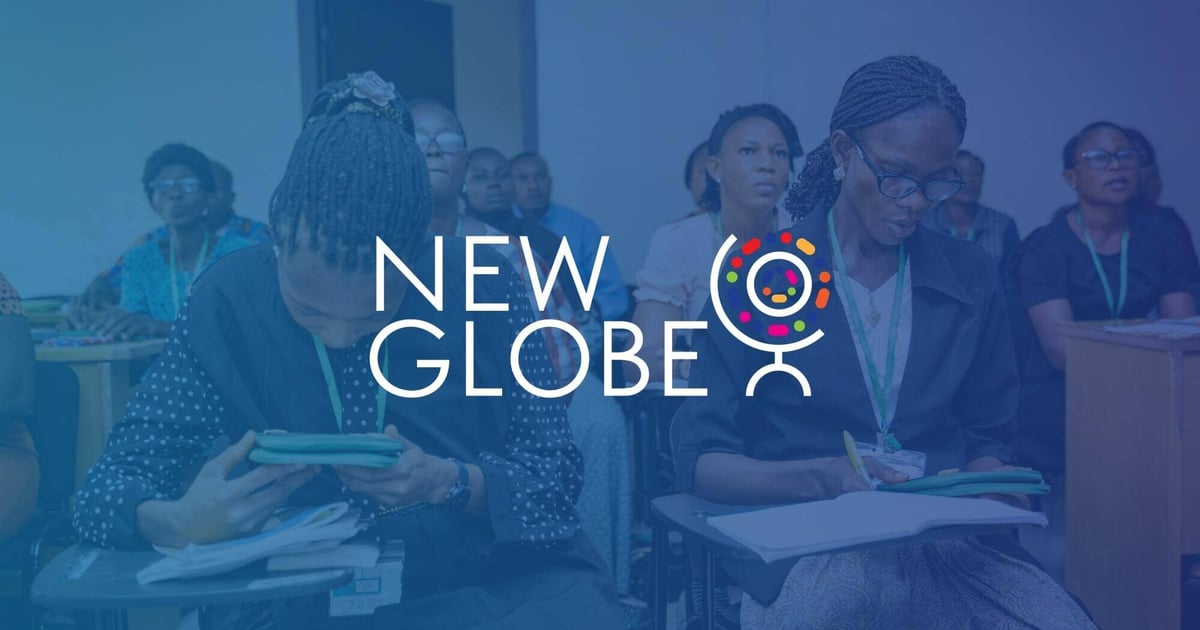
NewGlobe: GenAI cuts teacher-guide creation from 4 hours to 45 seconds
Objectives
- Automate structured teacher-guide authoring using a GenAI pipeline so content teams could produce personalised learning materials at national scale
- Reduce the manual editing cycle without sacrificing pedagogical accuracy or curriculum alignment
- Build a generation layer that NewGlobe's content team could operate without engineering support
Outcomes
- Teacher-guide creation time dropped from 4 hours to 45 seconds, a reduction of more than 99%
- The pipeline runs on a retrieval-augmented generation (RAG) architecture that grounds every guide in NewGlobe's own curriculum corpus, keeping outputs accurate and on-standard
- Content teams adopted the tool without a dedicated training programme
The RAG approach was the critical design choice here. A pure prompt-to-output pipeline produced guides that drifted from curriculum scope; grounding generation against an indexed content store closed that gap. Post-launch, we monitor retrieval precision and output rejection rates as the primary quality signals, when retrieval degrades, generation quality follows within days, not weeks.
Babbel: B2B admin dashboard enabling enterprise market entry

Objectives
- Build a B2B admin dashboard on top of Babbel's existing consumer language-learning platform
- Give enterprise HR and L&D administrators seat management, progress reporting, and cohort views without exposing consumer account architecture
- Ship fast enough to support active sales conversations with named enterprise prospects
Outcomes
- Babbel entered the B2B market and signed enterprise customers including Hyundai, Paramount, N26, and Bacardi
- The dashboard gave administrators a clear view of learner progress and licence allocation, decoupled from the consumer product
- The engagement showed that development companies scoping tools tightly to admin workflows can open an entirely new revenue channel without a full platform rewrite
The architectural approach that made this tractable was treating the B2B layer as a read/write facade over existing user and progress data, rather than duplicating storage. That kept the total integration surface small and the delivery timeline short. For teams with similar needs, this pattern also supports interoperability across multiple systems: a facade layer can expose standard data contracts that downstream HR and LMS tools can consume, without requiring changes to the core platform.
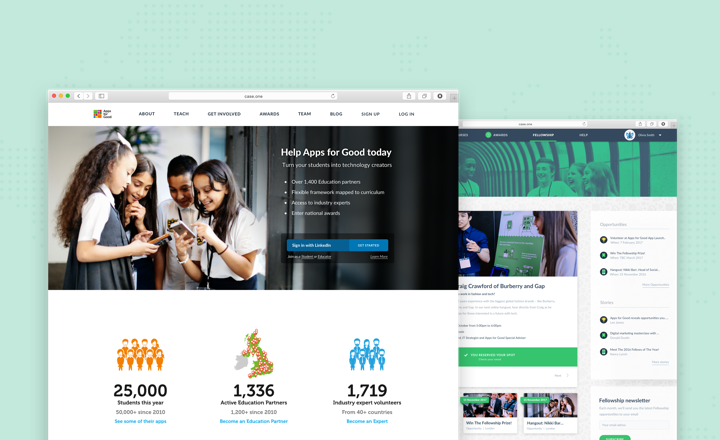
Apps for Good: Learning platform at 100K+ students across 40 countries
Objectives
- Support a global edtech programme connecting students with industry mentors through an accessible, remote-capable learning platform
- Serve schools and students across diverse infrastructure conditions, including low-bandwidth environments
- Keep the platform maintainable by a small internal team
Outcomes
- The platform engaged 100,000+ students and 1,375 industry experts across 40 countries
- A reorganised front end, a new student dashboard, and country-specific course platforms kept the system maintainable by a small internal team
- Accessibility and remote participation remained stable across the full geographic spread
Scale at this level, across 40 countries and varying network conditions, requires deliberate decisions about asset delivery, progressive loading, and session state. Platforms that are designed for a single-country deployment and then pushed globally tend to break on latency first and session reliability second.
AMBOSS: AI workshops and hackathon for a medical learning platform

Objectives
- Run structured AI discovery workshops with AMBOSS product and engineering teams to identify viable GenAI integration points within their medical learning platform
- Activate internal teams around AI product development rather than delivering a finished feature
- Produce a prioritised set of concepts grounded in AMBOSS's actual clinical content and adaptive learning algorithm architecture
Outcomes
- 30 new AI-centric ideas were pitched across the workshop and hackathon programme
- 14 internal teams formed around those concepts, each with a defined problem statement and a prototype direction
- AMBOSS left with an internal AI capability, not a dependency on external delivery
This engagement pattern, workshop-led AI activation rather than outsourced feature build, is increasingly what mature edtech companies need. The constraint is rarely technical; it's organisational. Fourteen teams forming around concrete AI product ideas is a more durable outcome than a single vendor-built feature. When scaling AI initiatives internally proves difficult, a staff augmentation model can embed experienced developers directly within existing teams without ceding product ownership.
Darajat: E-learning platform cutting tutoring cost by 93%
Objectives
- Build an e-learning platform for the emerging-market education segment where private tutoring costs put quality instruction out of reach for most families
- Architect for affordability at the infrastructure level, not just at the pricing layer
- Deliver a remote learning experience that works on mid-range consumer devices
Outcomes
- Tutoring cost dropped from $1,500 to $100-120 per semester, a 93% reduction
- The platform runs on a stack optimised for low per-session infrastructure cost, enabling the price point without margin compression
- React Native was selected for the mobile client to share business logic across iOS and Android and keep the long-term maintenance surface small
Emerging-market edtech affordability is an architecture problem before it is a pricing problem. If your infrastructure cost per active learner is set at consumer-market rates, you cannot reach sub-$150 annual price points without losing money. Darajat required working backward from the target price point to every infrastructure and licensing decision.
Educational SaaS web-app redesign: MVP in 6 months enabling a state contract

Objectives
- Redesign and rebuild an educational SaaS platform to a production-ready MVP within a fixed timeline
- Meet the compliance and accessibility requirements (WCAG 2.1 AA) that state procurement processes require
- Deliver enough functional scope for the client to demonstrate capability in a formal contract evaluation
Outcomes
- MVP delivered in 6 months, within the procurement window
- The client secured a state contract on the back of the demonstrated platform
- WCAG 2.1 AA compliance was validated as part of the build, not retrofitted after contract award
State education contracts have hard evaluation dates. A six-month MVP timeline only holds if scope is locked at week two and accessibility requirements are built in from the first sprint, retrofitting WCAG compliance into a completed UI typically adds four to eight weeks of remediation work, based on our experience across similar educational software development engagements.
Netguru's EdTech development process: Discovery to post-launch
Netguru's edtech software development process runs five phases, each with defined entry criteria, exit criteria, and handoff points that CTOs can audit before signing.
Phase 1, Discovery (2-3 weeks). We map existing Learning Management System architecture, audit SCORM and xAPI interoperability gaps, review FERPA §99.31 audit-log obligations, and validate WCAG 2.1 AA compliance coverage. The output is a prioritised backlog with risk-ranked architectural decisions, not a slide deck.
Phase 2, Architecture and design (2-4 weeks). AWS infrastructure topology, LTI 1.3 integration contracts, and CI/CD pipeline design are finalised here. For platforms serving minors, COPPA data-minimisation constraints are wired into the data model before a single migration runs. Custom adaptive learning algorithm requirements get scoped against retrieval-augmented generation (RAG) pipeline latency budgets.
Phase 3, Build (6-16 weeks, depending on scope). Engineering teams work in two-week sprints. LTI and xAPI interoperability with third-party tools is integration-tested in each sprint, not deferred to QA. GenAI pipelines, such as the teacher-guide automation we built for NewGlobe, which cut content creation time from 4 hours to 45 seconds, are staged behind feature flags so educational content teams can validate outputs before live rollout.
Phase 4, QA and compliance validation (2-3 weeks). Automated accessibility audits run against WCAG 2.1 AA at build time. FERPA audit-log coverage and SCORM content-package conformance testing run as dedicated regression suites, not as manual spot-checks.
Phase 5, Launch and post-launch monitoring (ongoing). AWS CloudWatch dashboards track enrolment-spike autoscaling, RAG pipeline latency, and LMS session-error rates from day one.
AI model performance is monitored on a rolling basis: intent accuracy and answer-quality degradation trigger retraining queues before learner experience deteriorates.
Handoffs between phases are documented as decision logs. We recommend a remote kick-off and a shared Confluence workspace from Phase 1 so your internal engineering team has full visibility at every gate, no black-box development periods.
Compliance built into architecture: FERPA, COPPA, GDPR, and WCAG 2.1
Compliance in edtech software development fails most often when it is retrofitted after the first production release. FERPA, COPPA, GDPR, and WCAG 2.1 AA are architecturally incompatible with last-minute bolt-ons: each imposes constraints on how data is stored, routed, and logged that touch database schema, not just policy documents.
FERPA §99.31 and your audit-log schema. FERPA's legitimate educational interest exception requires that every Student Information System disclosure be logged with requestor identity, timestamp, and purpose. In practice, this means a separate disclosure_audit table with immutable append-only writes, not a soft-delete pattern on your main users schema. If your SIS syncs to an LMS via LTI 1.3, every roster pull counts as a disclosure event and must appear in that log. Design this on day one; adding it post-launch requires a schema migration across every table that touches PII.
COPPA and consent-flow architecture. For platforms serving users under 13, COPPA Rule consent flows must be verifiable, a checkbox is not sufficient. We build consent state as a first-class database entity: a guardian_consent record gates all data-collection events downstream. No consent record, no telemetry write. This single constraint ripples through your event pipeline, your analytics schema, and your third-party SDK list.
GDPR/FERPA overlap. For platforms operating across the US and EU, the good news is that FERPA's data-minimisation principles and GDPR Article 5 overlap significantly. A single data-classification taxonomy, tagging fields as pii_ferpa, pii_gdpr, or pii_both, lets one access-control layer satisfy both regimes rather than two parallel governance tracks.
WCAG 2.1 AA in the component library. Accessibility compliance for learning platforms is not a QA pass at the end of development. We enforce WCAG 2.1 AA contrast ratios, keyboard navigation, and ARIA labelling at the design-system level, so every custom component ships compliant by default. 96% of audited higher education websites failed WCAG 2.1 Level AA standards (AAAtraq Report (via BOIA), 2022).
EdTech tech stack decisions: LMS, GenAI, and interoperability layer
Stack selection in edtech software development rarely has a single right answer, but three decisions carry disproportionate risk: your RAG pipeline configuration, your LMS interoperability approach, and your mobile framework choice.
Retrieval-augmented generation (RAG) latency vs. accuracy in production. RAG pipelines let a large language model (LLM) answer questions grounded in your proprietary content, course materials, teacher guides, assessment banks, rather than general training data. The tradeoff is real and measurable: tighter similarity-search thresholds produce more accurate retrievals but push p95 response latency above 3-4 seconds, which is the threshold where learner engagement drops on mobile. In our NewGlobe engagement, the GenAI teacher-guide automation pipeline reduced content creation time from 4 hours to 45 seconds; that required chunking strategy and embedding model selection to be resolved before any UI work started, not after.
LTI 1.3 vs. deep-link integration. LTI 1.3 gives you signed JWT launches, platform context, and grade passback without custom API contracts, the right default for any platform entering a district or higher-ed procurement cycle. Deep-link integrations make sense when the LMS vendor isn't IMS Global-certified or when you control both endpoints. SCORM and xAPI interoperability sit below this layer: SCORM 2004 for completion tracking in legacy LMS environments, xAPI where you need granular learning-path telemetry across distributed systems.
Flutter vs. React Native for EdTech mobile. React Native is our view for teams with an existing React web codebase: shared component logic, faster ramp-up, and a mature accessibility layer that eases WCAG 2.1 AA compliance. Flutter produces more consistent cross-platform rendering, which matters for interactive assessments with custom canvas elements, but adds a Dart skillset dependency. For offline-first learning in low-bandwidth markets, relevant to platforms like Darajat targeting emerging-market students, Flutter's asset bundling gives slightly better control over local storage. Neither choice is wrong; the real question is which mobile engineering skillset your team already has.
Frequently asked questions about EdTech software development
How do we outsource EdTech software development without losing compliance control?
What does custom EdTech software development cost compared to off-the-shelf LMS?
How long does an EdTech platform MVP typically take to ship?
Is Netguru an EdTech software development company based in Europe?
How does GenAI fit into a production EdTech platform today?
How do you build for FERPA and GDPR simultaneously without duplicating architecture?
What is the EdTech software development process at Netguru, step by step?
Talk to Netguru's EdTech team
Our EdTech team has shipped Learning Management System integrations, FERPA-compliant student data architectures, and adaptive learning algorithm pipelines across six published engagements, from GenAI teacher-guide automation at NewGlobe to accessible platforms serving 100K+ students at Apps for Good.
If you're scoping custom edtech software development, whether that's an LTI-connected LMS, a WCAG 2.1-accessible learning platform, or a FERPA-auditable data layer, we can run a focused discovery session and return a grounded estimate within hours. View our software development services and get an estimate for your project.


